
📋About Bioptimus
Updated September 19, 2026Bioptimus is a private Paris company, registered in September 2023 and launched publicly in February 2024, that builds foundation models for biology. Its best-known products are the H-optimus pathology models, which turn digitized tissue slides into numerical features other software can learn from, and M-Optimus, a model that combines several kinds of biological data. It is an AI vendor, not an adopter: the models are the product. One is free to download with commercial use allowed, others are sold with usage pricing through Amazon Web Services (AWS) Marketplace, and the newest is also offered to partners on request.
The company was co-founded by chief executive Jean-Philippe Vert, formerly Chief R&D Officer at Owkin and a research lead at Google Brain, with a team drawn from Owkin and Google DeepMind. Owkin describes Bioptimus as a company it incubated, and was an early investor that shared office space and helped with recruiting. A 35 million dollar seed round led by Sofinnova Partners arrived in February 2024, and a 41 million dollar round led by Cathay Innovation in January 2025 took the total to 76 million dollars. In June 2025 it secured NVIDIA DGX Cloud Lepton compute through Sofinnova.
Its pattern is open-core: release one model openly, then sell the newer ones. H-optimus-0, released in July 2024, is a 1.1 billion parameter vision model trained on more than 500,000 hematoxylin and eosin (H&E) stained slides, published under the permissive Apache 2.0 license. In October 2024 Proscia built it into its Concentriq Embeddings product. H-optimus-1, trained on more than 1 million slides from over 800,000 patients, went on AWS Marketplace in May 2025; its free Hugging Face download is for non-commercial academic research only, as is H0-mini, a smaller model distilled with Owkin.
M-Optimus, unveiled in December 2025, joins slide images with bulk RNA sequencing, spatial transcriptomics and clinical data. It launched to a limited group of partners, and a version called M-Optimus-1 is listed on AWS Marketplace, where it predicts the spatial activity of about 6,000 genes from a routine H&E slide. To feed it, Bioptimus announced STELA, its Spatial Tissue Embedding Learning Atlas, in March 2026 with 10x Genomics and Broad Clinical Labs, aiming to profile up to 100,000 patient specimens. The French digestive-cancer research network FFCD joined in June 2026 with data on more than 3,000 patients, and Cancer Research Horizons followed in August 2026 with a colorectal cancer cohort of more than 1,750 patients.
The honest framing: Bioptimus's value rests on proprietary, clinically linked tissue data and on how its models perform on independent benchmarks. Its own model cards state that the pathology models have not been reviewed or cleared by the FDA, the European Medicines Agency or the UK regulator, so they are research and development tools, not diagnostics. That separates it from Paige, which sells a cleared clinical product, and from PathAI, which Roche agreed to acquire in May 2026. Owkin and Noetik also build on patient tissue data, but mainly to find drugs and biomarkers of their own; Bioptimus sells the model itself.
🛠️Products & Tools (1)
Bioptimus's pathology foundation models that turn H&E slide tiles into embeddings for biomarker and survival models. H-optimus-0 is Apache 2.0; the newer H-optimus-1 is non-commercial on Hugging Face or paid on AWS Marketplace.
Keep track of the companies you’re watching
- Save the companies you want to follow
- Get ⚡ alerts when your saved companies change
- Every product they ship, cross-linked to 900+ AI tool profiles
- Today’s top AI Stories — the day’s most important AI news, free
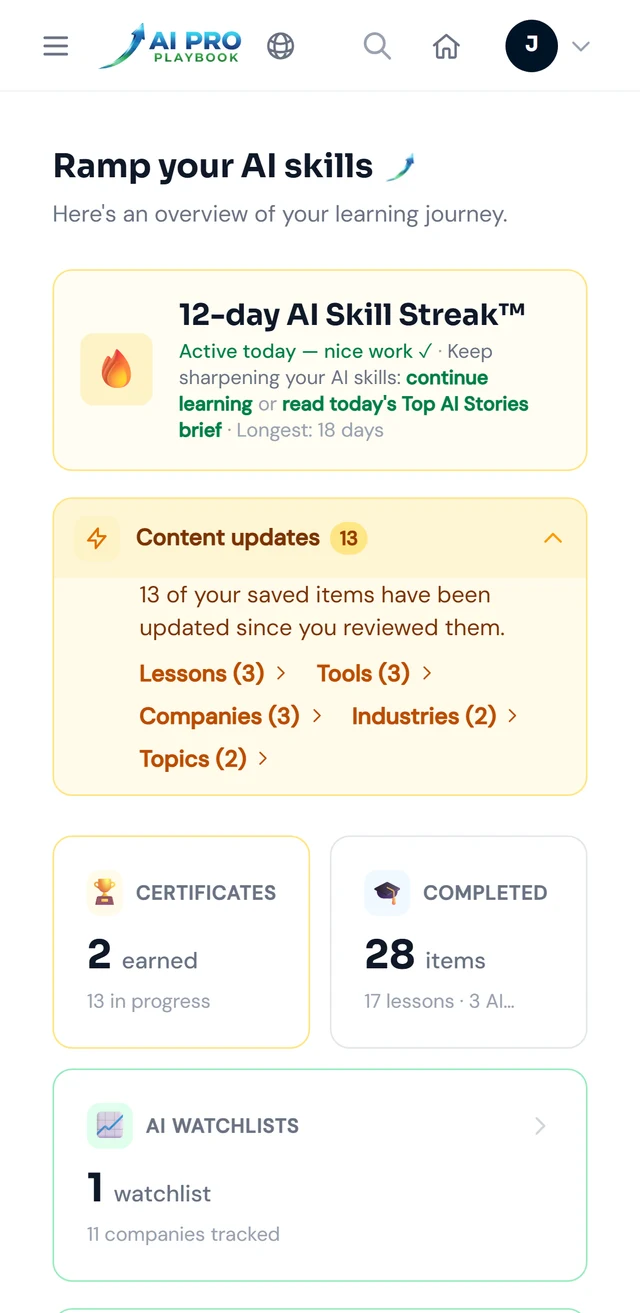

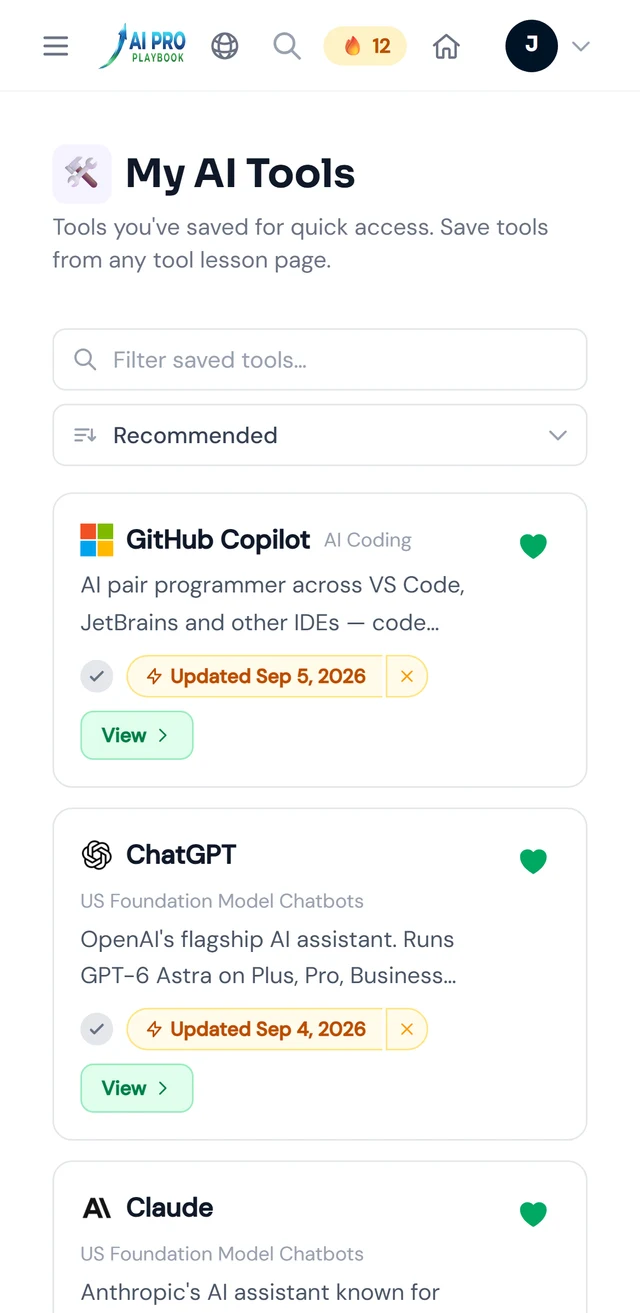
Swipe for Recommended for you and My AI Tools
Your AI Hub — sample data. See desktop view example