
📋About Cloudflare
Updated September 16, 2026Cloudflare is a global internet infrastructure company founded in 2009, providing CDN, DDoS protection, DNS, and zero-trust security services. With over 300 data centers in 100+ countries, Cloudflare's network handles a significant percentage of global internet traffic, serving millions of websites and applications.
Cloudflare has made aggressive moves into AI infrastructure with Workers AI, a serverless GPU inference platform that lets developers run AI models at the edge — close to users — without managing GPU infrastructure. The platform supports popular open-source models for text generation, image classification, speech recognition, and embeddings. Cloudflare's acquisition of Replicate, which hosted 50,000+ AI models, dramatically expanded its AI model ecosystem, and the company also acquired the Astro web framework to extend its developer-platform reach.
Cloudflare's broader AI portfolio includes AI Gateway (for monitoring and controlling AI API usage), Vectorize (vector database for RAG applications), D1 (serverless SQL database), and R2 (S3-compatible object storage with zero egress fees). The company's strategy is to become the default infrastructure layer for AI applications — providing everything from model inference to data storage to API management at the network edge, including agent-driven procurement workflows where AI agents can self-onboard, deploy, and pay for cloud resources without human intervention.
Extending that agent-first strategy, Cloudflare introduced the Monetization Gateway, which lets any website, API, or AI tool charge for access using the open x402 protocol: a client requests a gated resource, receives a payment-required response, pays in stablecoins, and retries, with settlement handled at Cloudflare's edge. It generalizes the company's earlier pay-per-crawl feature from AI scrapers to the whole agentic web, where autonomous software makes micro-payments without a human in the loop. More than 25 companies joined the coalition backing the protocol.
Cloudflare has emerged as one of the most prominent profitable tech companies to publicly attribute large-scale workforce restructuring directly to AI productivity gains rather than cost pressure. CEO Matthew Prince has articulated a framework distinguishing "builder" roles (engineers, designers, scientists), "seller" roles (account executives, customer-facing), and "measurer" roles (operations, monitoring, middle management) — arguing AI will heavily reshape the third category while strengthening the first two. The framework pairs Cloudflare's record financial performance with a named-CEO take on which roles inside the company are most exposed to AI displacement, positioning Cloudflare as a leading proof point for the "AI-native company" operating model.
On August 5, 2026 Cloudflare released Cloudflare OS, an open-source platform under the Apache 2.0 license that lets non-developers describe an internal application in plain language and have an AI agent build and run it. Applications, called Gadgets, run isolated per user, and every reach into an internal system passes through a capability-based permission layer named Gatekeepers. Cloudflare deployed it internally to thousands of employees across every function in May 2026 before publishing the code, and says a managed version will follow in the Cloudflare dashboard.
A day later Cloudflare extended the same agent-first thesis to the browser itself with Kitesurf, a browser written for AI agents rather than people. It discards tabs, themes, extensions and visual chrome, and runs on Cloudflare Workers instead of a Chromium process, assembled from Rust components — the Blitz rendering engine, Firefox’s Stylo CSS parser, Boa for JavaScript and Parley for text. Cloudflare measures three to four times less CPU and five to seven times less memory than Chromium on screenshot and HTML-extraction work, at the cost of running a little under twice as slow in wall-clock time. It is free during beta through Browser Run, and Cloudflare says it intends to open-source the code.
🛠️Products & Tools (3)
Open-source internal-agent platform from Cloudflare, released under Apache 2.0 in August 2026. Non-developers describe an internal app in plain language and an agent builds and runs it, with per-workspace isolation and a capability-based permission layer called Gatekeepers.
Serverless GPU inference platform running AI models at 300+ global edge locations. Supports text generation, image classification, embeddings, and speech recognition with zero cold starts.
A cloud browser built for AI agents rather than people. Runs on Cloudflare Workers instead of Chromium, uses roughly three to four times less CPU and five to seven times less memory on screenshot and HTML-extraction work, and speaks the Chrome DevTools Protocol. Free beta via Browser Run.
Keep track of the companies you’re watching
- Save the companies you want to follow
- Get ⚡ alerts when your saved companies change
- Every product they ship, cross-linked to 900+ AI tool profiles
- Today’s top AI Stories — the day’s most important AI news, free
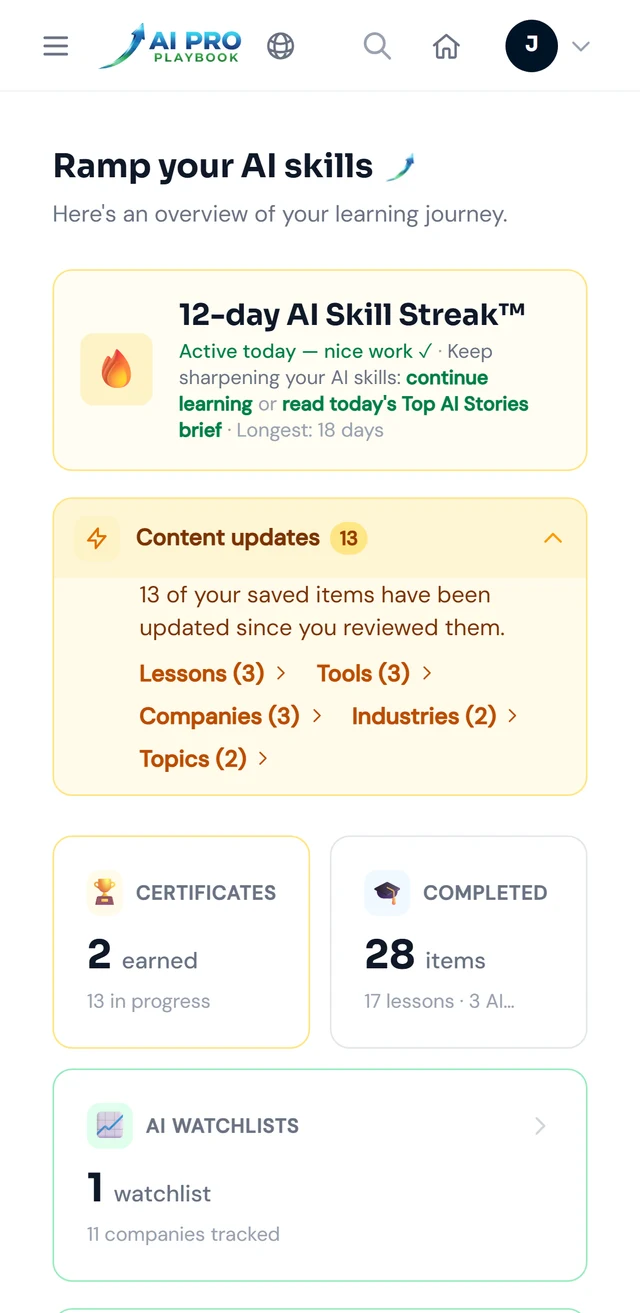
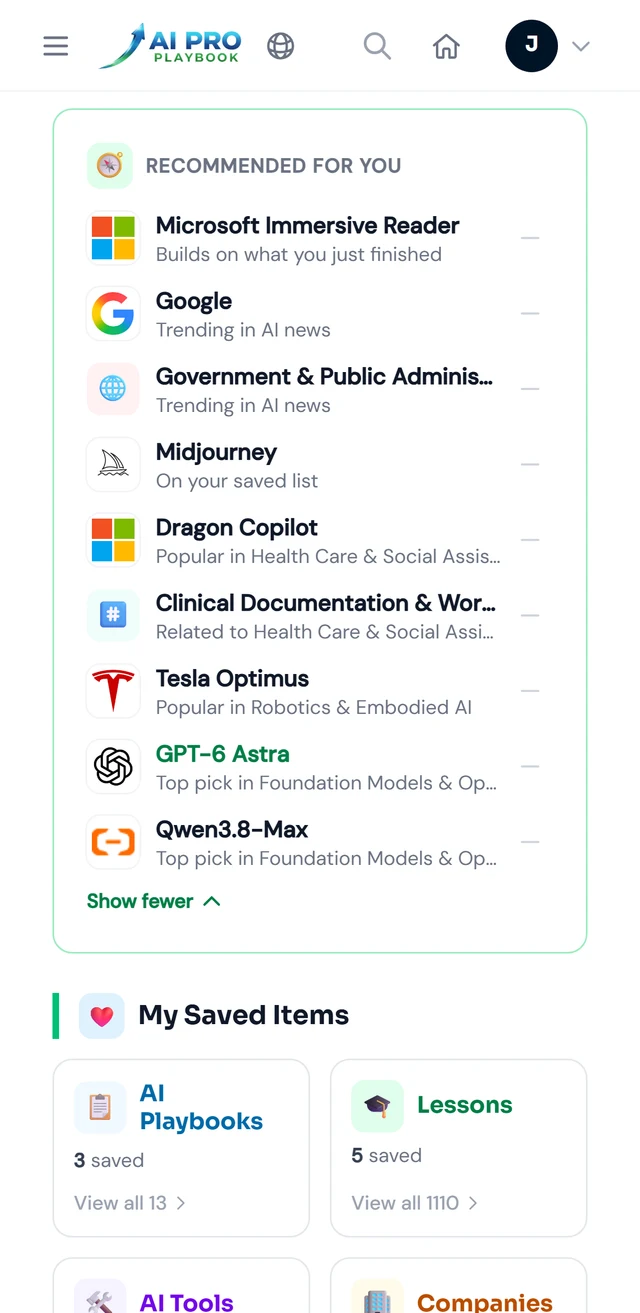
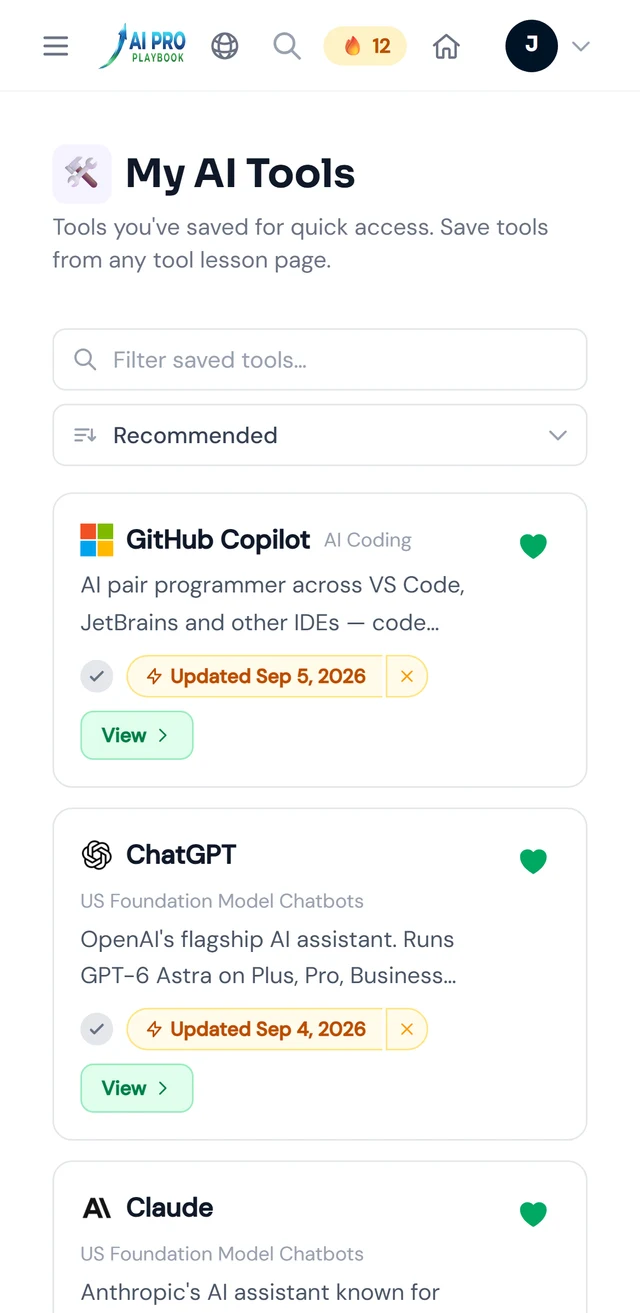
Swipe for Recommended for you and My AI Tools
Your AI Hub — sample data. See desktop view example