
📋About Epic Systems
Updated September 20, 2026Epic Systems is the dominant electronic-health-record (EHR) software vendor in the United States for large hospitals and integrated delivery networks, with approximately 40% market share among hospitals with over 500 beds and over 325 million patients holding a current electronic record globally. Founded in 1979 by Judy Faulkner with $70,000 in seed capital, the company has remained privately held throughout its history — Faulkner has publicly committed to keeping it private and not selling. Annual revenue is estimated at $4-5 billion (Epic does not disclose financials).
Epic's product portfolio centers on the EpicCare ambulatory and inpatient EHR, which is implemented at most major US academic medical centers, Veterans Affairs hospitals, and integrated health systems. Companion modules cover scheduling, billing, lab and radiology integration, patient portal (MyChart), and analytics (Cosmos, Caboodle). Epic's tightly-integrated, single-database architecture and famously demanding customer-success approach have driven both its market dominance and its reputation for difficulty of customization.
Epic Cosmos is the company's strategic AI and research initiative — a HIPAA-compliant research database aggregating de-identified patient records from participating Epic-using health systems. Cosmos covers 310 million patients across 22.6 billion encounters and is used by clinicians and researchers for cohort analytics and clinical research. Epic now organises its AI as three named agents: Art for clinicians, which drafts In Basket replies and, through Chart with Art, listens during a visit and drafts the note; Penny for revenue cycle and prior authorization; and Emmie for patients, covering scheduling, billing questions and lab-result explanations. Underneath sits Curiosity, a set of medical foundation models built on Cosmos with researchers from Yale and Microsoft, trained on more than 100 billion time-ordered medical events to simulate a patient's likely path; the accompanying paper calls the model family CoMET. Epic reported in March 2026 that more than 85 percent of its customers use at least one of these. Ambient documentation partnerships with Abridge, Suki and Nuance DAX continue alongside the in-house tools, and Agent Factory, a no-code way for health systems to build their own agents, is signalled for general availability in 2027. Epic UGM (User Group Meeting) in Verona is one of the largest annual healthcare-IT events in the world, drawing 25,000+ attendees.
Epic environments can now be connected to ChatGPT for Healthcare, an integration OpenAI opened in September 2026 that brings authorized patient context — visit notes, laboratory results, medications and specialist documentation — into ChatGPT so a clinician can ask what has changed since a patient's last visit rather than reading the chart end to end. It supports two shapes: pulling EHR context into ChatGPT, and embedding ChatGPT directly into an EHR layout so the work happens without leaving the patient chart. The University of California, San Francisco health system is a pilot partner. The arrangement is notable less for the capability than for the position it puts Epic in — the system of record now brokers access for a general-purpose frontier model alongside the clinical-documentation partnerships it already runs with Microsoft, Nuance and Abridge.
🛠️Products & Tools (1)
Epic's embedded AI: the Art clinician assistant (In Basket drafting and Chart with Art ambient notes), the Penny revenue-cycle agent, the patient-facing Emmie, and the Curiosity predictive models built on the Cosmos research database of 310 million patients.
Keep track of the companies you’re watching
- Save the companies you want to follow
- Get ⚡ alerts when your saved companies change
- Every product they ship, cross-linked to 1,000+ AI tool profiles
- Today’s top AI Stories — the day’s most important AI news, free
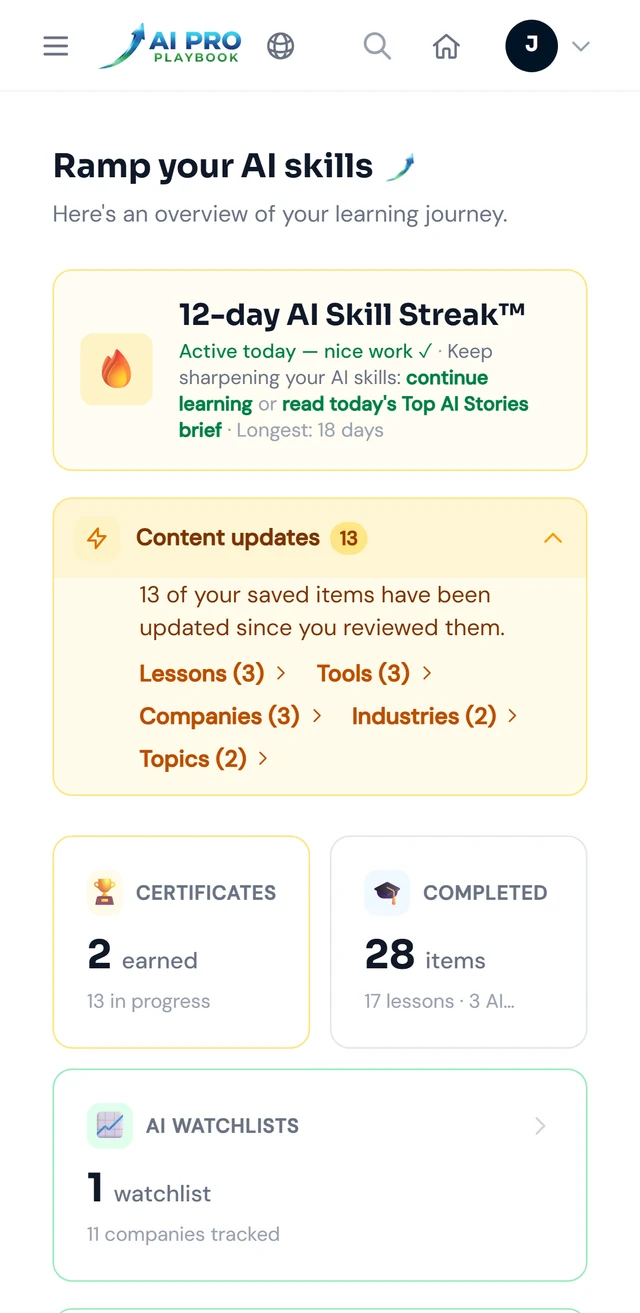
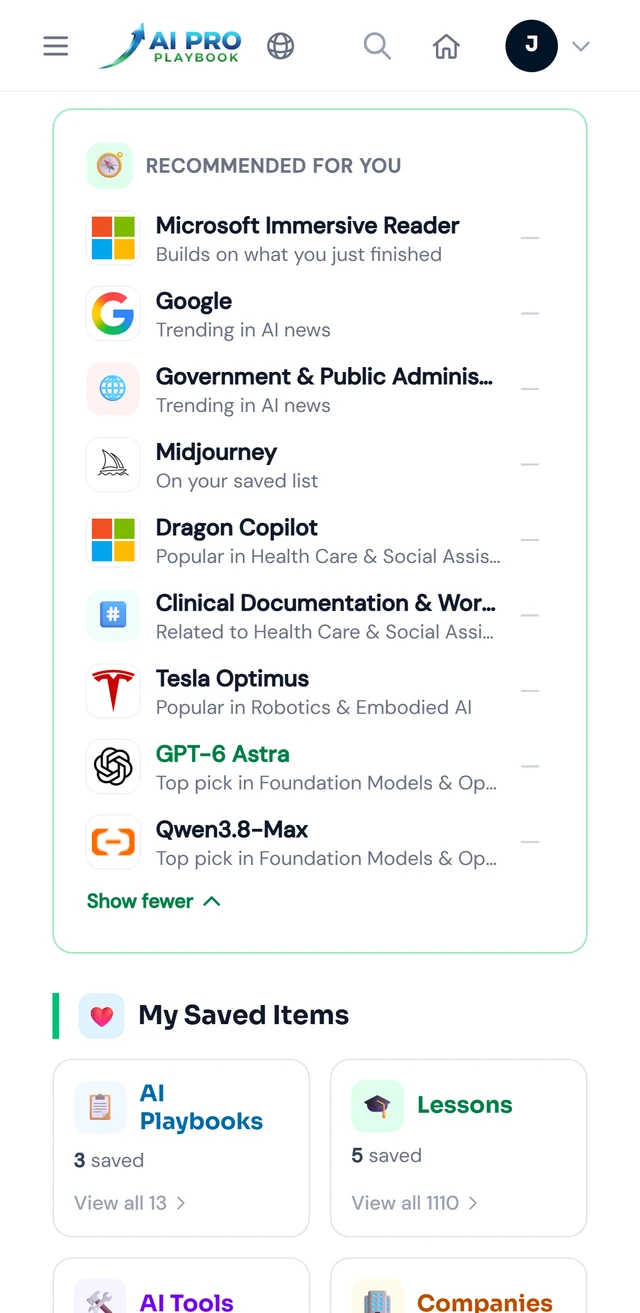
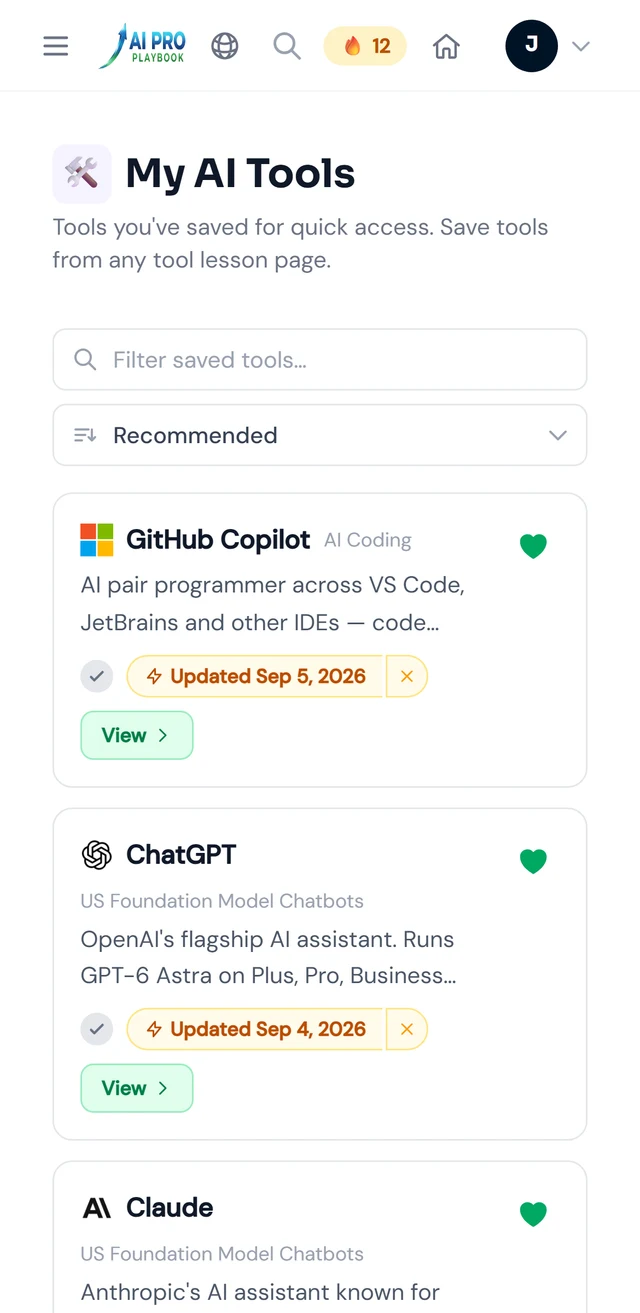
Swipe for Recommended for you and My AI Tools
Your AI Hub — sample data. See desktop view example