
📋About Groq
Updated August 26, 2026Groq is an AI inference hardware and cloud company founded in 2016 by Jonathan Ross, who designed Google's first TPU. The company's custom Language Processing Units (LPUs) deliver inference speeds 10 to 18 times faster than GPU-based alternatives, powering real-time conversational and agentic AI through the GroqCloud inference platform.
In December 2025, NVIDIA entered a non-exclusive licensing agreement for Groq's inference technology valued at approximately $20 billion. Jonathan Ross and the bulk of Groq's senior chip-engineering leadership moved to NVIDIA, while GroqCloud was explicitly excluded from the deal and continues to operate independently. At GTC 2026, NVIDIA unveiled the Groq 3 LPU built on the licensed intellectual property — a clean separation of the chip lineage (now at NVIDIA) from the cloud service (still under Groq).
The remaining Groq is now run as an inference-cloud company: CEO Adam Winter — who joined in 2024 to lead the international business and stepped up to run the company in 2026 — and CFO Matt Eng refocused the roadmap on GroqCloud and the on-demand inference market that sits beneath the application layer. The pitch is straightforward — inference is now a much larger market than training, and Groq's existing chip fleet plus the LPU-licensing royalty stream from NVIDIA gives the smaller team a credible wedge in the rapidly commoditizing inference-cloud category.
The company is raising a roughly $650 million round to fund this pivot. Existing investors are leading, with Disruptive and Infinitium committed to fill any unsubscribed shares. Cumulative funding now exceeds $2 billion, building on the $750 million round closed in September 2025 at a $6.9 billion valuation.
GroqCloud serves more than 2 million registered developers (with roughly 360,000 active monthly) and counts 75% of the Fortune 100 as account holders. The platform's headline workloads — real-time voice, agentic browser control, low-latency function calling — are exactly the categories where token-per-second economics matter most, and Groq's LPU advantage on those workloads remains intact after the NVIDIA deal. The longer-term question is whether Groq can hold the customer-facing inference category as NVIDIA, AWS Bedrock, Cerebras, and Together AI all push their own inference services using the same or similar chip generations.
Groq closed roughly $650 million in June 2026 and a further $350 million in August, led by Disruptive with NVIDIA participating, at a $3.5 billion valuation — around half the $6.9 billion it carried before the licensing deal. Groq frames that as a new valuation for the post-licensing business rather than a down round, which is a fair reading given the company being priced is a cloud operator rather than the chip designer that earned the earlier number.
In August 2026 Groq was certified as an NVIDIA Cloud Partner, allowing it to deploy and operate NVIDIA accelerated computing to NVIDIA's reference architecture. The certification adds NVIDIA hardware alongside the LPU fleet rather than replacing it: Groq still runs its own silicon — by its own account the only team operating LPUs in production at scale — across 13 data centers serving more than 6 million developers, with capacity set to grow from about 54 megawatts toward 200-plus megawatts during 2027. The arrangement leaves NVIDIA occupying four roles at once in Groq's business: licensee of its inference technology, hardware supplier, investor, and beneficiary of its infrastructure spending.
🛠️Products & Tools (1)
Ultra-fast AI inference platform powered by custom LPU chips. Fastest token generation speeds in the industry for real-time applications. API access to major open-source models.
Keep track of the companies you’re watching
- Save the companies you want to follow
- Get ⚡ alerts when your saved companies change
- Every product they ship, cross-linked to 900+ AI tool profiles
- Today’s top AI Stories — the day’s most important AI news, free
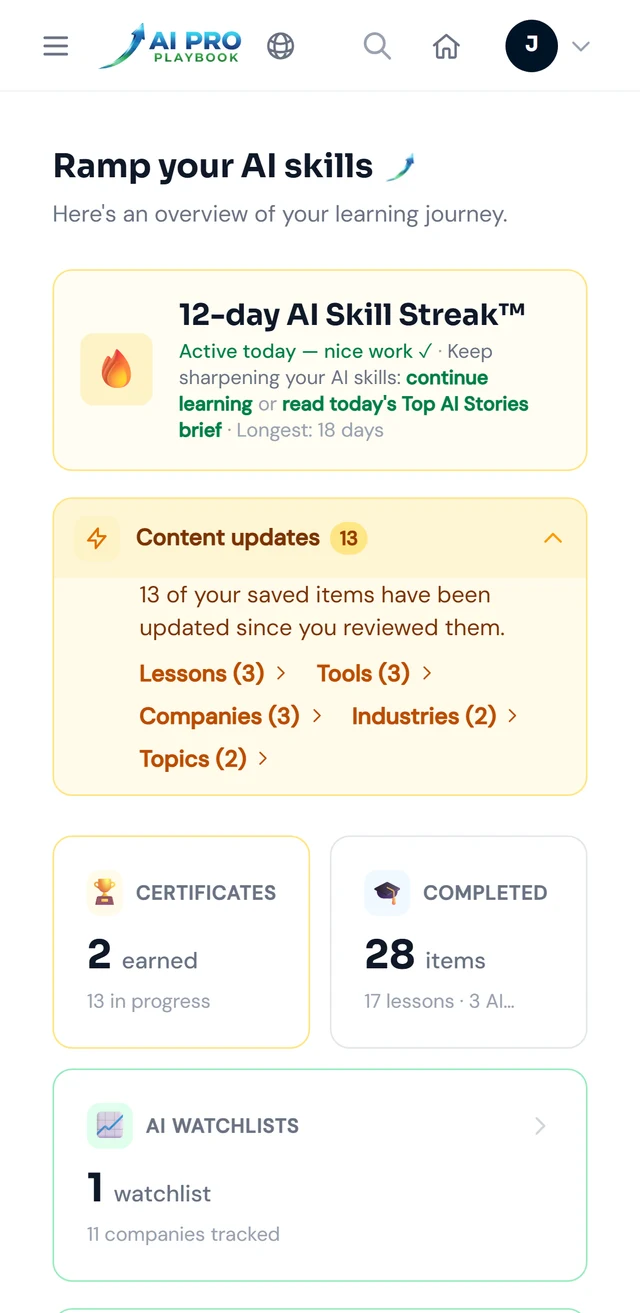
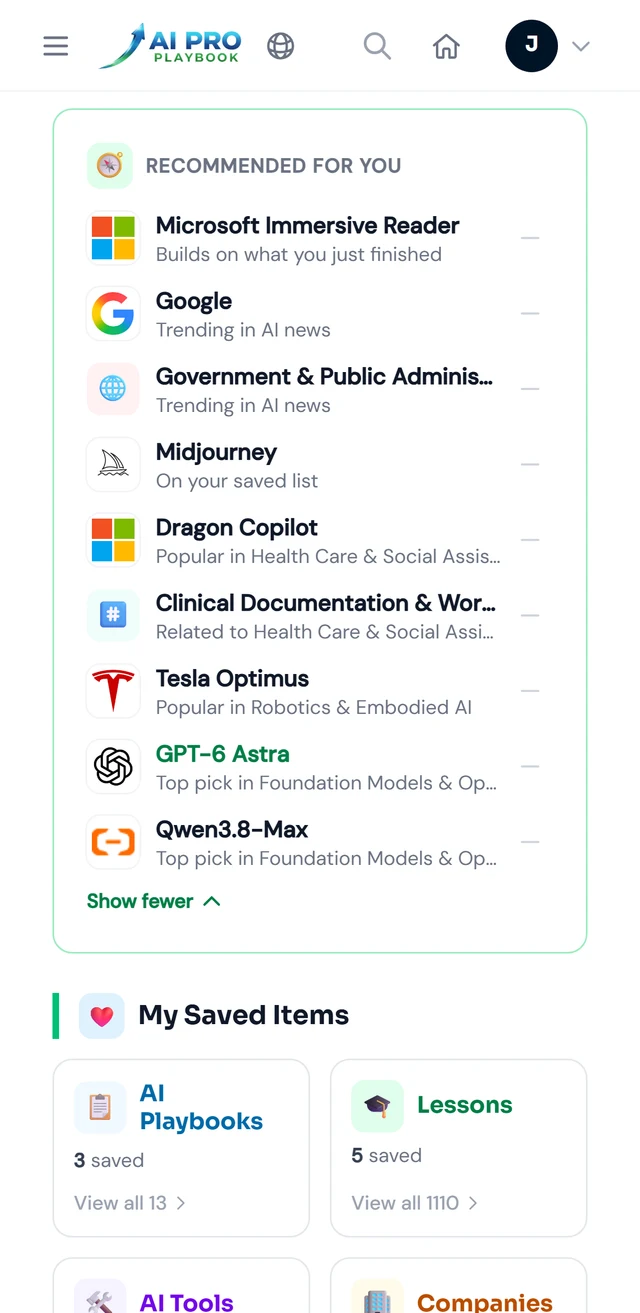
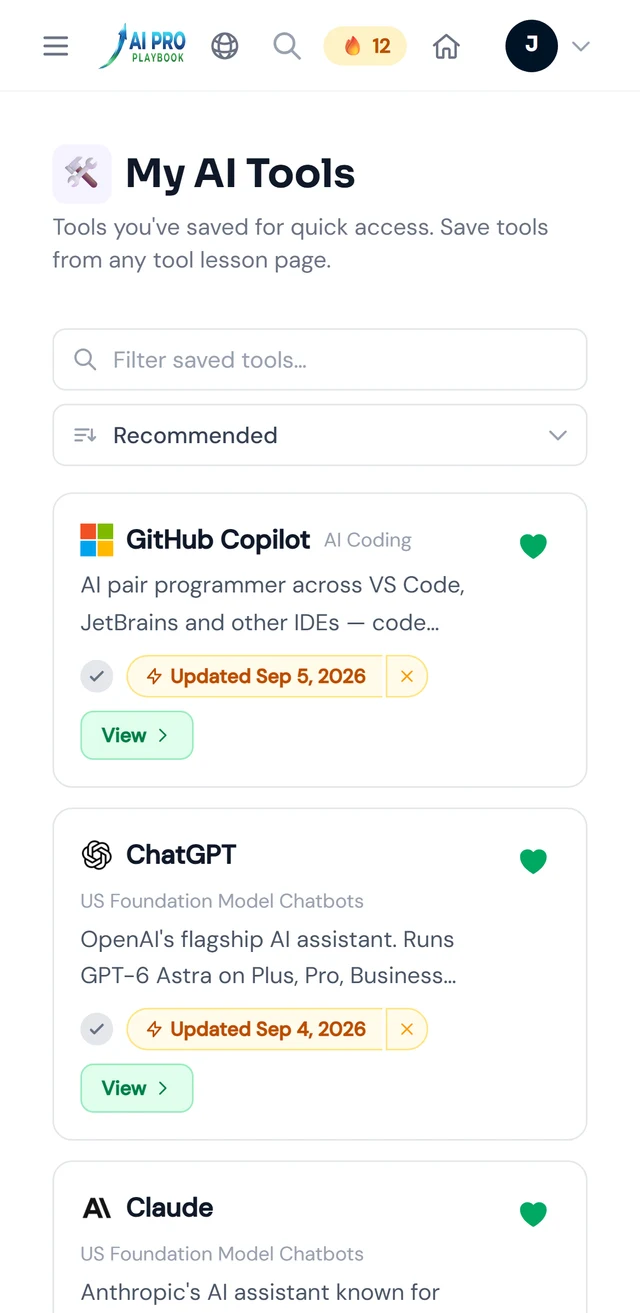
Swipe for Recommended for you and My AI Tools
Your AI Hub — sample data. See desktop view example