
📋About IBM
Updated September 16, 2026IBM (International Business Machines) is one of the world's largest technology companies, founded in 1911. With approximately 264,000 employees and operations in 170+ countries, IBM serves enterprises and governments worldwide.
IBM's AI strategy centers on the watsonx platform: watsonx.ai (model training/inference), watsonx.data (data lakehouse), watsonx.governance (AI lifecycle management), and watsonx Orchestrate (agentic AI with 150+ pre-built agents). The Granite 4.0 model family uses a hybrid Mamba-2/Transformer architecture for 70%+ RAM reduction, with domain-specific variants for finance and healthcare under Apache 2.0.
IBM's GenAI book of business exceeds $12.5 billion cumulative (80% consulting, 20% software). The company holds IDC MarketScape 2025 Leader status for Unified AI Governance and ISO 42001 certification. IBM's focus on governance-first AI with hybrid cloud deployment via Red Hat OpenShift positions it for regulated industries that prioritize compliance over raw model performance.
IBM also anchors the US government's quantum-computing industrial strategy. Under the CHIPS and Science Act, the US Department of Commerce has committed roughly $1 billion to IBM through a letter of intent — the largest single award in a $2.013 billion package across nine quantum firms — in exchange for a minority, non-controlling equity stake in the company. The structure mirrors the federal equity precedent set by the Intel deal and positions IBM as the designated US national champion for fault-tolerant superconducting-qubit quantum computers. While IBM's quantum work sits adjacent to its AI business rather than inside it, the same hybrid-cloud research and enterprise-account muscle that drives watsonx adoption is the operational backbone for quantum service delivery — and IBM's combined AI-plus-quantum positioning is increasingly how the company differentiates against the hyperscaler competition for regulated, long-horizon enterprise compute contracts.
On August 13, 2026 IBM joined OpenAI's Elite partner tier and began embedding GPT-5.6, Codex and ChatGPT Work into IBM Consulting Advantage, the platform its consultants deliver client work through. The agreement creates a dedicated OpenAI practice staffed by thousands of certified consultants and engineers, targeting financial services, government, telecommunications and retail first, and pairs the models with IBM Autonomous Security under OpenAI's Daybreak Cyber Partner Program. No financial terms were disclosed. The move sharpens a division inside IBM's AI business: watsonx remains the governed, hybrid-deployable platform running IBM's own Granite models, while the consulting arm now delivers frontier models it did not build.
🛠️Products & Tools (4)
IBM enterprise AI platform spanning model training (watsonx.ai), data management (watsonx.data), and AI governance (watsonx.governance). Granite open-source models. ISO 42001 certified for regulated industries.
IBM RXN for Chemistry uses AI trained on millions of reactions to predict reaction outcomes and plan retrosynthetic routes from a target molecule, and couples to RoboRXN cloud robotics for autonomous synthesis.
Causal-AI observability with topology-aware incident investigation and watsonx remediation.
The largest fleet of cloud-accessible quantum computers plus the widely used Qiskit toolkit — from a free tier to enterprise, with a public roadmap to a fault-tolerant machine by 2029.
Keep track of the companies you’re watching
- Save the companies you want to follow
- Get ⚡ alerts when your saved companies change
- Every product they ship, cross-linked to 900+ AI tool profiles
- Today’s top AI Stories — the day’s most important AI news, free
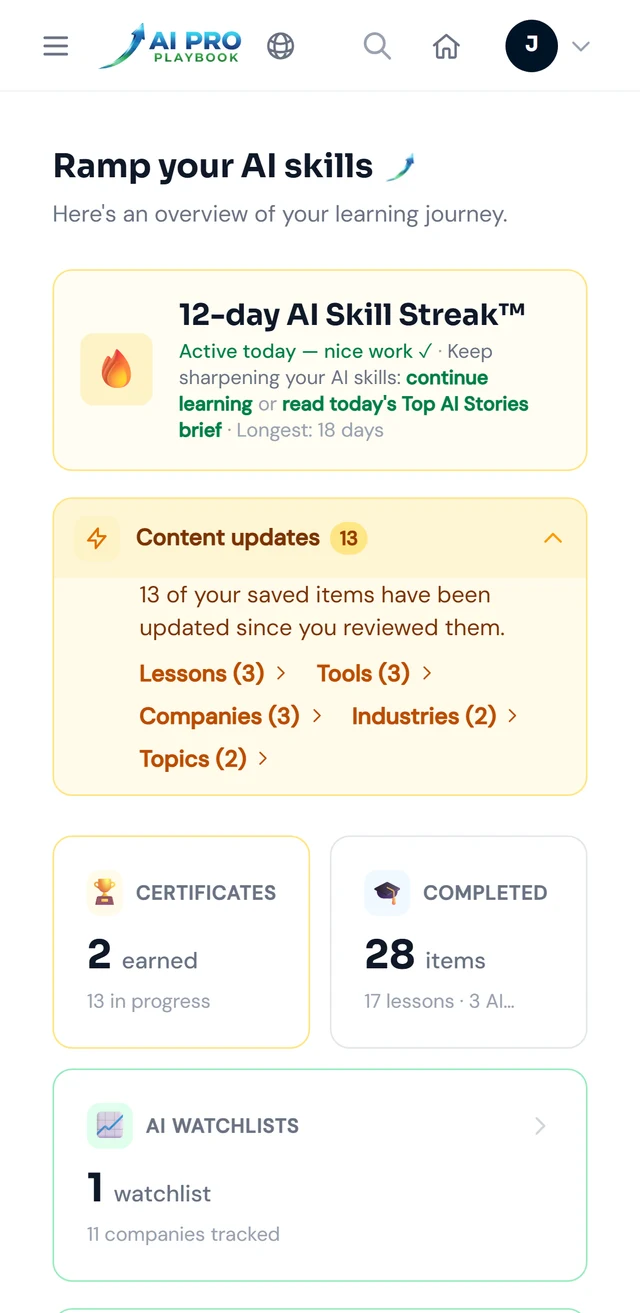
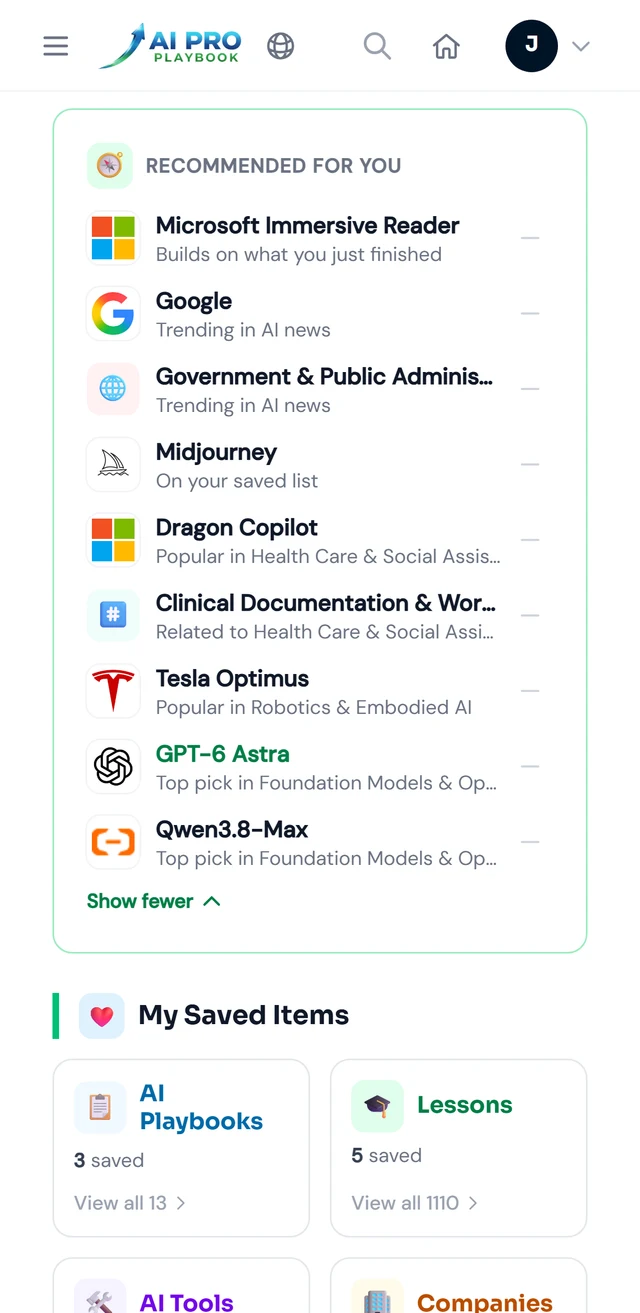
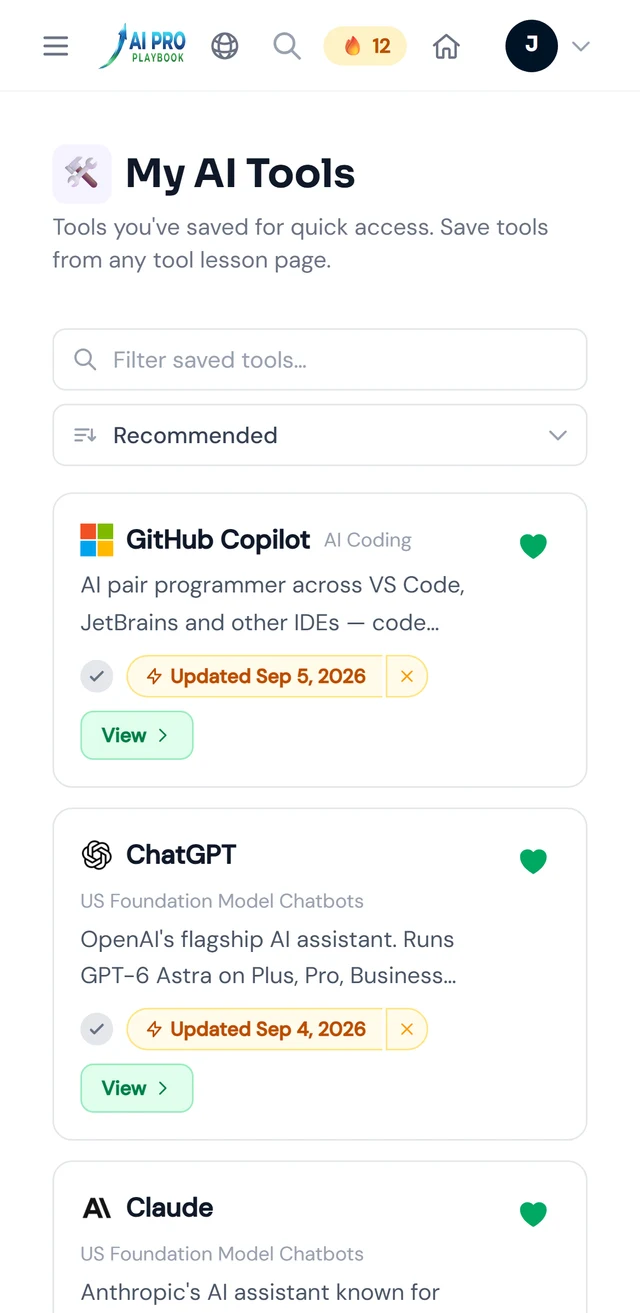
Swipe for Recommended for you and My AI Tools
Your AI Hub — sample data. See desktop view example