
📋About Insilico Medicine
Updated September 19, 2026Insilico Medicine is an AI-driven drug discovery company that builds generative AI software and uses it to find and develop its own medicines. It was founded in 2014 by Alex Zhavoronkov and runs research sites in Cambridge, Massachusetts, Hong Kong, Shanghai and Abu Dhabi. Before going public it was backed by investors including Warburg Pincus, Qiming Venture Partners and B Capital. On December 30, 2025 it listed on the Hong Kong Stock Exchange Main Board under stock code 3696, raising about 2.277 billion Hong Kong dollars, and since August 2026 its shares have also traded over the counter in the United States (OTC: ISLMF). That made it the largest biotech listing in Hong Kong that year by money raised, and the first AI-driven biotech on the Main Board. Eli Lilly, Tencent and Temasek were among its cornerstone investors.
The technology is Pharma.AI, a suite that covers the drug discovery chain from disease biology to the clinic. PandaOmics identifies and ranks disease targets from multi-omics data and the scientific literature. Chemistry42 generates new drug-like molecules rather than screening existing libraries, optimizing them for binding, safety and ease of synthesis. inClinico estimates how likely a clinical trial is to succeed. Newer modules extend the suite to antibody and protein design and to research assistance. Insilico says 10 of the top 20 global pharmaceutical companies work with the platform, and the business has two halves: partnering on discovery programs, and developing its own drug candidates.
Its lead drug, rentosertib, is the clearest test so far of whether AI can supply both the target and the molecule. Insilico's AI identified an enzyme called TNIK as a target in idiopathic pulmonary fibrosis, a progressive scarring of the lungs, and Chemistry42 designed the compound that blocks it. Results from a Phase II trial, published in Nature Medicine in 2025, showed improved lung function against placebo. On September 10, 2026 the first patient was dosed in GENESIS-IPF-3, a 52-week Phase III trial of about 320 patients at 47 centers in China, which Insilico calls the world's first Phase III trial of a drug discovered and developed with generative AI. Most drugs that reach Phase III still fail there, so the trial is a test rather than a verdict. At its listing the company reported more than 30 programs, ten of them cleared for human testing and seven in active clinical development.
Partnerships are how the platform reaches the market, and the deals have grown in size. Sanofi signed a discovery collaboration in 2022 worth up to 1.2 billion dollars. In March 2026 Eli Lilly agreed to pay 115 million dollars upfront, and about 2.75 billion dollars in total plus royalties, for an exclusive worldwide license to oral drug candidates still in preclinical development. In July 2026 Takeda signed a deal to apply Pharma.AI across six of its therapeutic areas, worth about 60 million dollars near term and about 600 million dollars in total, plus royalties, with Takeda taking worldwide rights to any molecule it selects.
For learners, Insilico is the reference case for AI-native drug discovery. Adopters such as Takeda and Eli Lilly run AI alongside a conventional pipeline, while for Insilico the platform is the product and the pipeline is the proof. That makes its milestones unusually easy to read, and it cuts both ways. A Phase III success would be the strongest evidence yet that generative AI can shorten drug development, while a failure would show that faster discovery does not guarantee a better drug.
🛠️Products & Tools (1)
AI-driven drug discovery platform (Pharma.AI suite) covering target identification, generative chemistry, and clinical-trial prediction. Its lead AI-discovered drug, rentosertib, entered a Phase III trial in September 2026.
Keep track of the companies you’re watching
- Save the companies you want to follow
- Get ⚡ alerts when your saved companies change
- Every product they ship, cross-linked to 900+ AI tool profiles
- Today’s top AI Stories — the day’s most important AI news, free
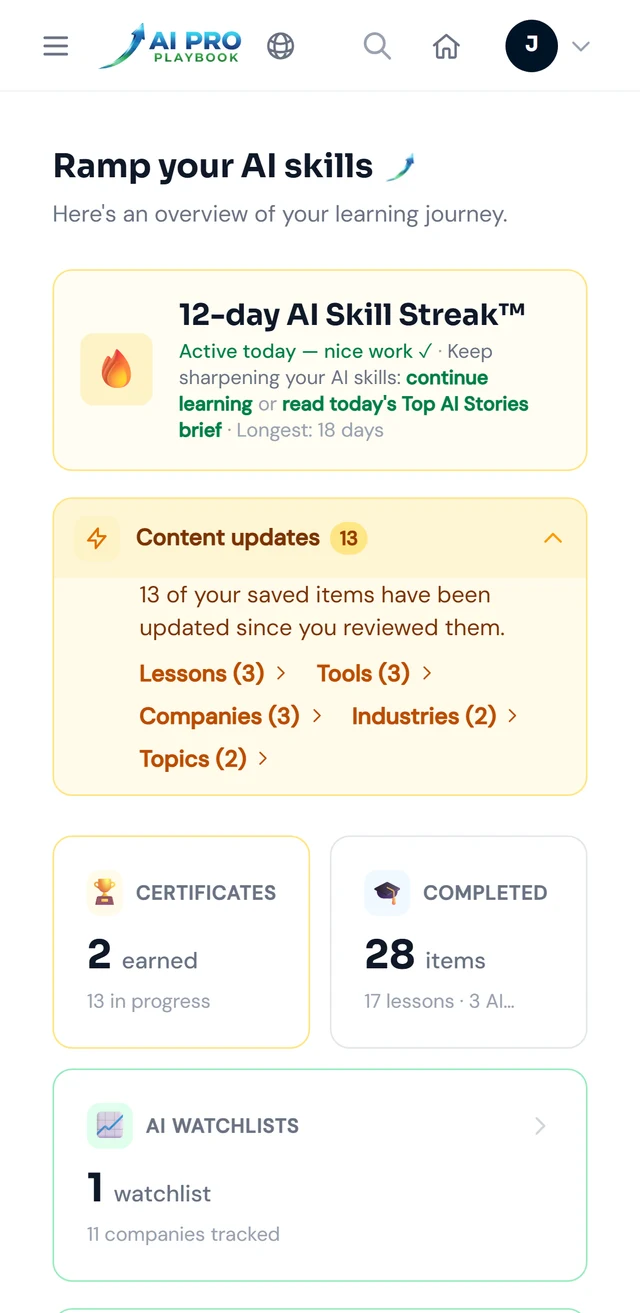
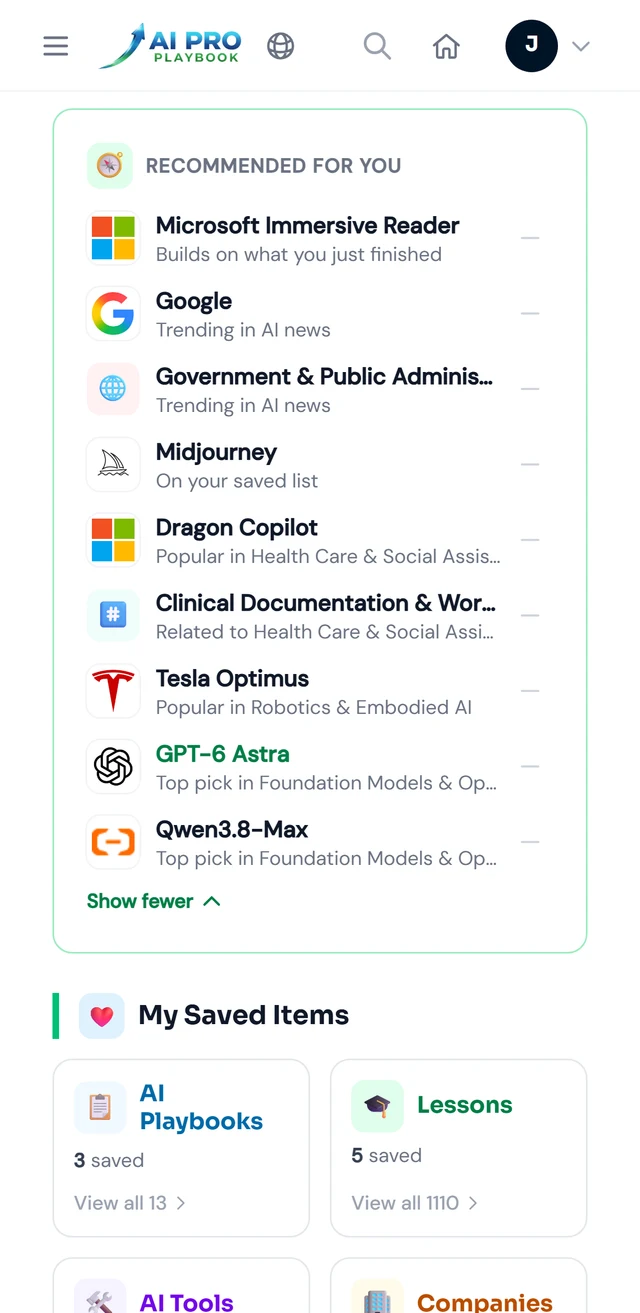
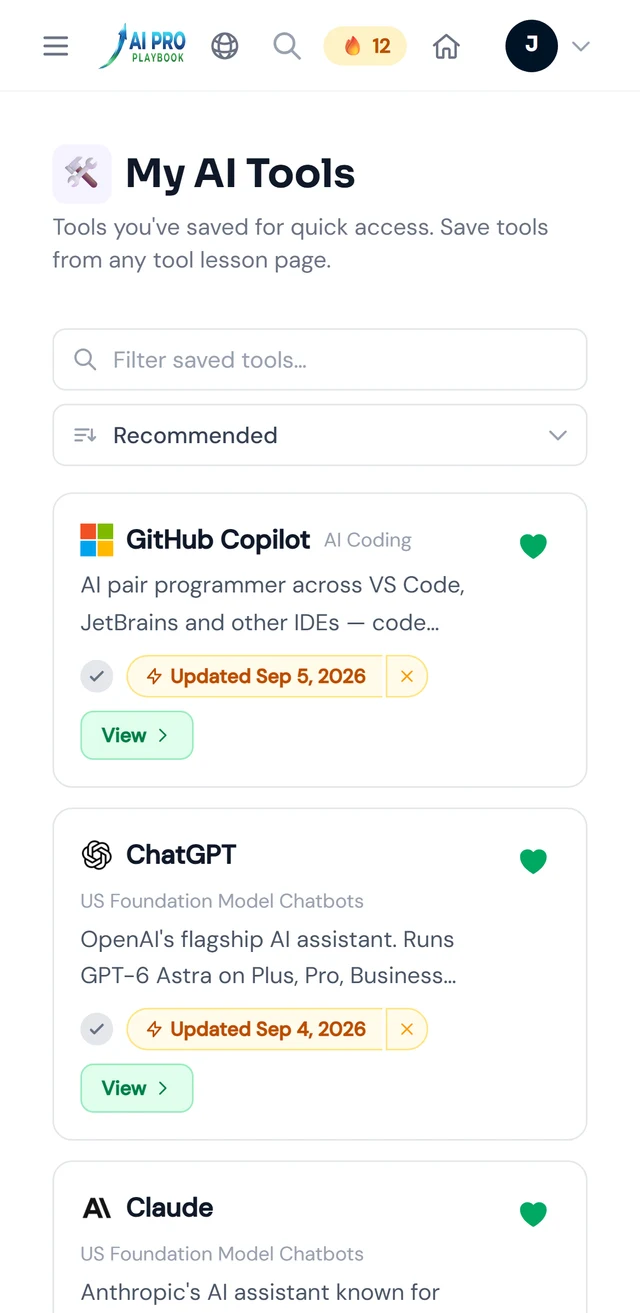
Swipe for Recommended for you and My AI Tools
Your AI Hub — sample data. See desktop view example