
📋About Merck KGaA
Updated September 19, 2026Merck KGaA is a science and technology group headquartered in Darmstadt, Germany, listed in Frankfurt and traded in the United States as an over-the-counter American depositary receipt (OTC: MKKGY). It is a separate, unaffiliated company from Merck & Co., the American drugmaker that owns the Merck name in the United States and Canada, so Merck KGaA operates there as EMD Serono in healthcare, MilliporeSigma in life science and EMD Electronics in chip and display materials. Its best-known products include the multiple sclerosis drug Mavenclad and the Sigma-Aldrich catalog of lab reagents. It appears here mainly as a large AI adopter and a supplier to the AI buildout, with one exception: it does sell an AI product of its own, the AIDDISON drug-design software.
Its defining pattern is toolmaker-and-supplier: the life science arm sells AI software to other drug hunters, while the electronics arm sells materials that AI chips are made from. MilliporeSigma launched AIDDISON in December 2023, a cloud service combining generative AI, machine learning and classical computer-aided drug design. The company says it was trained on more than two decades of experimentally validated pharmaceutical data, searches a chemical space of more than 60 billion compounds, and hands molecules to its Synthia software to propose how each could be made. Its 2025 annual report says its own healthcare business also uses AIDDISON in early discovery. In September 2025 a Siemens agreement began placing those tools inside Luma, the data platform Siemens gained by buying Dotmatics.
On the drug-discovery side it also buys from specialists. In September 2023 it signed a three-program deal with Exscientia, paying 20 million dollars upfront with up to 674 million dollars in milestones. Recursion inherited that collaboration when it acquired Exscientia in November 2024, and still lists it as an active partnership. Its data work runs through Palantir: Syntropy, a joint venture formed in November 2018 for sharing cancer research data, and Athinia, launched in December 2021 as a shared data platform for chip factories and their suppliers. The 2025 annual report still names both. In November 2025 it switched on a high-performance computer in Munich, built with Lenovo and Equinix, for all three businesses.
Electronics is where the AI boom reaches Merck KGaA most directly, as a supplier, not an AI software maker. In December 2025 the company opened its largest semiconductor materials campus, in Kaohsiung, Taiwan, after investing 500 million euros. The site makes thin films, formulation materials and specialty gases that the company calls essential for next-generation logic and memory chips for AI. It capped five years of electronics investment totaling over 3 billion euros.
The honest framing: Merck KGaA's value rests on medicines, lab supplies and chip materials, and its most direct exposure to the AI boom is demand for its chip chemistry, a supplier's exposure rather than an AI capability. AIDDISON is a real, sold product, but its payoff so far is the company's claim of faster design, not a published tally of candidates reaching the clinic. Among catalog peers it stands apart: Gilead procures specialists, Eli Lilly productized its own models through TuneLab, Moderna built hundreds of models in-house, Merck & Co. runs one enterprise AI platform with Google Cloud, and Novo Nordisk spreads its work across OpenAI, Amazon Web Services and Anthropic. Merck KGaA alone also sells AI design software and the materials AI chips are built from.
Keep track of the companies you’re watching
- Save the companies you want to follow
- Get ⚡ alerts when your saved companies change
- Every product they ship, cross-linked to 900+ AI tool profiles
- Today’s top AI Stories — the day’s most important AI news, free
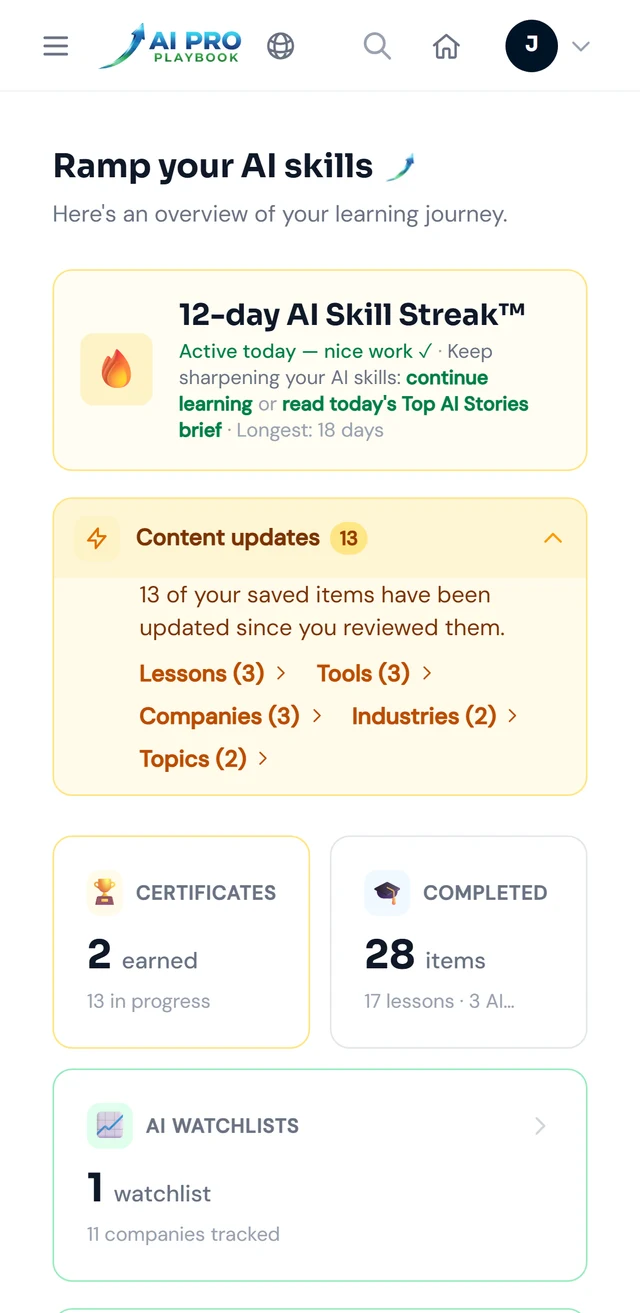
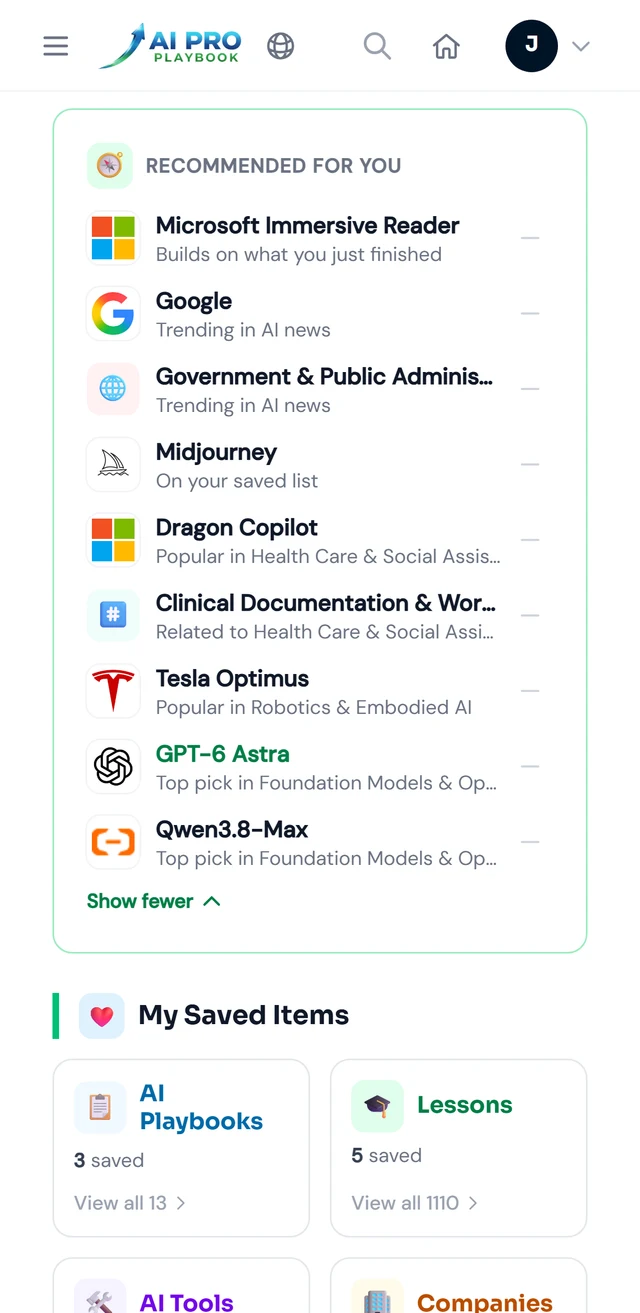
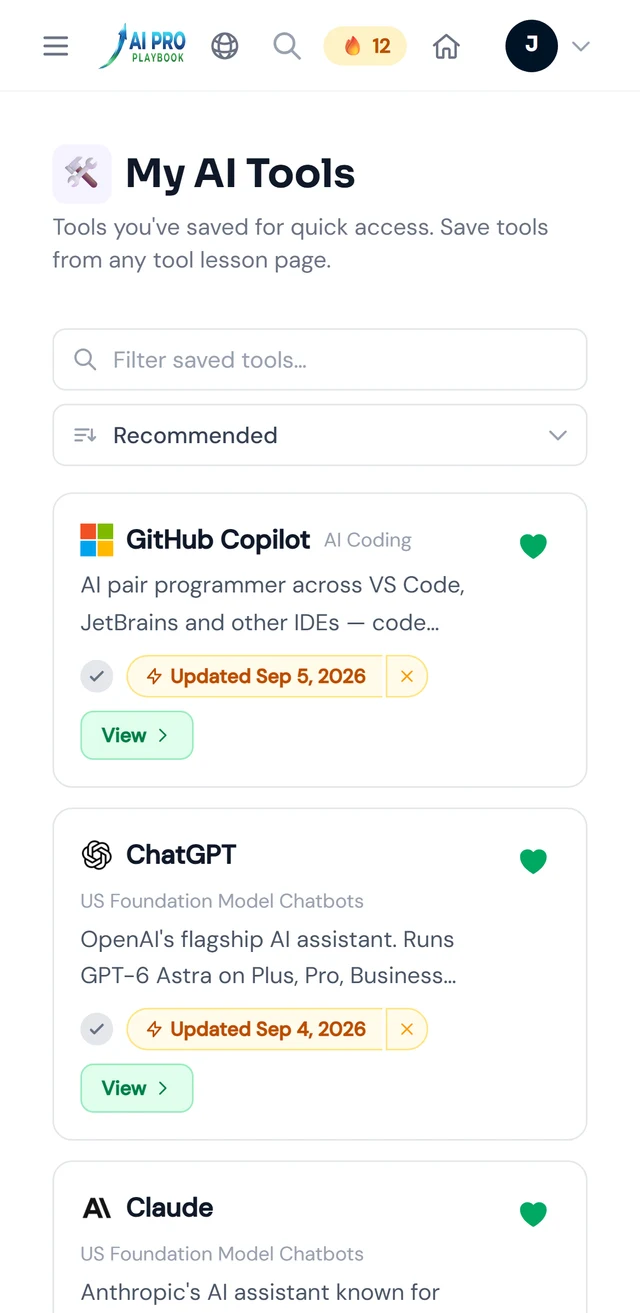
Swipe for Recommended for you and My AI Tools
Your AI Hub — sample data. See desktop view example