
📋About River AI
Updated August 26, 2026River AI is a San Francisco AI lab building what it calls *personal* AI — models a customer trains into their own rather than rents from a central provider. It was incorporated in Nevada on April 20, 2026 and came out of stealth on June 10, founded by Igor Babuschkin, a co-founder of xAI who previously worked on generative modeling and reinforcement learning at Google DeepMind and led large-scale training at OpenAI.
The thesis is deliberately positioned against the direction the frontier labs are taking. Where most labs pitch increasingly capable systems that substitute for human work, Babuschkin's launch post argues for assistants that individuals own and shape, and is explicit that this requires more than a new model: "the stack has to be rebuilt end to end: training, models, the product layer, and new hardware that lets personal AI live close to you." The company frames the goal as owning "the hardware it runs on, the data it learns from, and the intelligence itself."
The first shipped product is an API for customizing open-weight models. It offers LoRA-based supervised fine-tuning with configurable adapter rank, and reinforcement learning through off-policy policy-gradient methods including importance sampling, PPO, clipped importance-sampling policy optimization, and direct reward optimization. Roughly a dozen open-weight base models are available across the Qwen, GLM and Kimi families, reached through a small Python client that submits work asynchronously and polls for results. River's headline operational claim is that an enterprise can complete a complex reinforcement-learning run in 15 to 20 minutes with no infrastructure team, at two to four times the cost saving of closed-source alternatives.
In August 2026, two months after leaving stealth, River raised $1.1 billion across a Series Seed and Series A, led by General Catalyst and AMP PBC, with strategic participation from NVIDIA and AMD Ventures alongside Y Combinator and Temasek. Having both major accelerator vendors on the cap table is notable for a company whose stated roadmap includes its own hardware. The valuation was not disclosed.
Two things are worth holding in view when assessing River. It is very early — a company of a few months with an API, a stated hardware ambition, and no shipped consumer product — and the scale of the raise reflects investor conviction about the founder and the thesis rather than a track record. And the "own your intelligence" framing has a practical limit worth naming: customers fine-tune and reinforcement-train someone else's open-weight base models on River's hosted infrastructure, so what is owned is the adaptation, not the underlying model or the machines it runs on. The hardware that would change that has been described but not built.
🛠️Products & Tools (1)
API for customizing open-weight models — low-rank adaptation fine-tuning and hosted reinforcement learning across the Qwen, GLM and Kimi families, from xAI co-founder Igor Babuschkin.
Keep track of the companies you’re watching
- Save the companies you want to follow
- Get ⚡ alerts when your saved companies change
- Every product they ship, cross-linked to 900+ AI tool profiles
- Today’s top AI Stories — the day’s most important AI news, free
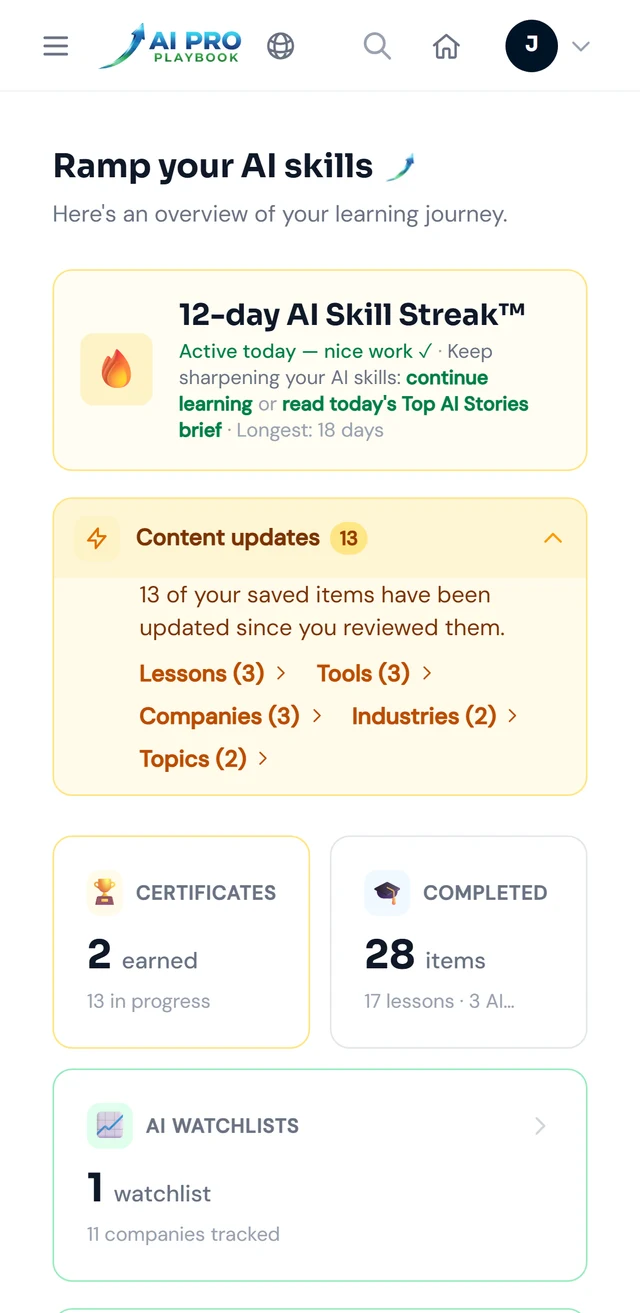
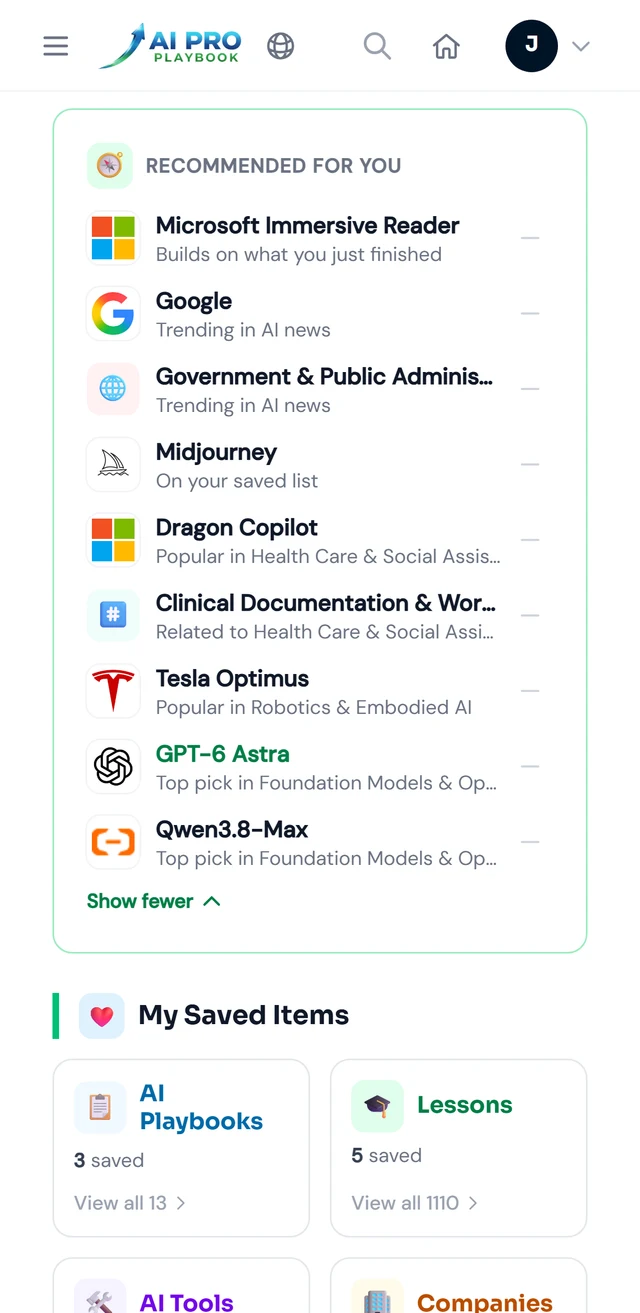
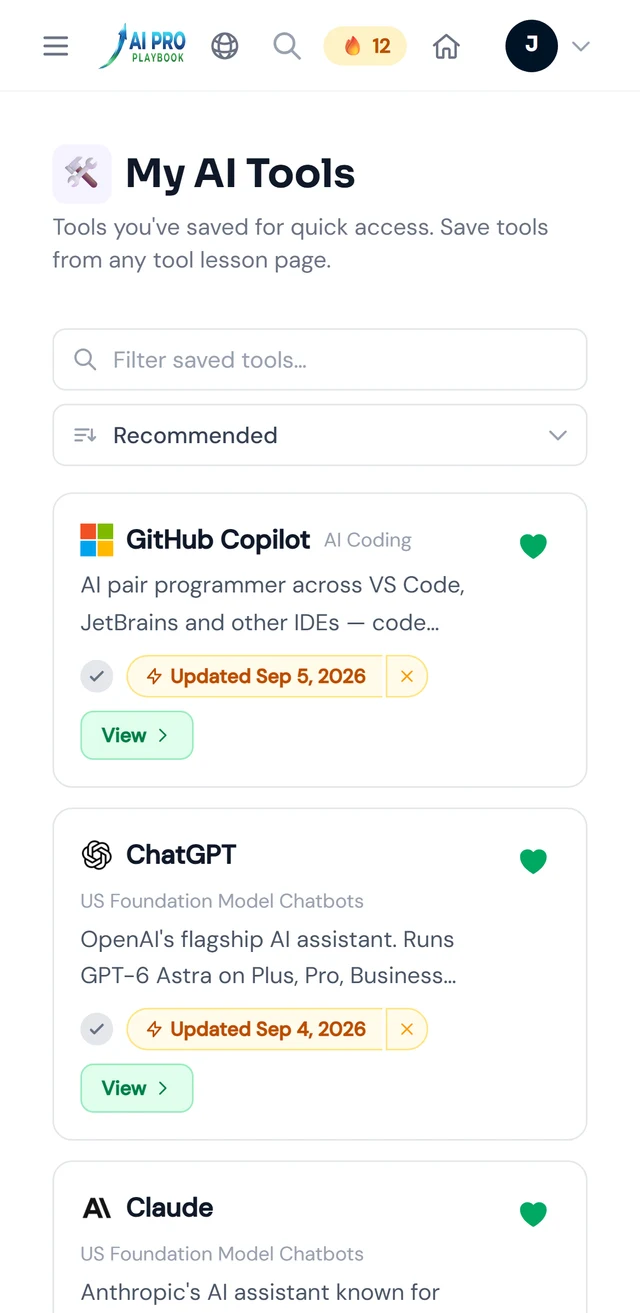
Swipe for Recommended for you and My AI Tools
Your AI Hub — sample data. See desktop view example