
📋About SpaceX
Updated September 17, 2026SpaceX is an aerospace company founded in 2002 by Elon Musk, and since an all-stock acquisition of xAI in February 2026 it is also one of the most consequential players in AI infrastructure. The combined company completed the largest initial public offering in history, listing on the Nasdaq under the ticker SPCX, and then acquired the AI coding startup Cursor for roughly 60 billion dollars — the largest price ever paid for a startup. The consequence is that one company now owns a frontier lab, the compute that trains it, and the editor a large share of professional developers work in. The offering was positioned explicitly around orbital AI data centers, reframing a launch-and-broadband company as an AI compute provider.
The AI infrastructure strategy has three layers. Starlink satellites are designed to double as distributed orbital compute nodes, with filings authorizing constellations pitched explicitly as AI connectivity and a dedicated orbital data center satellite carrying a compute payload cooled by a deployable radiator, to be mass-produced at a vertically integrated campus in Bastrop, Texas. Second, SpaceX is a founding partner in Terafab, the chip foundry joint venture with Tesla, xAI and Intel that would produce radiation-tolerant silicon for orbital inference — an arrangement SpaceX's own filing describes as a general framework carrying no binding commitment. Third, it owns xAI's Colossus training clusters in Memphis and the Grok model family.
That compute is increasingly sold rather than only used. SpaceX leased an entire Colossus cluster to Anthropic in the largest disclosed AI cloud contract to date, agreed to supply roughly 110,000 chips to Google as bridge capacity, and leased further capacity to the open-source lab Reflection AI. The effect is to reposition the combined entity as both a frontier model developer and a neocloud selling capacity to rival labs — including competitors — with even newer buildout partly leased to outside demand rather than reserved for internal training.
The wider Musk-ecosystem integration across Tesla, xAI and SpaceX spans chip design, fabrication, data centers, ground deployment and orbital compute, and is one of the most ambitious vertical-integration bets in the industry. Successful execution would create the first credible non-NVIDIA frontier AI platform at scale; sceptics point to Tesla's lack of foundry experience and to chip timelines that have already slipped by years.
Two constraints are worth stating plainly. Power has become a manufacturing problem: SpaceX is integrating backwards into casting turbine blades and vanes, on the argument that castings rather than turbines are the bottleneck in bringing new gas generation online — which carries an air-quality cost, and the company's Memphis turbines have drawn repeated accusations of operating without required permits and pollution controls. And the orbital-compute plan faces an unresolved environmental question, with petitioners asking the Federal Communications Commission to pause licensing of space-based data centers pending a programmatic review, citing satellite burn-up on re-entry and the faster replacement cycle that putting compute in orbit implies.
🛠️Products & Tools (2)
SpaceX's third-generation satellite platform — 1 Tbps per satellite, terabit-class laser mesh, 60 per Starship launch — designed to double as distributed orbital AI compute nodes. January 2026 FCC filing requests up to 1 million satellites functioning as orbital AI data centers.
SpaceX's government and national-security space stack — a militarized variant of Starlink for secure communications, hosted payloads, and Earth observation. Its proliferated low Earth orbit constellation exceeds 200 satellites, with AI essential to manage the network and process sensor data on orbit. Won a $2.29 billion US Space Force SDN Backbone contract in May 2026.
Keep track of the companies you’re watching
- Save the companies you want to follow
- Get ⚡ alerts when your saved companies change
- Every product they ship, cross-linked to 900+ AI tool profiles
- Today’s top AI Stories — the day’s most important AI news, free
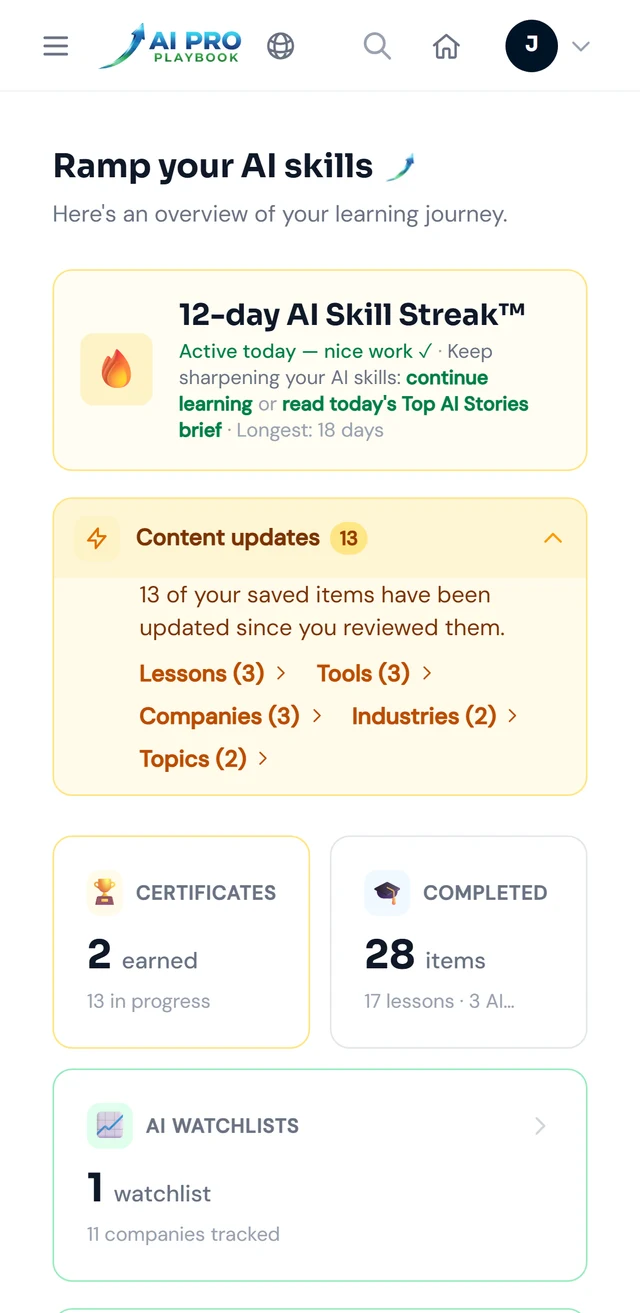
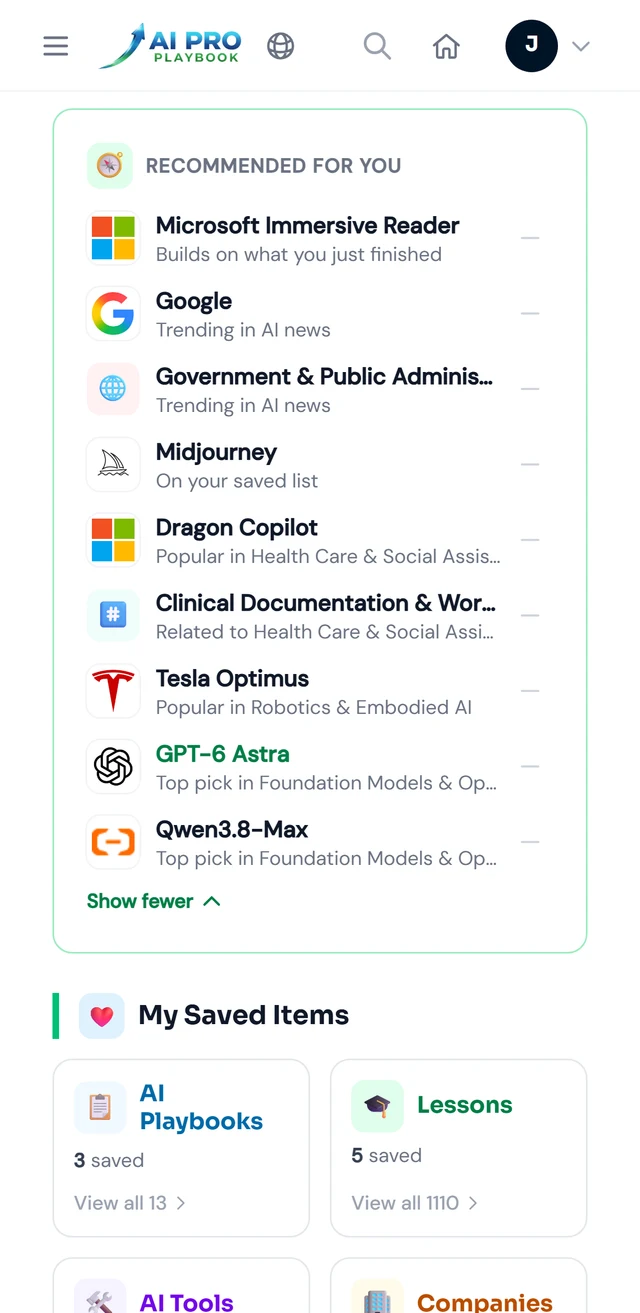
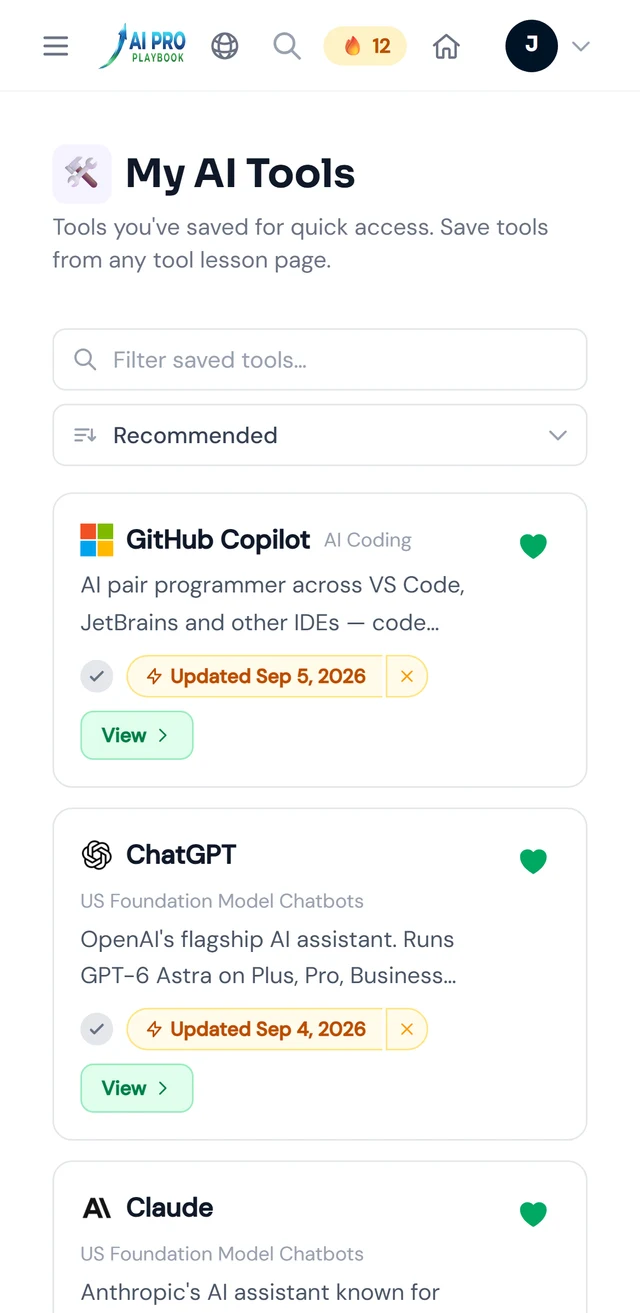
Swipe for Recommended for you and My AI Tools
Your AI Hub — sample data. See desktop view example