
📋About Spotify
Updated September 16, 2026Spotify is the world's largest music-streaming service by subscribers and revenue, approximately 640 million monthly active users, and approximately 250 million Premium paid subscribers. Founded in 2006 by Daniel Ek and Martin Lorentzon in Stockholm, the company went public on NYSE via direct listing in 2018 and trades as SPOT.
Spotify operates the largest catalog of any streaming service — over 100 million songs, 6 million+ podcast titles, and a growing audiobook catalog. The platform's strategic moves into podcasting (the 2019-2022 acquisitions of Gimlet Media, Anchor, Parcast, Megaphone, and the Joe Rogan licensing deal) made Spotify the largest podcast platform by listening hours, and its 2022 entry into audiobooks via the Findaway acquisition expanded its content scope further. Primary revenue streams are Premium subscriptions (~85%) and ad-supported listening (~15%).
Spotify has been one of the most-developed AI applications in consumer technology for over a decade. Discover Weekly (launched 2015) was an early ML-driven personalization breakthrough that has shaped subsequent industry expectations; Daily Mix, Release Radar, and the Made For You collection extended that lineage across the listening experience. The Spotify DJ feature — powered by OpenAI's ChatGPT for AI host commentary plus Spotify's own ML for music selection — is one of the most-used consumer AI products globally, and Spotify Wrapped uses ML extensively. The flagship product expansion is Studio by Spotify Labs, a standalone desktop application whose AI agent browses the web and accesses users' calendar, inbox, and notes (with explicit permission) to generate personalized podcasts, briefings, and playlists — positioned explicitly as a competitor to Google's NotebookLM with agentic capabilities NotebookLM does not offer.
Spotify sits at the center of the AI-music-rights debate. The company's licensing agreement with Universal Music Group — which allows Premium subscribers to create AI-generated covers and remixes of UMG artists' songs with revenue shared back to participating artists — is the music industry's most prominent licensed AI-music framework to date. The deal is framed around three principles (consent, credit, compensation) and contrasts sharply with Suno and Udio, which are being sued by the major labels for training on their catalogs without permission. Spotify's strategic relationships with UMG, Sony, and Warner position it as the labels' preferred consumer-facing AI-music partner.
In August 2026 the framework widened from the majors to the independents. Merlin — the licensing body representing independent labels and distributors across more than 70 countries, roughly 15% of the global recorded-music market — signed its own agreement covering the same fan-made covers and remixes product. Member labels choose whether their artists participate, and the tool ships as a paid add-on so participation carries a revenue share. With UMG and Merlin both inside it, the majority of recorded music by market share is now covered by a licensed, opt-in AI-derivative framework, which is a materially different position from the litigation the labels are pursuing against Suno and Udio.
Spotify has separately moved on AI *identity* rather than AI *music*. An AI Persona badge marks artist profiles whose public identity does not represent a real person. Artists can self-disclose through Spotify for Artists, and Spotify additionally applies a Likely AI Persona label to profiles that it judges — through a mix of human and automated review — to present photorealistic AI-generated identities, starting with artists past defined audience thresholds. The badges surface on the profile, in search and on playlist track rows from mid-September 2026. By default those artists are excluded from editorial and algorithmic recommendations unless a listener chooses to follow them, which makes the label a distribution decision rather than only a disclosure. Spotify is careful to separate the two questions: the badge describes who the artist is, while its AI Credits and SongDNA tools cover how a track was made.
Keep track of the companies you’re watching
- Save the companies you want to follow
- Get ⚡ alerts when your saved companies change
- Every product they ship, cross-linked to 900+ AI tool profiles
- Today’s top AI Stories — the day’s most important AI news, free
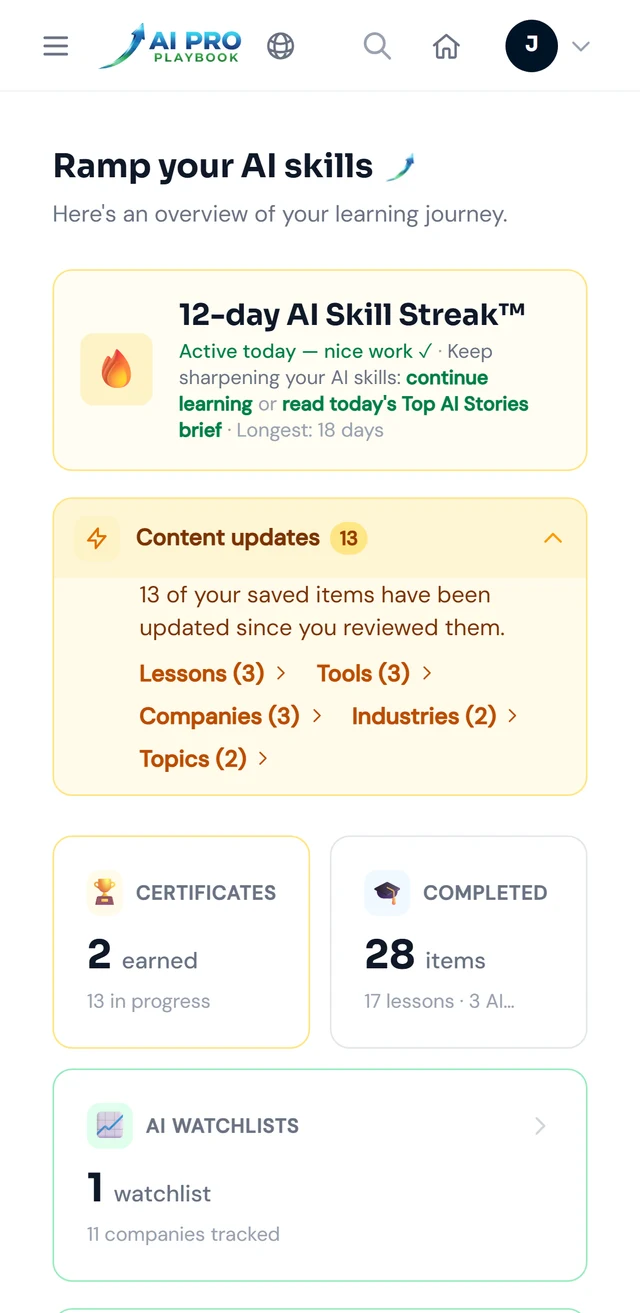
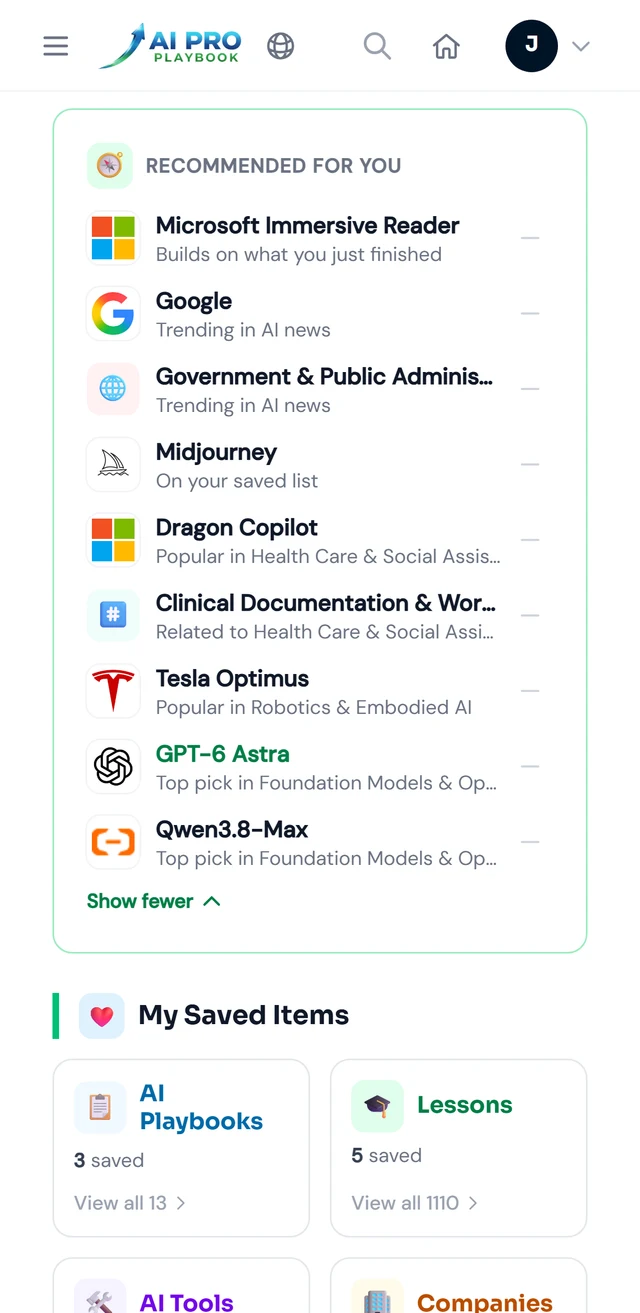
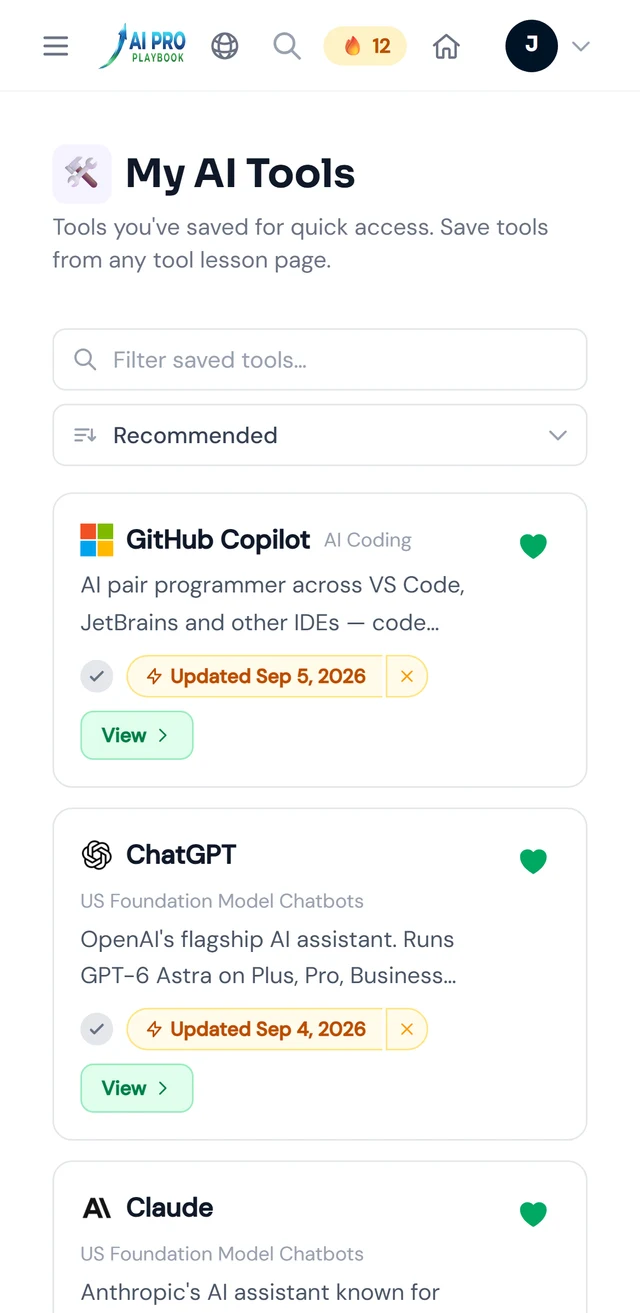
Swipe for Recommended for you and My AI Tools
Your AI Hub — sample data. See desktop view example