
📋About Takeda Pharmaceutical
Updated September 19, 2026Takeda Pharmaceutical is a Japanese biopharmaceutical company founded as an Osaka medicine shop in 1781 and now headquartered in Tokyo, with American depositary shares listed on the New York Stock Exchange (NYSE: TAK). Its best-known medicines include Entyvio for inflammatory bowel disease, Takhzyro for hereditary angioedema, the dengue vaccine Qdenga and a large franchise of plasma-derived therapies such as immune globulins. It appears here not as an AI vendor but as a large AI adopter: Takeda sells no AI product, and uses machine learning across discovery, clinical development, manufacturing and its own workforce.
Its defining AI pattern is the ecosystem-builder. Rather than building its own discovery models, Takeda signs several specialist platforms at once, each covering a different kind of molecule, and pays mostly on success; its latest annual report calls this an AI ecosystem of strategic partners. In October 2025, Nabla Bio announced a second collaboration, extending work begun in 2022, to apply its Joint Atomic Model to designing antibodies and other protein therapeutics from scratch, with success-based payments that could exceed one billion dollars. In February 2026, Iambic announced a deal giving Takeda its NeuralPLexer and Enchant models for small-molecule design in oncology, gastrointestinal and inflammatory disease, with success-based payments that could exceed 1.7 billion dollars.
In July 2026, Insilico Medicine added a collaboration using its Pharma.AI platform across six Takeda therapeutic areas, worth about 60 million dollars near term and about 600 million dollars in total, plus royalties, with Takeda holding exclusive worldwide rights to any selected molecule. In June 2026 it also began deploying Boltz's proprietary BoltzMol-1 and BoltzProt-1 design models across its research organization, with Boltz scientists fine-tuning models for selected programs; Takeda keeps ownership of the compounds, and no terms were disclosed. Takeda's most advanced computationally designed drug arrived by acquisition instead. In February 2023 it bought zasocitinib, an oral tyrosine kinase 2 (TYK2) inhibitor, from Nimbus Therapeutics for about four billion dollars upfront. Schrödinger, a Nimbus co-founder, says the molecule was co-invented with its physics-based free energy calculations, which is computational chemistry rather than machine learning. The US Food and Drug Administration accepted zasocitinib for priority review in plaque psoriasis in September 2026.
Inside the company, the figures are measured rather than projected. Takeda reports that 63.4 percent of its workforce was actively using generative AI tools as of March 2026, up from 46.6 percent a year earlier, after it shifted spending from general-purpose chat assistants toward AI agents embedded in specific processes. One clinical data team used an in-house generative AI assistant to create synthetic test data, replacing an external vendor. At its plant in Lessines, Belgium, Takeda runs more than 170 AI-enabled predictive maintenance agents and plans to extend them to other sites by 2027.
The honest framing: Takeda's value rests on Entyvio, its plasma franchise and a late-stage pipeline, with AI as a lever on top. The headline deal values are mostly success-based milestones, paid only if programs advance, so they measure ambition rather than results; what is measured is workforce adoption and one computationally designed drug nearing a decision. Gilead is also partnership-first, but Takeda runs platforms for small molecules and proteins in parallel and paid billions upfront for a designed asset, while Eli Lilly productized its own models, Moderna built its own, Merck & Co. standardized on Google Cloud and Novo Nordisk mixes several vendors.
Keep track of the companies you’re watching
- Save the companies you want to follow
- Get ⚡ alerts when your saved companies change
- Every product they ship, cross-linked to 900+ AI tool profiles
- Today’s top AI Stories — the day’s most important AI news, free
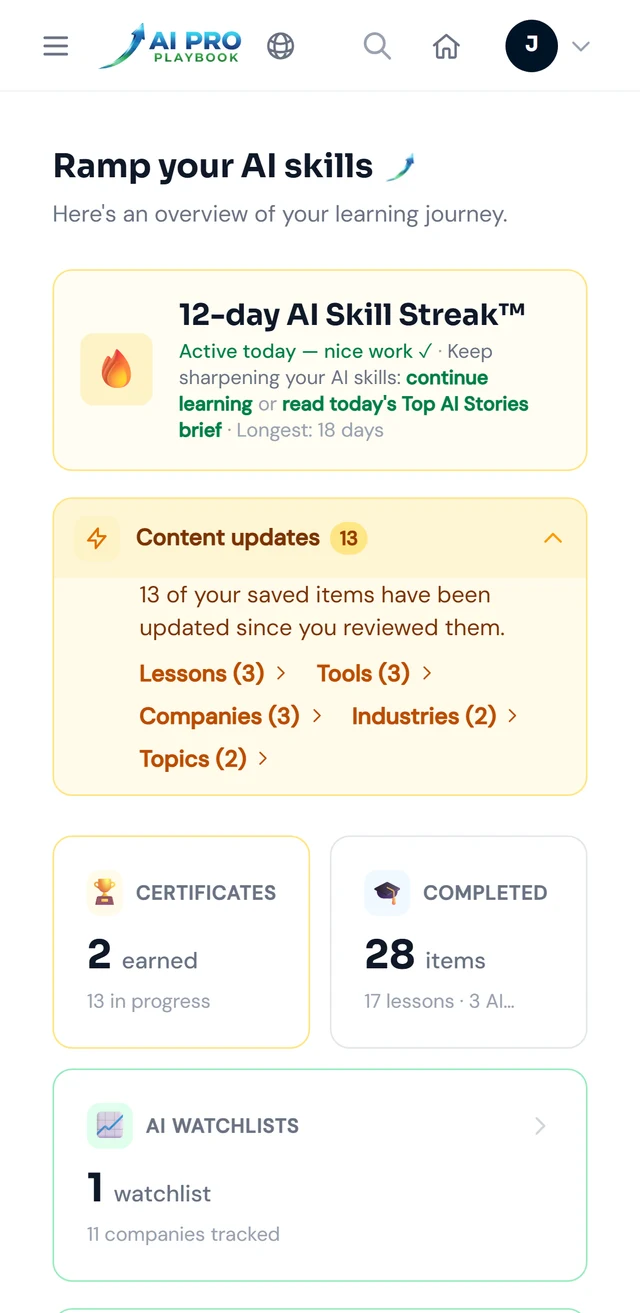
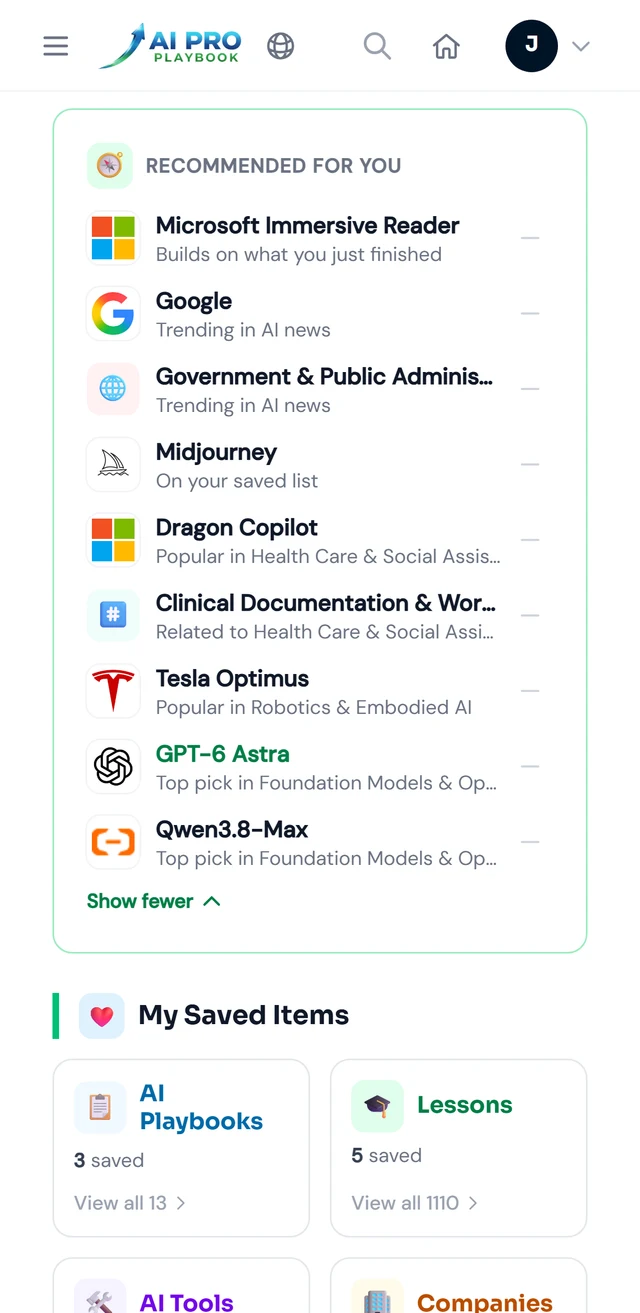
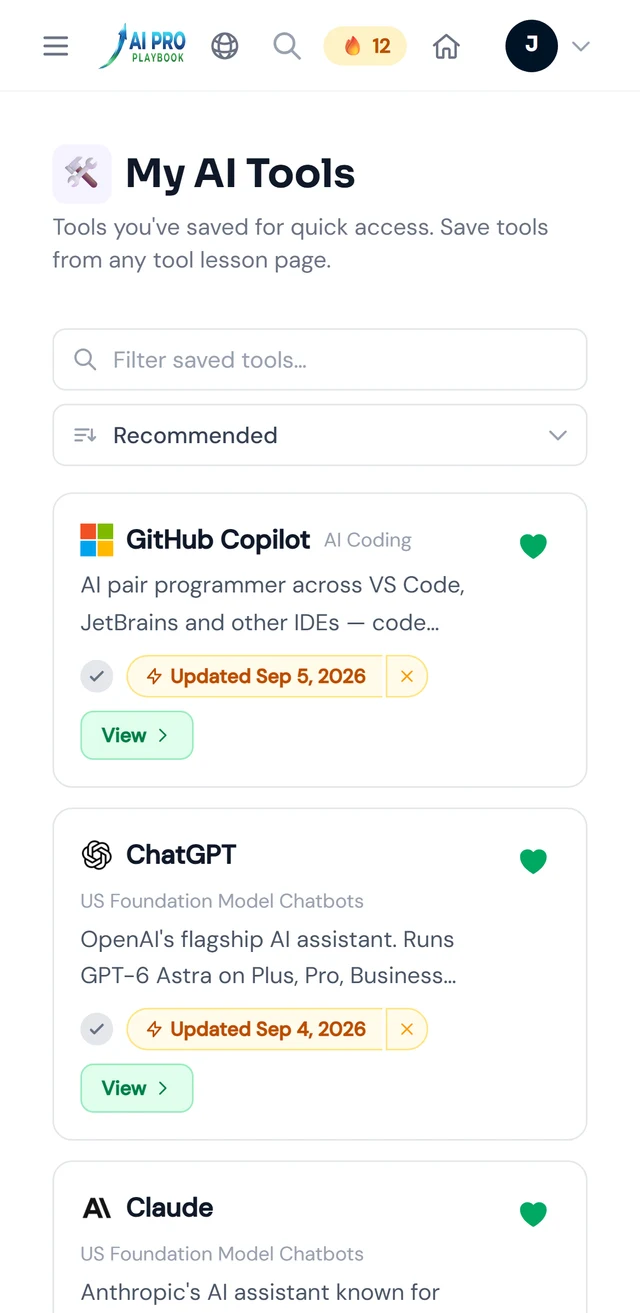
Swipe for Recommended for you and My AI Tools
Your AI Hub — sample data. See desktop view example