
📋About Verizon
Updated September 16, 2026Verizon Communications Inc. is one of the largest US telecommunications carriers and is currently the largest US mobile-wireless carrier by revenue. The company was formed in 2000 from the merger of Bell Atlantic and GTE Corporation, with the addition of MCI WorldCom's broadband assets via subsequent transactions. Verizon trades on NYSE as VZ and employs approximately 105,000 US workers. The company operates Verizon Wireless (~145 million retail postpaid subscribers, the largest US carrier by revenue) and Verizon Business (enterprise services). The 2021 sale of Verizon Media (formerly Yahoo and AOL) marked the company's strategic refocus on core telecommunications.
Verizon's 5G deployment has been the largest US carrier capital program over the past several years. The C-Band 5G expansion ($45 billion+ in spectrum and infrastructure investment) and the parallel Fios fiber-to-the-home build (now passing 16+ million homes) have been the major investment priorities. Verizon Business serves enterprise customers across mobile, networking (SD-WAN), security, and managed-services. The company's public-sector federal business is a significant revenue contributor.
Verizon's AI strategy includes network operations AI (anomaly detection, traffic-routing optimization, predictive maintenance), customer-care AI (the My Verizon app uses Google's Dialogflow plus internal models for customer-service automation), and Verizon Business managed-services AI (network-operations-center automation for enterprise customers). The 2024 partnership with Google Cloud expanded Verizon's AI infrastructure and customer-facing AI offerings. Network slicing — a 5G-specific capability for delivering differentiated network services to specific customer use cases — increasingly relies on AI for resource allocation decisions. Verizon has publicly committed to Ask Verizon-style internal AI deployments in customer-care and field-operations contexts. The company's strategic positioning around AI emphasizes the "AI for the network" angle (using AI to operate the carrier business more efficiently) more than customer-facing generative AI products.
Keep track of the companies you’re watching
- Save the companies you want to follow
- Get ⚡ alerts when your saved companies change
- Every product they ship, cross-linked to 900+ AI tool profiles
- Today’s top AI Stories — the day’s most important AI news, free
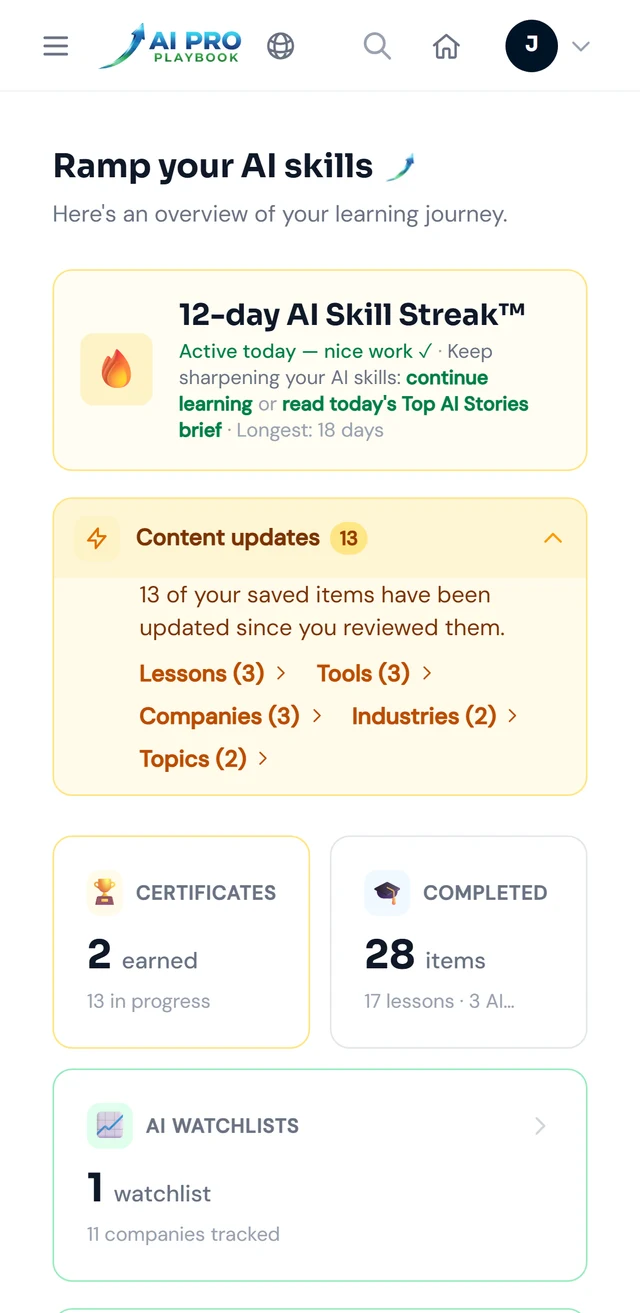
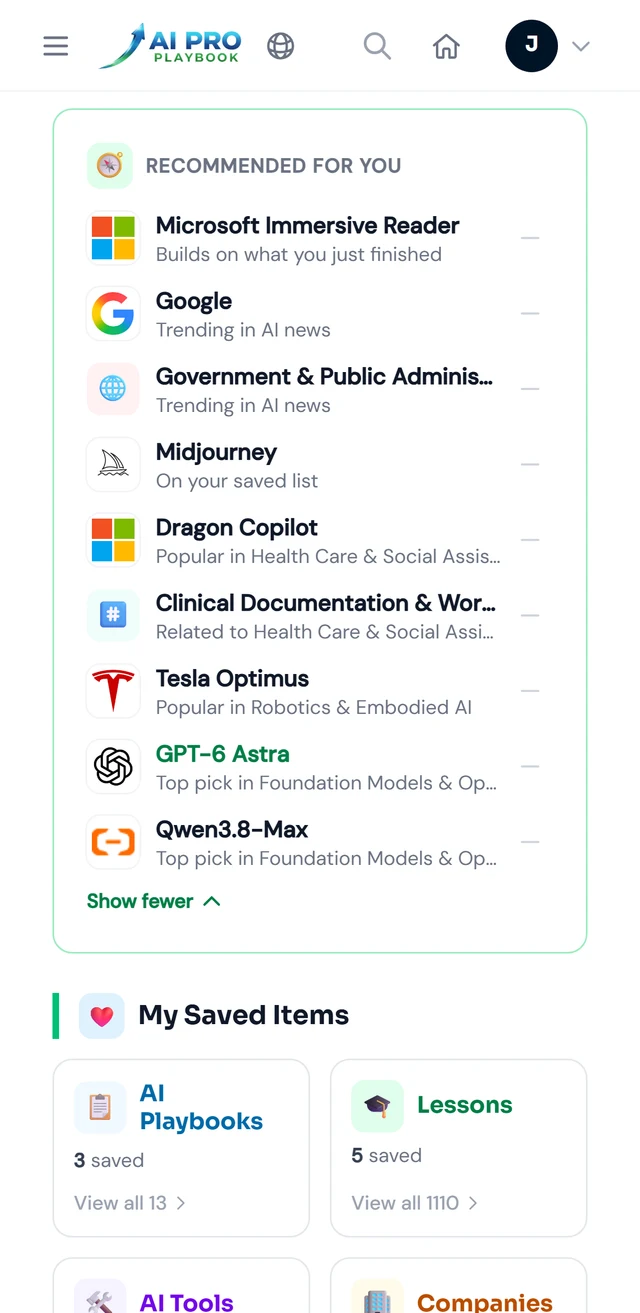
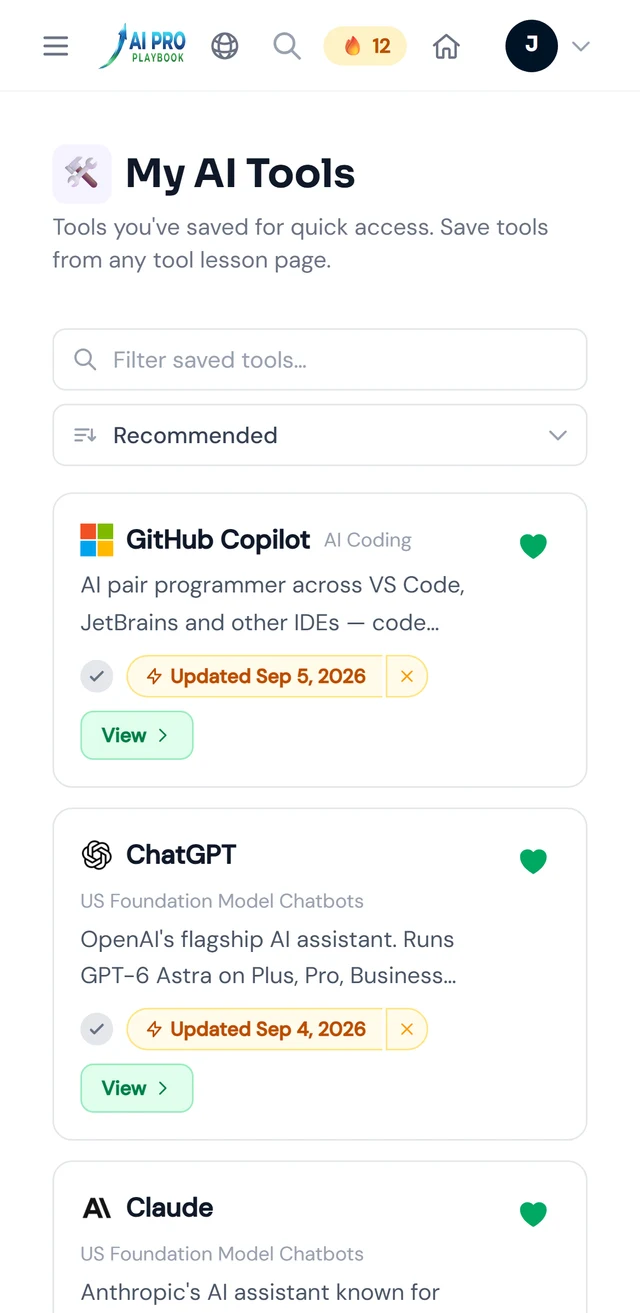
Swipe for Recommended for you and My AI Tools
Your AI Hub — sample data. See desktop view example