
📋About Xanadu
Updated September 16, 2026Xanadu is a quantum computing company founded in 2016 by Christian Weedbrook and headquartered in Toronto, Canada. The company is publicly traded, dual-listed on Nasdaq and the Toronto Stock Exchange under the ticker XNDU. Its defining technical choice is photonic quantum computing — encoding quantum information in squeezed states of light rather than in superconducting circuits or trapped ions. This approach lets Xanadu's machines run at or near room temperature and connect to one another over standard optical fiber, two properties the company treats as central to scaling.
Xanadu's hardware reflects that networked strategy. Aurora, published in the journal Nature, is described as the first modular, networked, and scalable photonic quantum computer, built from 35 photonic chips linked by 13 kilometers of optical fiber. Borealis is a 216-qubit photonic system that is reachable through the cloud via Xanadu Cloud and Amazon Web Services Braket, allowing researchers to run programs on real photonic hardware without owning any of it.
The company's most widely used product is PennyLane, its open-source software framework and the leading tool for quantum machine learning. PennyLane is cross-compatible with PyTorch, TensorFlow, and JAX, and supports automatic differentiation across quantum circuits, so researchers can build and train hybrid quantum-classical models using the same gradient-based methods that train neural networks. Because PennyLane is free and runs on local simulators, it serves as an accessible on-ramp to quantum machine learning, with a clear path to running the same code on Xanadu's photonic hardware through the cloud.
🛠️Products & Tools (1)
Photonic quantum computing (Aurora, Borealis) plus PennyLane — the leading open-source quantum machine-learning framework, cross-compatible with PyTorch, TensorFlow, and JAX (Nasdaq: XNDU).
Keep track of the companies you’re watching
- Save the companies you want to follow
- Get ⚡ alerts when your saved companies change
- Every product they ship, cross-linked to 900+ AI tool profiles
- Today’s top AI Stories — the day’s most important AI news, free
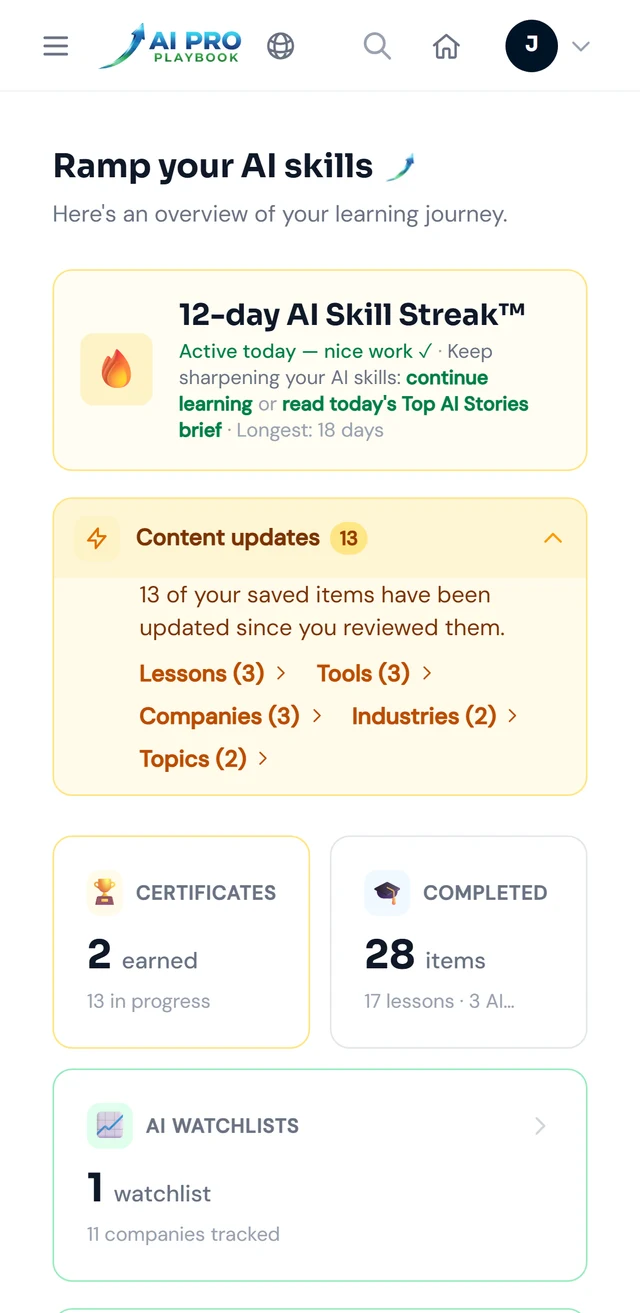
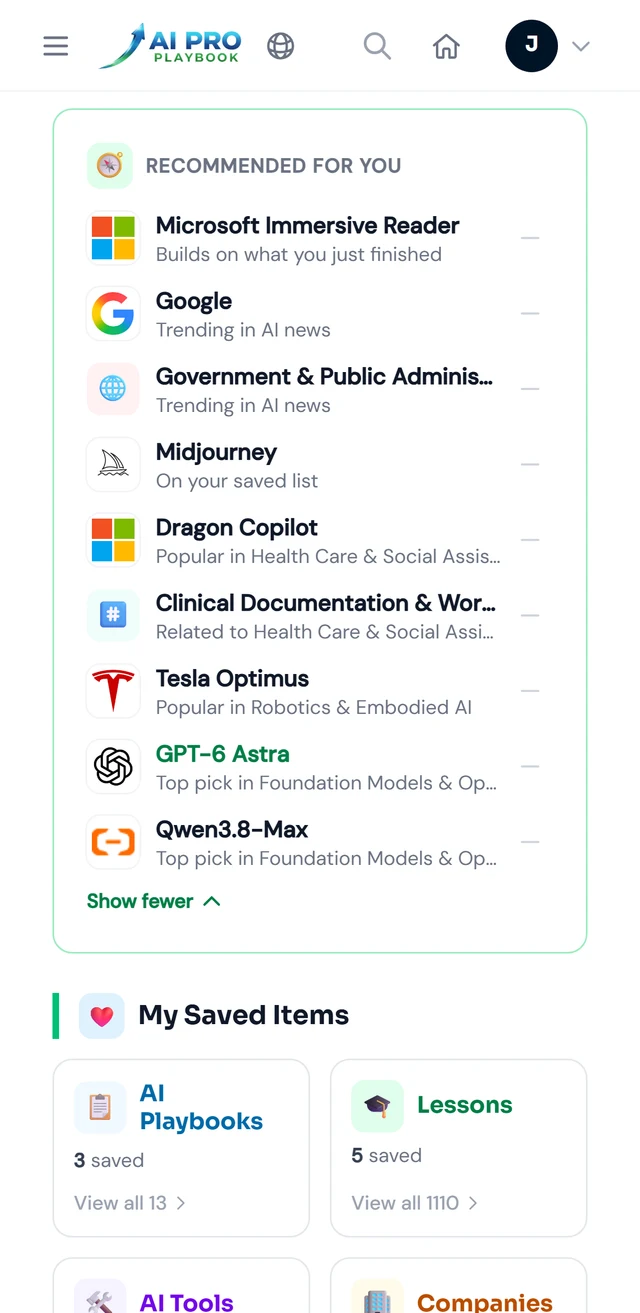
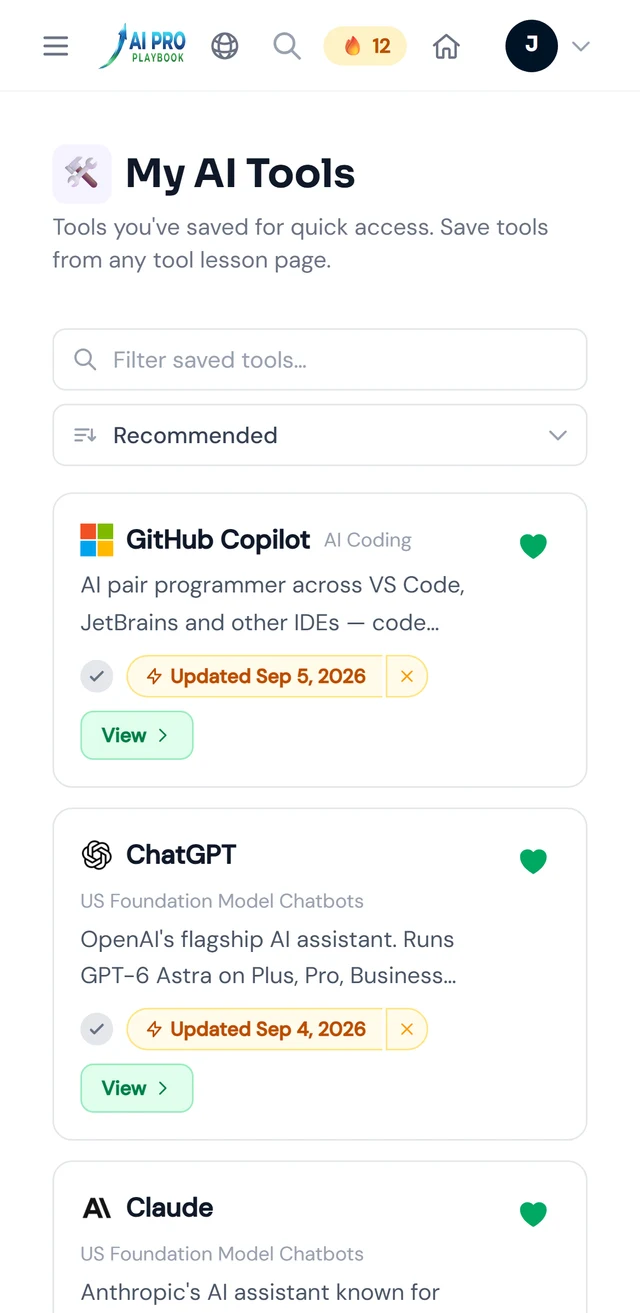
Swipe for Recommended for you and My AI Tools
Your AI Hub — sample data. See desktop view example