🏭Industry Overview
Updated May 16, 2026Higher Education (NAICS 6113) covers four-year colleges, research universities, graduate schools, and professional schools (law, medicine, business). The US system includes ~4,000 degree-granting institutions enrolling ~18 million students, with combined annual revenue exceeding $700 billion across tuition, research grants, philanthropy, and auxiliary enterprises. The top-tier R1 research universities (Harvard, Stanford, MIT, Caltech, Princeton, Yale, Berkeley, Michigan, etc.) collectively attract the largest share of NSF and NIH research funding. State flagship systems (UC, SUNY, Texas, UCLA system) educate the bulk of public-university students. The for-profit / online segment — Southern New Hampshire University, Arizona State Online, Western Governors University, Purdue Global, University of Phoenix — has grown to enroll millions of working adult learners. The international landscape is similarly broad: Oxbridge in the UK, the Russell Group, the European research universities, and the rapidly-rising Chinese and Singaporean institutions (Tsinghua, Peking, NUS, NTU).
🤖AI in Action
AI is being applied across the higher-education stack. Admissions and enrollment use predictive ML for yield modeling, financial-aid optimization, and applicant-essay screening (though several institutions have publicly committed not to use AI for application review). Instruction is being reshaped by AI tutoring (Khanmigo, Synthesis, dedicated university partnerships with OpenAI for ChatGPT Edu and Anthropic Claude for Education), AI-assisted lecture-content generation, and AI grading (Gradescope, Crowdmark). Research workflows are heavily AI-augmented — Elicit, Consensus, scispace, and Tavily for literature review; AlphaFold for structural biology; ChatGPT Deep Research and Gemini Deep Research for analysis. Plagiarism and AI-detection tools (Turnitin, GPTZero, Copyleaks) face accuracy challenges as foundation models improve. Student support uses AI chatbots (Pounce at Georgia State, Cody at Berklee) for FAQ and registration assistance. Major universities have announced campus-wide AI partnerships — Arizona State with OpenAI, Cal State system, Vanderbilt, Wharton, Harvard Business School.
An institution-level response to AI-assisted academic dishonesty is now visible at the most selective US universities. In May 2026, Princeton's faculty voted — with a single dissenting vote — to mandate proctoring for all in-person exams starting July 2026, ending 133 years of unproctored testing under the student honor code. The proposal explicitly named AI and personal electronic devices as "major catalysts," noting that AI tools on small devices make cheating much harder for peers to observe and that the peer-reporting model on which the honor system relied has effectively collapsed. The Daily Princetonian's 2025 Senior Survey of more than 500 graduating seniors found 29.9 percent admitted cheating on an assignment or exam, 44.6 percent said they knew of violations they did not report, and only 0.4 percent had ever reported a peer to the Honor Committee — datapoints widely cited by other institutions weighing similar policy changes. The likely cascade is more proctoring contracts, increased reliance on AI-detection vendors despite their accuracy issues, and a shift toward authentic-assessment formats (oral examinations, project-based portfolios, in-class handwritten work) that are harder to game with generative AI.
📊Impact on Jobs
The university workforce is feeling AI pressure across multiple roles. Adjunct instructors and TAs in introductory courses face direct competition from AI tutors that students increasingly prefer for homework help. Grading and rubric-based assessment is heavily AI-augmented; large-section instructors are spending less time on routine grading. Administrative roles in admissions, financial aid, and student services are being reshaped — institutional research and enrollment-management roles are growing while transactional admin work shrinks. Library and information-services roles face the most significant restructuring as AI search disrupts traditional reference work; new roles in AI-literacy instruction and dataset curation are emerging at major libraries. Tenure-track research faculty are largely insulated — AI is a productivity tool, not a substitute for novel research. Academic-integrity and AI-policy roles are growing: most major universities have appointed AI coordinators or convened AI committees. New emerging roles: AI-instruction designer, learning-analytics researcher, prompt-engineering instructor.
Keep track of AI in your sector
- Save the sectors you follow
- Get ⚡ alerts when their tools and companies change
- The AI tools that actually ship here, from 900+ AI tool profiles
- Today’s top AI Stories — the day’s most important AI news, free
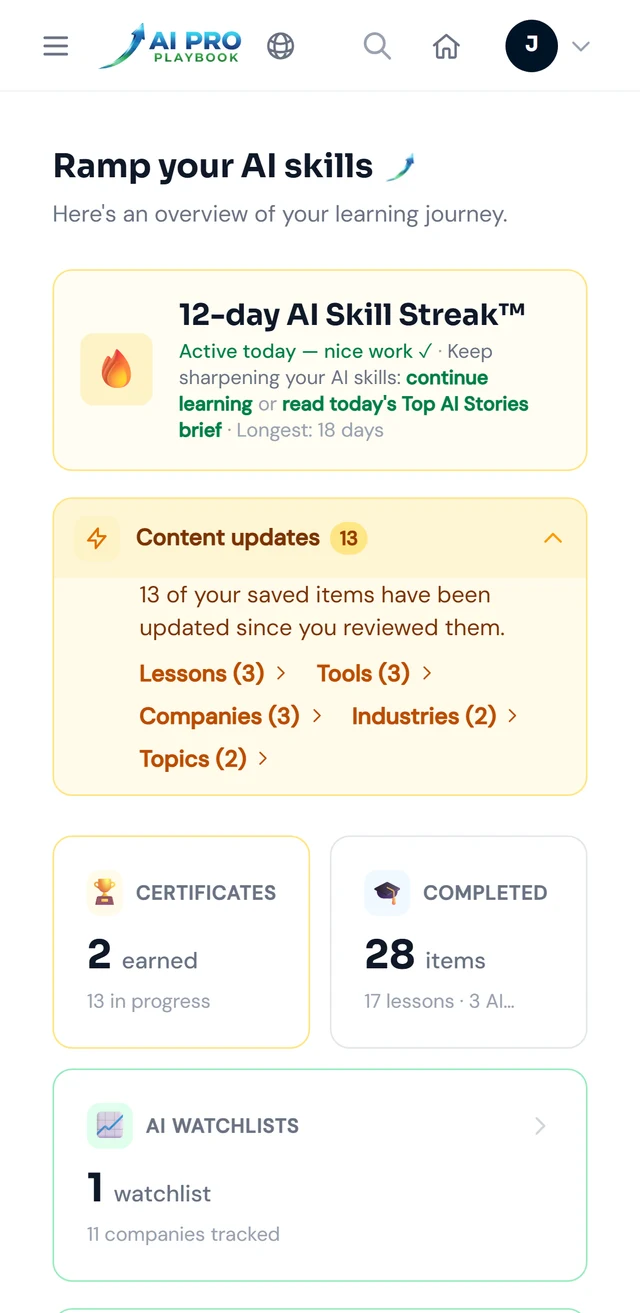
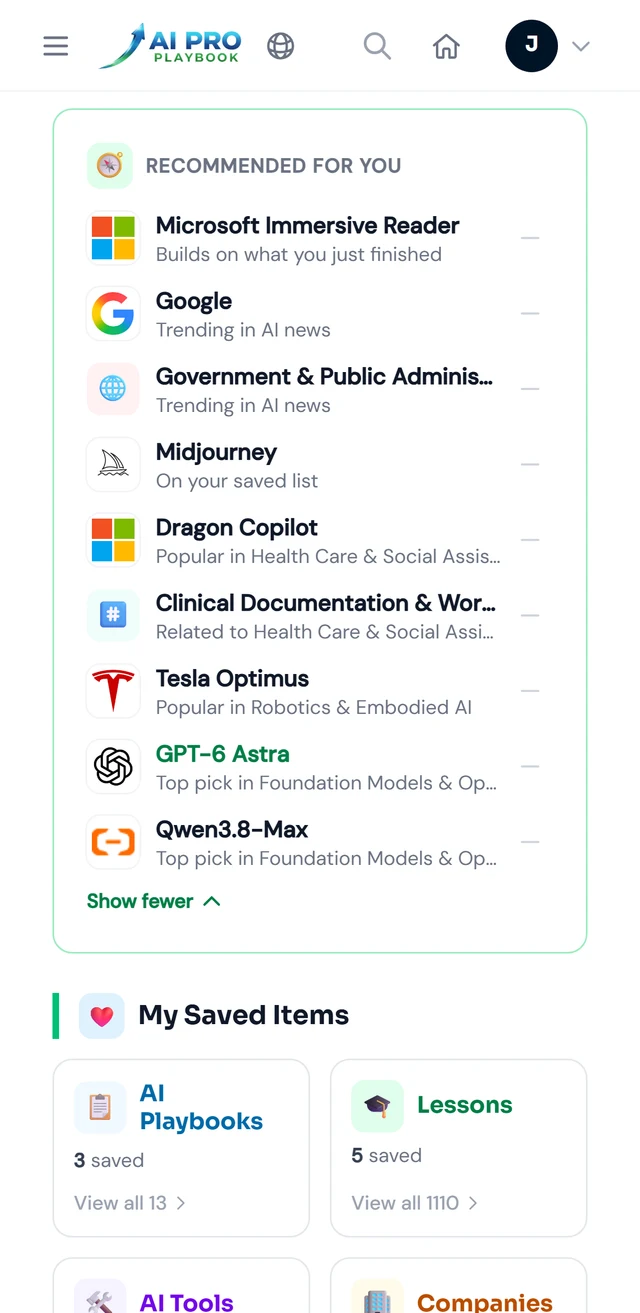
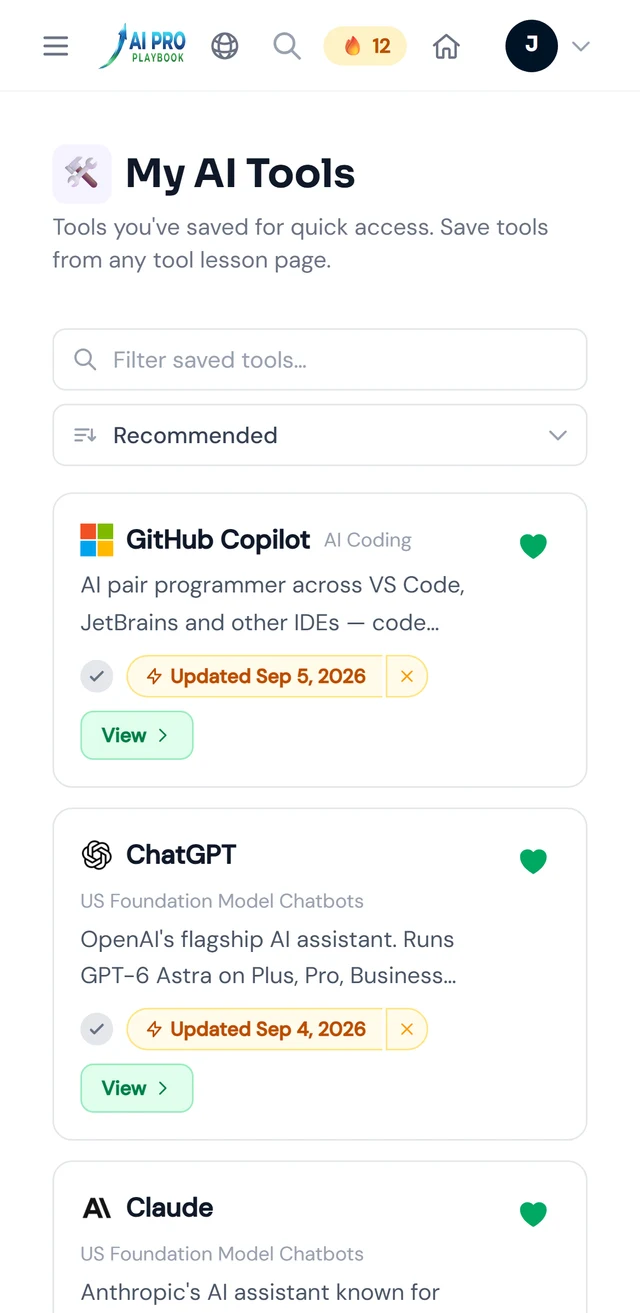
Swipe for Recommended for you and My AI Tools
Your AI Hub — sample data. See desktop view example
🛠️Top AI Tools in This Industry
 Elicit
AI research assistant specialized for academic literature. Searches 125M+ papers, extracts key data from PDFs, and summarizes findings across multiple studies.
 Consensus
AI search engine for scientific research. Finds and synthesizes evidence from peer-reviewed studies. Generates consensus summaries across multiple papers.

AI for scientific paper analysis, literature review, and writing — extracts answers from PDFs and helps researchers explore citation networks.




AI-assisted grading platform by Turnitin helping professors and teaching assistants grade assignments, exams, and programming submissions faster and more consistently at scale.