🏭Industry Overview
Updated May 16, 2026Water, Sewage, and Other Systems (NAICS 2213) covers drinking-water and wastewater utilities. The US is unusually fragmented compared to other utility industries — over 50,000 community water systems serve ~330 million people, with the bulk owned by municipal governments (~85% of US water customers) plus a smaller investor-owned segment. Major investor-owned water utilities include American Water Works (the largest US water utility, NYSE: AWK), Essential Utilities (formerly Aqua America), American States Water, California Water Service Group, and the international giants (Veolia, SUEZ now part of Veolia, United Utilities, Severn Trent). The wastewater-treatment segment includes municipal treatment plants and the private operators (Veolia North America, Suez Water, AECOM). Combined US water and wastewater revenue exceeds $200 billion annually across investor-owned and public sectors. The industry faces enormous capital-investment needs — the EPA estimates over $1 trillion in needed water-infrastructure investment over the next 20 years for lead-pipe replacement, treatment-plant upgrades, and climate-resilience.
🤖AI in Action
AI is being applied across water utilities. Leak detection (Asterra, Varuna, Elsight) uses satellite, sensor, and acoustic data with ML to identify distribution-system leaks before they become catastrophic main breaks — particularly important in older Northeast and Midwest systems with distribution-system loss rates of 15-30%. Water-quality monitoring (KETOS, Trihedral) uses sensor networks and ML to detect contamination events; particularly critical for harmful-algal-bloom prediction and lead-contamination monitoring. Treatment-plant optimization (SUEZ AquaAdvanced, EmNet) uses ML to optimize chemical dosing, energy consumption, and effluent quality. Customer-service AI handles routine billing inquiries and water-service requests. Demand forecasting uses ML for short-term (heat-wave response, drought management) and long-term (climate-impact) demand models. Sewer-system AI predicts combined-sewer overflows for stormwater management. The newer frontier: AI for lead-pipe-mapping and replacement planning (a major use case driven by the EPA Lead and Copper Rule revisions and the federal infrastructure law).
📊Impact on Jobs
Water-utility workforce is heavily unionized (AFSCME for municipal systems, IBEW and others for investor-owned) and roles are stable due to physical and certification requirements. Operators (drinking-water and wastewater) require state certification and are not AI-displaceable. Field-service technicians, meter-readers (transitioning to AMI smart meters which reduces meter-reading roles), and distribution-system maintenance roles are mostly stable with AI-augmentation rather than replacement. Customer-service and billing roles face the same AI-displacement pressure as other utilities. Engineering roles are growing dramatically due to lead-pipe-replacement and climate-resilience capital programs. Treatment-plant operators are stable. Water-quality scientists and lab technicians are growing roles. New emerging roles: water-AI engineer, lead-pipe-mapping analyst, harmful-algal-bloom-prediction specialist, climate-resilience-water-system planner. The municipal-water sector lags investor-owned utilities and the major water companies (American Water Works, Veolia) in AI adoption.
Keep track of AI in your sector
- Save the sectors you follow
- Get ⚡ alerts when their tools and companies change
- The AI tools that actually ship here, from 900+ AI tool profiles
- Today’s top AI Stories — the day’s most important AI news, free
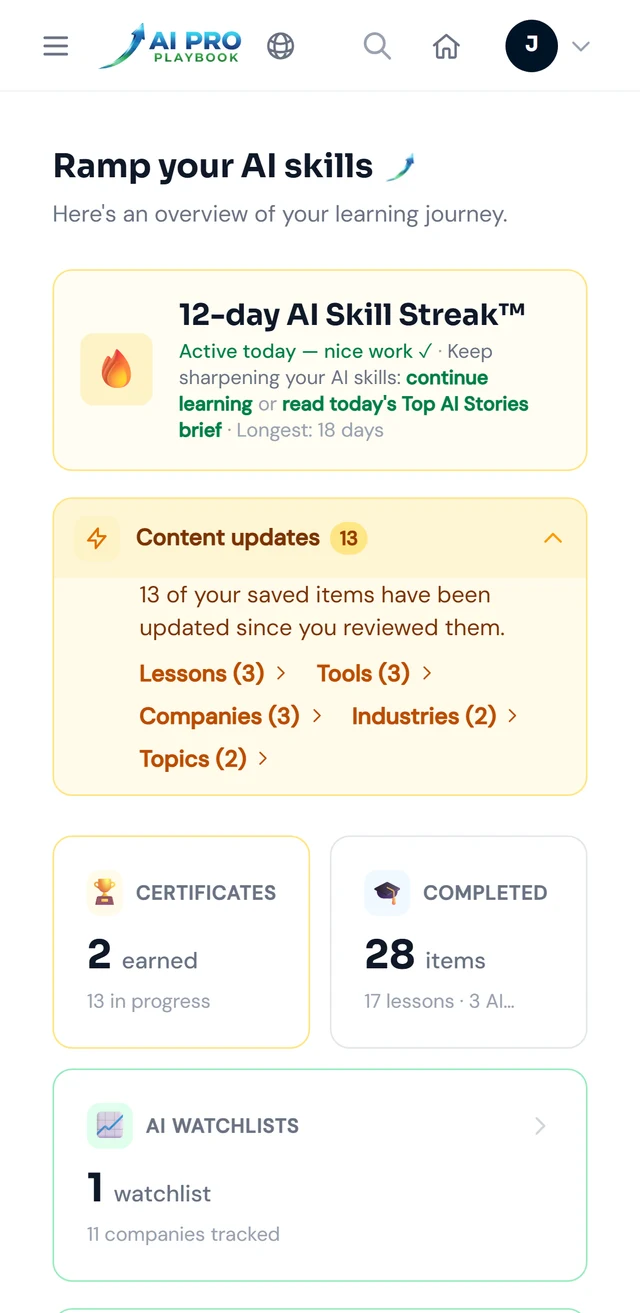
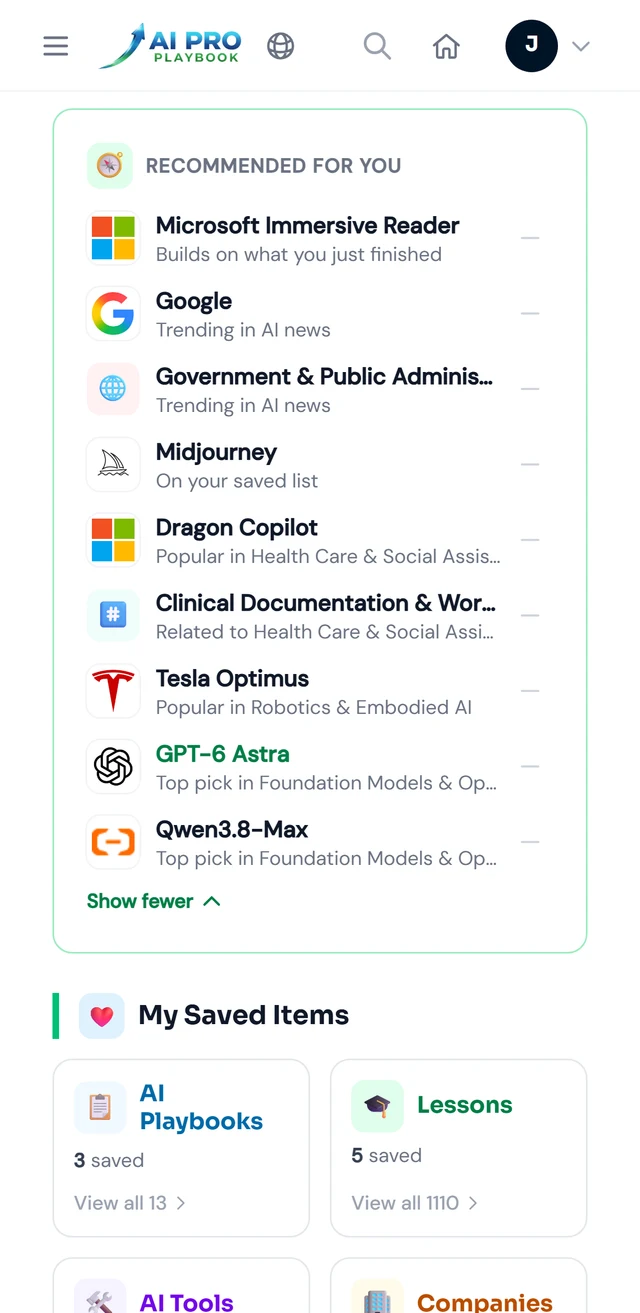
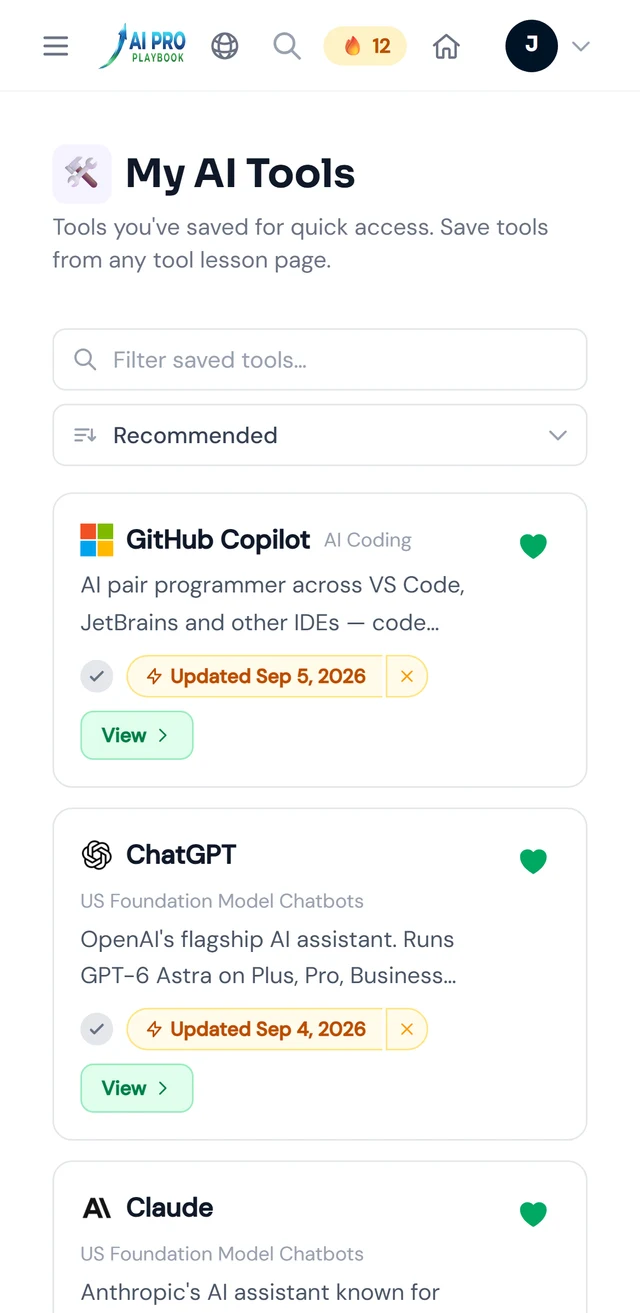
Swipe for Recommended for you and My AI Tools
Your AI Hub — sample data. See desktop view example
🛠️Top AI Tools in This Industry

 ASTERRA
Satellite radar and AI that detect underground water leaks and infrastructure risk from space.
 Aquarius Spectrum
Fixed acoustic-sensor network and AI correlation for continuous water-leak monitoring.

 Aquasight
AI analytics suite for water and wastewater operations, from pumps to treatment to asset planning.





 INGU Pipers
Free-floating in-line sensors and ML that inspect live water and gas pipelines for leaks and defects.