🏭Industry Overview
Updated May 16, 2026US book publishing generates roughly $30 billion in annual revenue across trade publishing (the Big Five — Penguin Random House, HarperCollins, Hachette, Simon & Schuster, Macmillan), academic and educational publishing, and a fast-growing self-publishing tier dominated by Amazon Kindle Direct Publishing. The industry has been disrupted twice — first by Amazon's direct-to-consumer dominance starting in the late 2000s, then by self-publishing democratization that turned millions of independent authors into book producers. Trade publishing remains a hits-driven business: a handful of bestsellers subsidize hundreds of titles that lose money. Self-publishing flipped the economics — high-volume authors writing in genre fiction (romance, thrillers, sci-fi) now produce 6-12 books a year and earn full-time incomes from Amazon royalties. The traditional vs. indie split shapes nearly every business decision in the industry.
🤖AI in Action
AI authoring tools have moved from novelty to core workflow. Sudowrite is the dominant fiction-author AI — used by tens of thousands of novelists for ideation, scene expansion, prose rewriting, and writer's-block recovery. ChatGPT and Claude handle nonfiction drafting, research, and outline generation. Jasper AI and Copy.ai dominate marketing copy for book launches and Amazon listings. Grammarly and Writer AI catch copy issues that traditional copyediting workflows used to require. Notion AI helps authors organize series bibles, character notes, and worldbuilding documents. ElevenLabs has democratized professional-quality audiobook narration — independent authors who couldn't afford a $5,000 narrator can now generate audiobook editions for a few hundred dollars. Adobe Firefly and Midjourney handle cover-art generation for indie authors. Amazon's internal AI features (KDP listing optimization, A+ content generation, recommendation algorithms) shape what readers see.
📊Impact on Jobs
The most visible impact is on the indie/self-publishing tier, where AI has compressed time-to-market from months to weeks. A genre-fiction author who previously published 4 books a year can now publish 8-12 with AI-assisted drafting and editing. Trade publishers are slower to adopt openly — there are real concerns about reader trust, AI-disclosure requirements, and the line between AI-assisted and AI-generated work — but back-office adoption (copy editing, marketing copy, metadata enrichment) is widespread. The biggest displacement risk is at the freelance editorial tier (copy editors, line editors, proofreaders) whose work AI can plausibly handle for routine titles. The opportunity is for editors and authors to move upstream into developmental editing, voice work, and community-building — areas where human judgment is hard to replicate. Growing tensions: Amazon's 2023 cap on KDP daily uploads (responding to AI-generated content flooding the platform), pending lawsuits over training-data copyright, and reader-disclosure debates.
Keep track of AI in your sector
- Save the sectors you follow
- Get ⚡ alerts when their tools and companies change
- The AI tools that actually ship here, from 900+ AI tool profiles
- Today’s top AI Stories — the day’s most important AI news, free
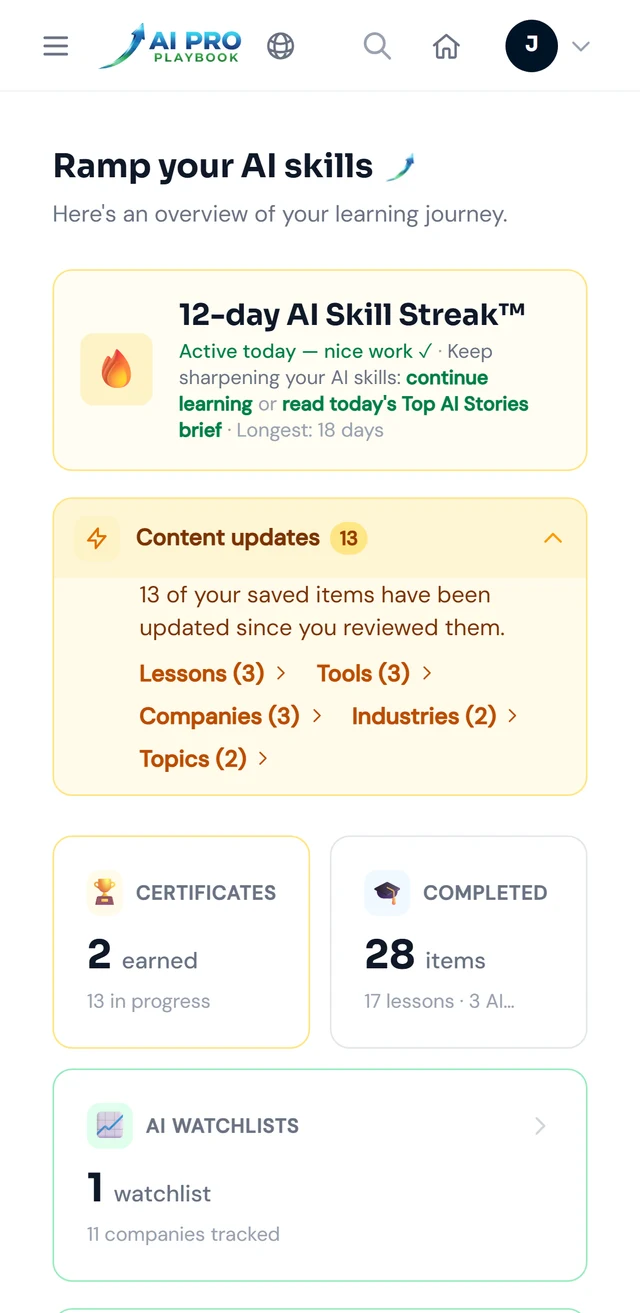
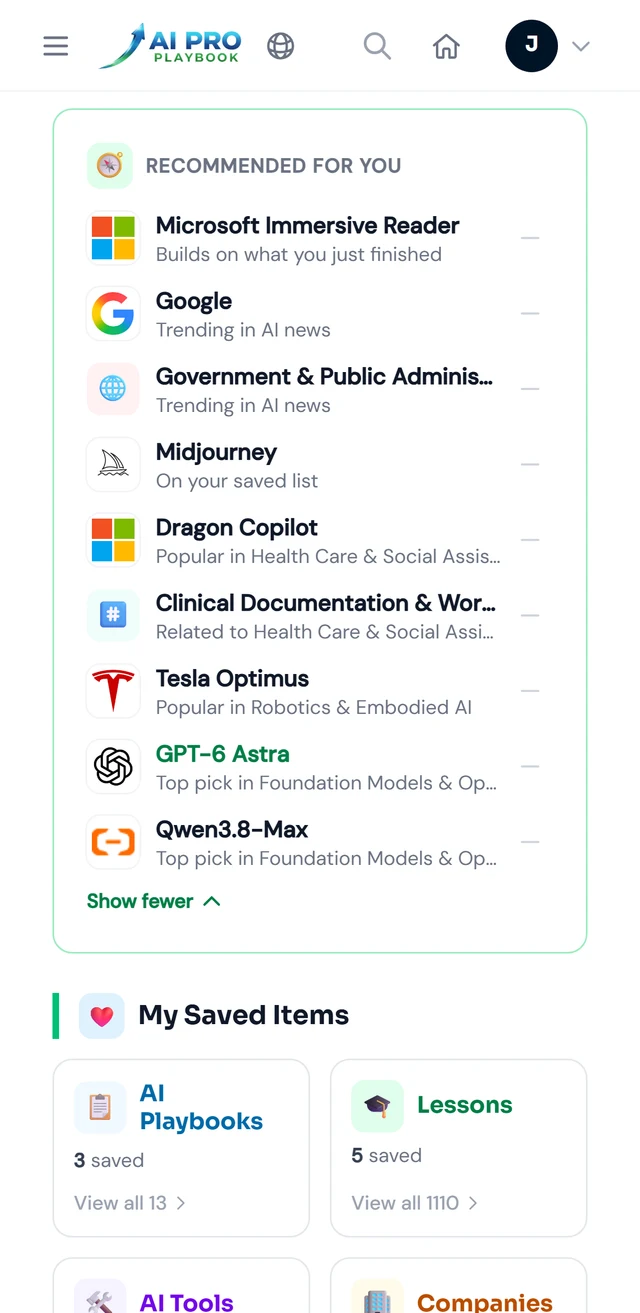
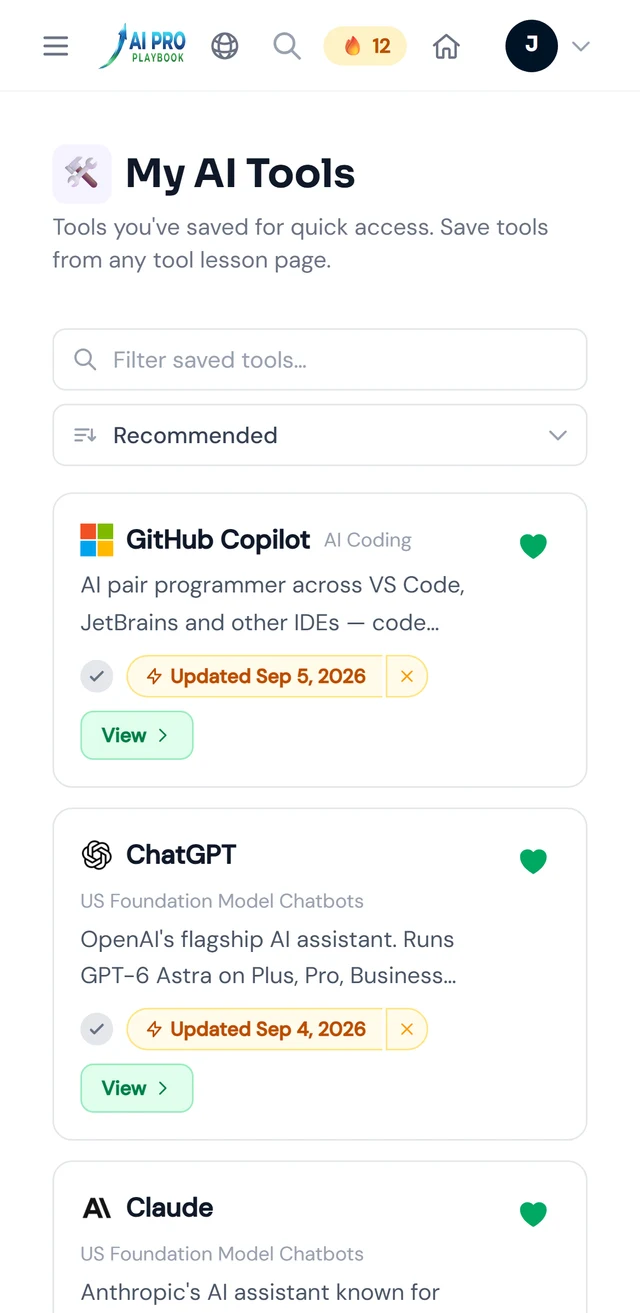
Swipe for Recommended for you and My AI Tools
Your AI Hub — sample data. See desktop view example
🛠️Top AI Tools in This Industry
 Sudowrite
AI writing assistant built specifically for fiction authors — generates plot ideas, expands scenes, suggests rewrites, and helps overcome writer's block. Used by tens of thousands of novelists, including bestselling authors who treat it as a co-writer rather than autopilot.
 Jasper AI
Enterprise AI writing platform for marketing teams. Brand voice training, multi-channel content generation, SEO optimization, and team collaboration.
 Writer AI
Enterprise AI content platform with proprietary Palmyra LLM. Brand-consistent content generation, governance controls, and enterprise security. Used by Fortune 500 companies.
 Grammarly
AI writing assistant for grammar, style, tone, and clarity. Available as a browser extension across every web app. Generative AI features for drafting and rewriting.
 Notion AI
AI writing, summarization, and Q&A built into Notion's workspace. Ask questions about your notes, auto-fill databases, and draft content in context.
 ElevenLabs
The leading AI voice generation platform. Ultra-realistic text-to-speech in 32 languages, voice cloning, and a massive voice library. Used by 1M+ creators.
 ChatGPT
OpenAI's flagship AI assistant. Runs GPT-6 Astra on Plus, Pro, Business and Enterprise since September 3, 2026, with GPT-5.6 Luna still the free default and unlimited free text chats. Includes GPT Image 2, full-duplex voice, Deep Research, ChatGPT Health, Sites for building and hosting web apps, and an auto-enrolled restricted mode for under-18s.
 Claude
Anthropic's AI assistant known for long-context reasoning, coding, and following nuanced instructions, with a 1 million token context window. Offers the current Claude lineup from the economical Opus tier up to the Fable flagship. Strong safety and helpfulness balance.