🏭Industry Overview
Updated May 16, 2026Natural Gas Distribution (NAICS 2212) covers local distribution companies (LDCs) that deliver natural gas to residential, commercial, and industrial customers. Major US natural-gas LDCs include Southern Company Gas (formerly AGL Resources), Atmos Energy, NW Natural, NiSource, ONE Gas, and the gas distribution divisions of integrated utilities (Duke Energy, Sempra, Centerpoint Energy). The interstate pipeline segment is dominated by Williams Companies (Transco system), Kinder Morgan, Energy Transfer, ONEOK, and Enbridge (Canadian-owned, large US operations). Combined US natural-gas-distribution revenue exceeds $100 billion annually. The industry is navigating profound transition uncertainty — electrification policies in California, New York, Massachusetts, and Washington are restricting new gas hookups, while the AI data-center load-growth has driven sharp natural-gas-power-generation growth (combined-cycle gas plants are the marginal new-build for grid reliability). The 2024-2025 winter and the Texas 2021 winter storm underscored the role of gas heating and gas-fired generation in extreme-weather reliability.
🤖AI in Action
AI is being applied across natural-gas operations. Leak detection is the most-developed AI application — methane-detection AI processes data from satellite (GHGSat, Carbon Mapper), aerial flyover (Bridger Photonics), drone (Percepto), and stationary monitoring systems to detect and prioritize methane leaks across pipelines and distribution networks. Pipeline-integrity AI uses ML on inline-inspection-tool data (smart-pig results) to predict corrosion and stress-corrosion-cracking. Demand forecasting uses ML for short-term (storm preparation, cold-snap response) and long-term (multi-decade transition planning) demand models. Customer-service AI handles routine billing and emergency-call triage. The newer frontier: AI for transition-planning analytics — utilities and policymakers use AI scenario tools to model gas-system retirement, electrification adoption rates, and the optimal pace of distribution-system attrition. Hydrogen-blending pilots (where green hydrogen is blended into natural-gas distribution systems) increasingly use AI for blending optimization.
📊Impact on Jobs
Natural-gas utility workforce is unionized and mostly stable due to physical-infrastructure operations requirements. Field-service technicians, leak-detection inspectors, and distribution-system operators face stable demand even as the industry navigates long-term transition. AI is augmentation rather than substitution at the field level. Customer-service roles face the same retail AI displacement as other utilities. Engineering and integrity-management roles are growing in the methane-emissions-reduction era — new federal and state regulations (the EPA Methane Emissions Reduction Program, California SB 1383) require expanded compliance and engineering capacity. Pipeline-control-room operations are heavily AI-augmented but headcount-stable. Transition-planning analyst roles are growing at utilities, regulators (PUCs), and policy organizations. New roles emerging: methane-emissions-AI engineer, hydrogen-blending operator, transition-planning analyst, gas-system-retirement program manager (a brand-new role created by California and New York gas-system-retirement legislation).
Keep track of AI in your sector
- Save the sectors you follow
- Get ⚡ alerts when their tools and companies change
- The AI tools that actually ship here, from 900+ AI tool profiles
- Today’s top AI Stories — the day’s most important AI news, free
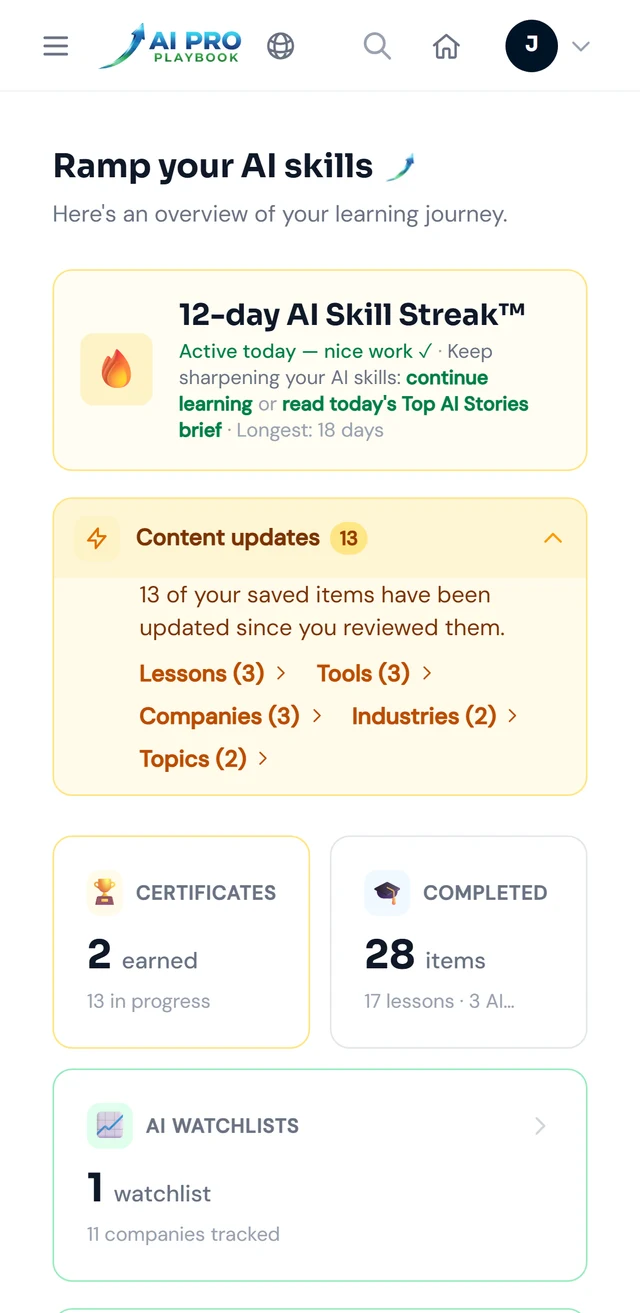
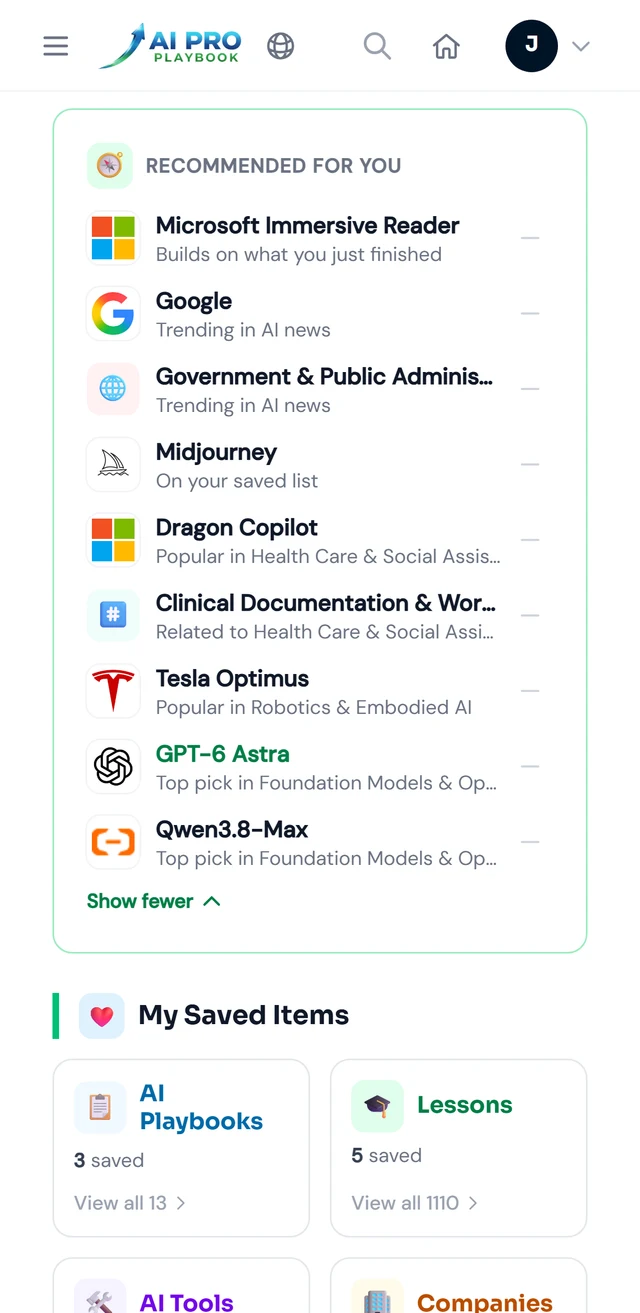
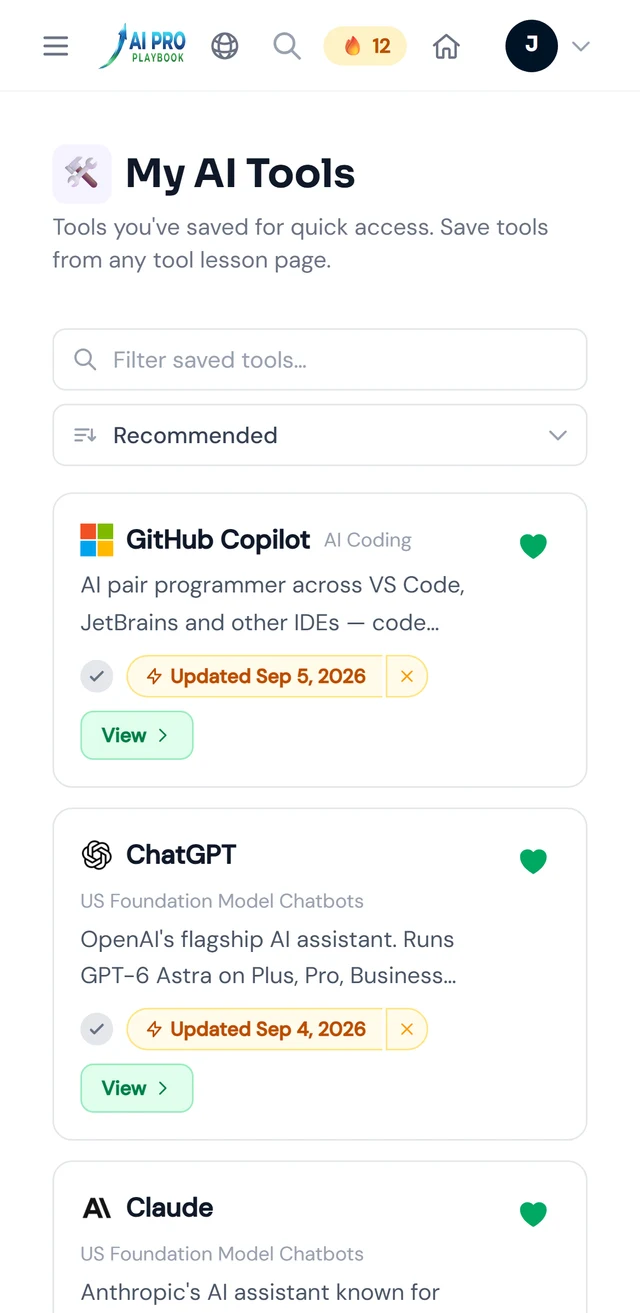
Swipe for Recommended for you and My AI Tools
Your AI Hub — sample data. See desktop view example
🛠️Top AI Tools in This Industry
 Picarro Surveyor
Precision methane analyzers and analytics that map and rank gas-distribution leaks at driving speed.
 Qube Technologies
Continuous methane monitoring with IoT sensors and ML that localizes and quantifies emissions.
 LongPath
Laser-tower network and AI that continuously monitor thousands of facilities for methane.
 Project Canary
Methane emissions-intelligence and certification platform with continuous sensing and AI.
 GHGSat
Largest commercial methane-monitoring satellite constellation, with AI pinpointing site-level sources.
 INGU Pipers
Free-floating in-line sensors and ML that inspect live water and gas pipelines for leaks and defects.
 AspenTech
Industrial AI software for energy and chemical companies optimizing refinery operations, asset performance management, and supply chain efficiency with machine learning models.