🏭Industry Overview
Updated May 16, 2026Securities brokerage encompasses the firms that connect retail and institutional investors to markets — buying and selling stocks, bonds, options, mutual funds, and ETFs on behalf of customers. The retail end is dominated by Charles Schwab (which acquired TD Ameritrade in 2020), Fidelity, Vanguard, E*TRADE (now Morgan Stanley), and the disruptor tier (Robinhood, Webull, M1 Finance). Institutional brokerage serves hedge funds, pension funds, and asset managers — that segment overlaps heavily with investment banking and is dominated by the bulge brackets. The economic model has shifted dramatically: zero-commission trading became table-stakes after Robinhood's 2013 launch, pushing brokerages to compete on platform features, research quality, and increasingly, AI-augmented advisory and education. Revenue now comes primarily from payment-for-order-flow, asset-based fees on managed accounts, margin-lending interest, and securities-lending.
🤖AI in Action
BlackRock Aladdin AI is the dominant institutional-brokerage platform — used by asset managers running roughly $20 trillion in combined AUM for risk analytics, portfolio construction, and trade execution. AlphaSense handles equity research at thousands of brokerages and asset managers. Hebbia Matrix and Bloomberg AI fill complementary research roles. Retail brokerages have built AI-augmented features into their flagship platforms: Schwab's AI-powered research summaries, Fidelity's natural-language search across SEC filings, Robinhood's AI-driven discovery and education features. NICE Actimize handles the regulatory-compliance side (trade surveillance, market manipulation detection). The horizontal models (ChatGPT, Claude, Microsoft Copilot) are used heavily for customer-service drafting, internal research, and the educational content that brokerages produce to drive engagement.
📊Impact on Jobs
The retail-broker workforce is being aggressively reshaped. Branch-based financial advisor roles (the historical Charles Schwab business model) are being squeezed as customers migrate to AI-augmented self-service. Robo-advisors serve ten times more clients per AUM dollar than human advisors — making the human-advisor role increasingly reserved for high-net-worth segments where personal relationships still matter. Customer-service roles are being automated outright at retail brokerages. The institutional-brokerage end is more resilient — sales traders, equity research analysts, and prime-brokerage relationship managers retain leverage from AI tooling rather than getting displaced. New roles emerging at retail brokerages: AI-product manager (designs the retail-investor AI experience), licensed advisor specialist (handles complex situations AI can't), platform-engineering lead. Regulatory friction is real — FINRA and SEC guidance on AI-driven advice, especially around suitability and fiduciary duty, continues to evolve.
Keep track of AI in your sector
- Save the sectors you follow
- Get ⚡ alerts when their tools and companies change
- The AI tools that actually ship here, from 900+ AI tool profiles
- Today’s top AI Stories — the day’s most important AI news, free
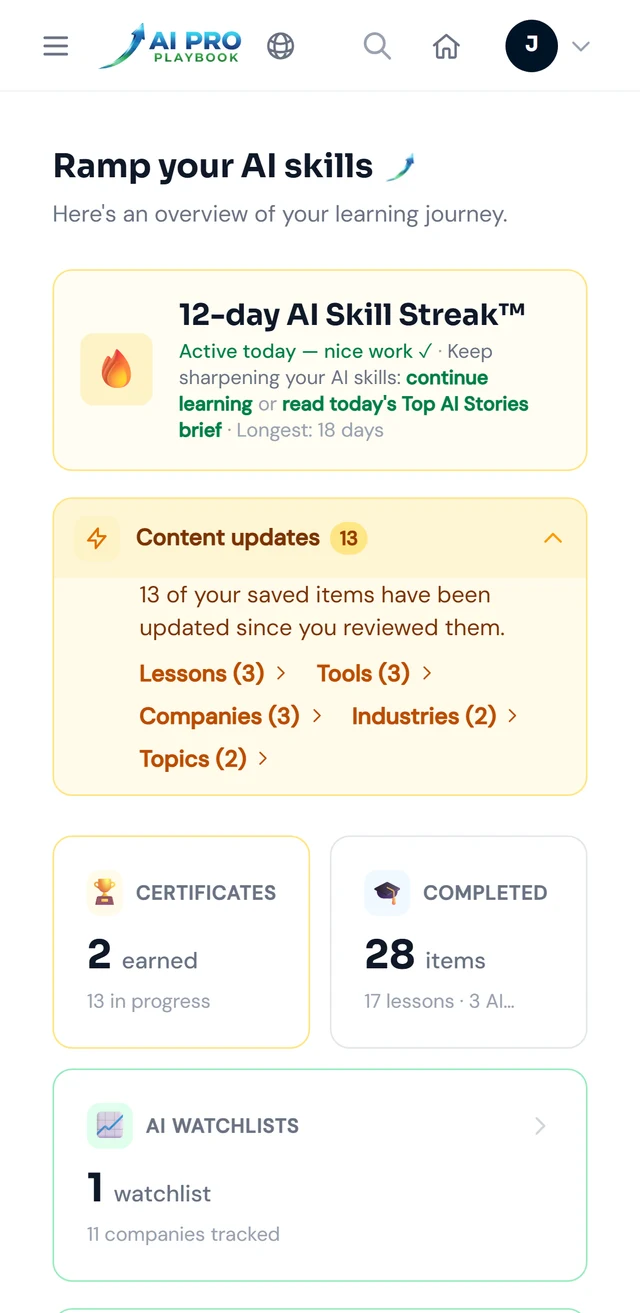
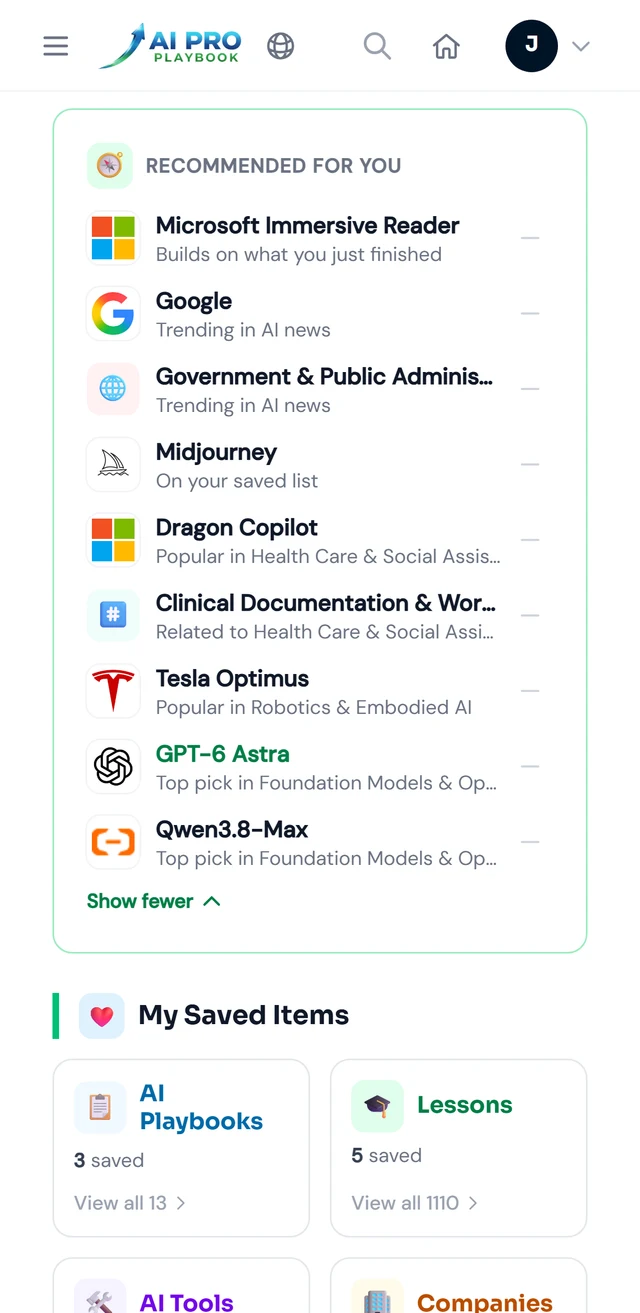
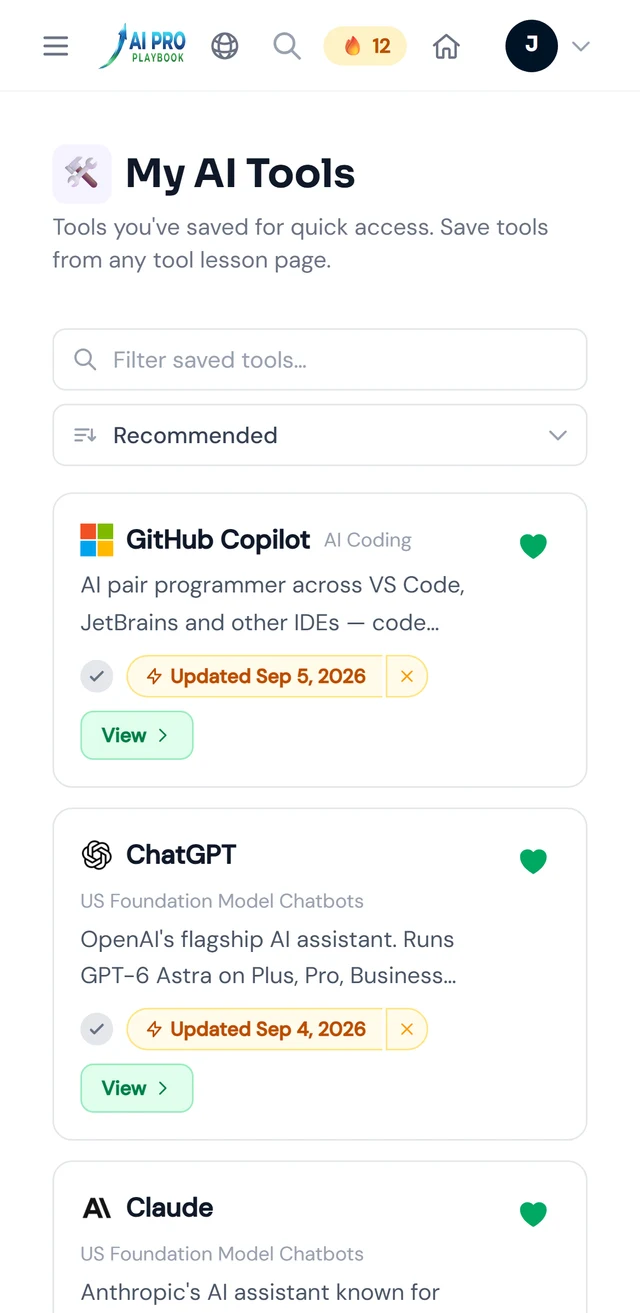
Swipe for Recommended for you and My AI Tools
Your AI Hub — sample data. See desktop view example
🛠️Top AI Tools in This Industry

 AlphaSense
AI market intelligence platform used by investment banks, hedge funds, and corporations to research companies, analyze earnings calls, and surface insights from millions of documents.
 Hebbia Matrix
AI enterprise search platform for finance and legal. Matrix multi-agent system enables knowledge workers to analyze and reason over large document sets with structured AI-powered workflows.
 Bloomberg AI
AI features integrated across the Bloomberg Terminal — earnings-call summaries, document Q&A, and Bloomberg-trained financial NLP models.

 ChatGPT
OpenAI's flagship AI assistant. Runs GPT-6 Astra on Plus, Pro, Business and Enterprise since September 3, 2026, with GPT-5.6 Luna still the free default and unlimited free text chats. Includes GPT Image 2, full-duplex voice, Deep Research, ChatGPT Health, Sites for building and hosting web apps, and an auto-enrolled restricted mode for under-18s.
 Claude
Anthropic's AI assistant known for long-context reasoning, coding, and following nuanced instructions, with a 1 million token context window. Offers the current Claude lineup from the economical Opus tier up to the Fable flagship. Strong safety and helpfulness balance.