🏭Industry Overview
Updated June 14, 2026Sound recording studios encompass commercial recording facilities (from Capitol Studios and Abbey Road to thousands of small independent rooms), home studios run by working musicians, podcast and audiobook production studios, and post-production audio houses that overlap with motion-picture postproduction. The US recording-studio industry is fragmented and small in dollar terms — roughly $1 billion in commercial-studio revenue plus a much larger informal home-studio economy. The shift toward home recording started in the 2000s with affordable Pro Tools rigs and accelerated dramatically in the streaming era — most music released today on Spotify and Apple Music was tracked in home or project studios, not commercial facilities. Commercial studios survive by specializing: orchestral recording rooms, vintage analog facilities, vocal booths optimized for podcasting and audiobook narration, and high-end mixing rooms. Engineers are heavily contract/freelance with strong personal-brand differentiation.
🤖AI in Action
AI has reshaped recording-studio workflows in three distinct ways. Music generation: Suno AI and Udio produce broadcast-quality vocal tracks from text prompts — used by working musicians for prototyping, demoing, and even final production at the indie tier. The 2024 RIAA lawsuits against both companies highlight ongoing copyright tension. Voice and dialogue: ElevenLabs has revolutionized voice synthesis — audiobook narration that once required engaging a $5,000-per-book voice actor can now produce broadcast-quality output in hours, including for languages the author doesn't speak. Adobe Podcast Enhance handles podcast cleanup at studio-grade quality without an engineer in the loop. Editing and mastering: Descript transformed dialog editing through text-based audio manipulation. AI mastering services (LANDR, eMastered) handle the final-polish step that used to require a dedicated mastering engineer at $300-1,000 per song. The horizontal models (ChatGPT, Claude, Microsoft Copilot) help engineers and producers with session planning, contract drafting, and metadata management.
📊Impact on Jobs
The independent musician and content-creator tier is the biggest beneficiary — tools that previously required engaging multiple specialty professionals are now one-click operations or affordable monthly subscriptions. The squeeze is on the middle of the profession: mid-career mastering engineers, podcast editors, and voice talent face the steepest disruption from AI alternatives. Top-tier engineers and producers (the Rick Rubins, Andrew Watts, Jack Antonoffs of the world) gain leverage — their creative direction is what artists pay for, and AI tools amplify rather than replace that value. Voice acting in particular is in active labor dispute: SAG-AFTRA secured AI-consent and compensation provisions in its 2024 video-game contract, but enforcement is still being tested. Audiobook narrators face existential pressure as ElevenLabs-quality synthesis becomes indistinguishable from many lower-tier human performances. New roles emerging: AI-music supervisor (curates and refines generated tracks for film, TV, and ad placement), AI-voice-direction specialist, prompt-design specialist for music generation. The shift toward fewer, more skilled specialists handling more output per professional is well underway.
Keep track of AI in your sector
- Save the sectors you follow
- Get ⚡ alerts when their tools and companies change
- The AI tools that actually ship here, from 900+ AI tool profiles
- Today’s top AI Stories — the day’s most important AI news, free
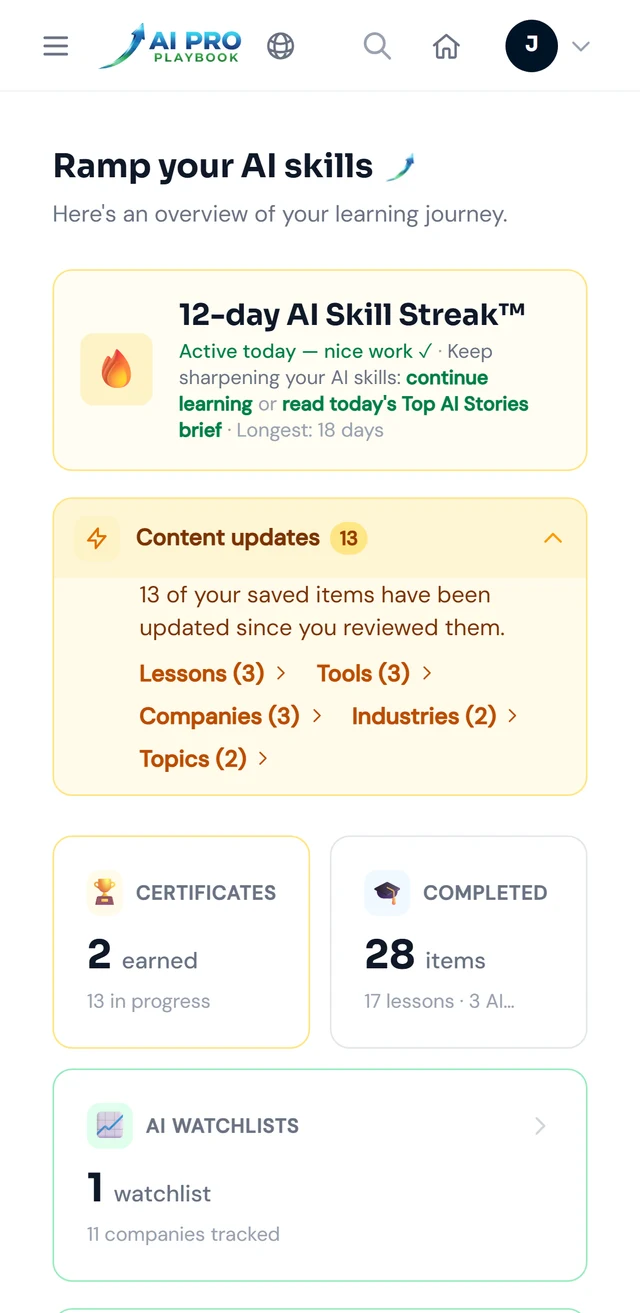
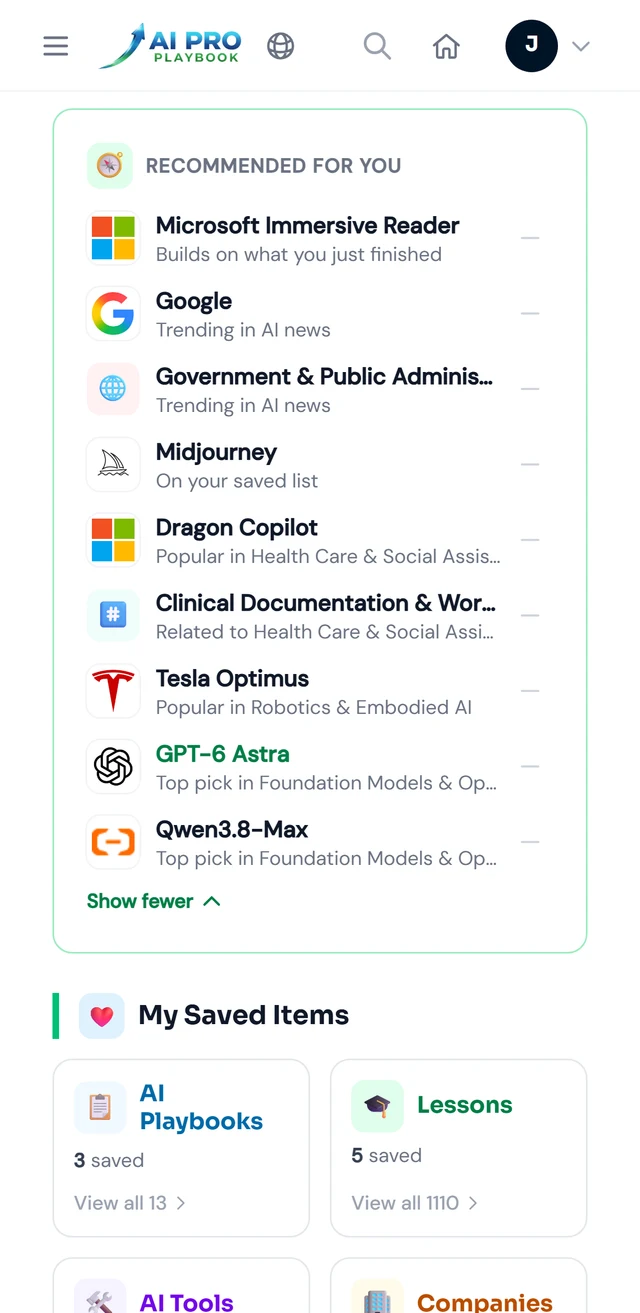
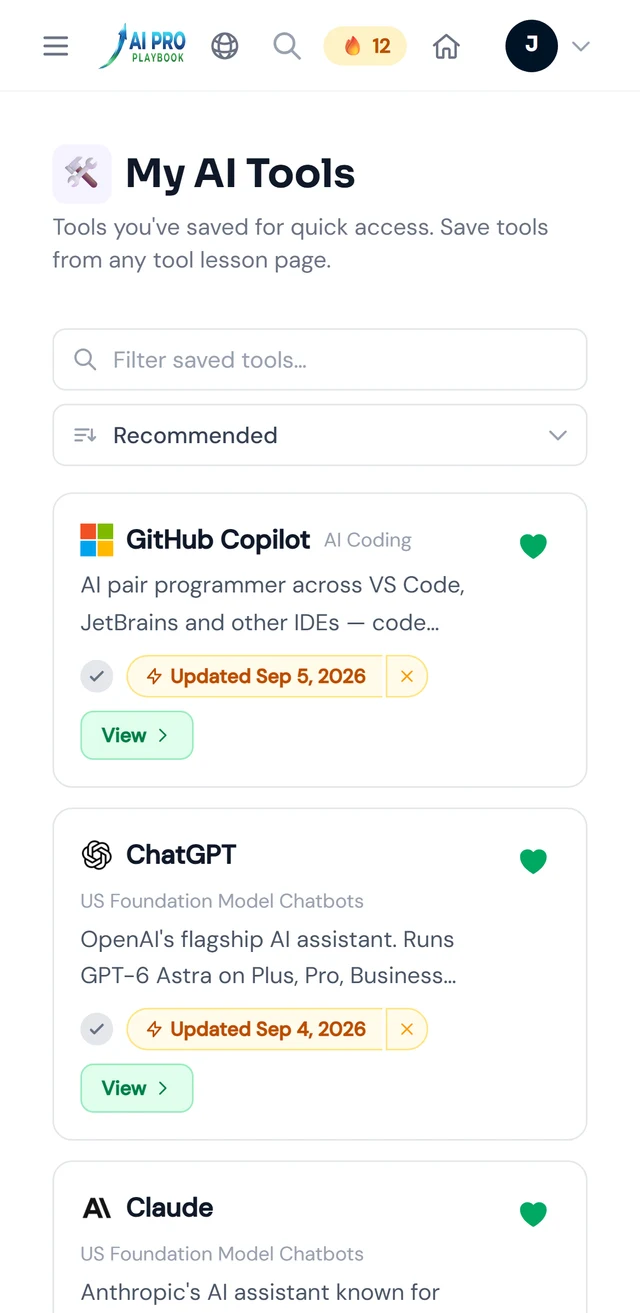
Swipe for Recommended for you and My AI Tools
Your AI Hub — sample data. See desktop view example
🛠️Top AI Tools in This Industry
 Suno AI
AI music generation platform that creates full songs with vocals from text prompts. Generate radio-quality tracks in any genre in seconds.
 Udio
UdioAI music creation tool that generates studio-quality songs with instrumentals and vocals. Strong for diverse genres and style blending.
 ElevenLabs
The leading AI voice generation platform. Ultra-realistic text-to-speech in 32 languages, voice cloning, and a massive voice library. Used by 1M+ creators.

 Descript
AI-powered video and podcast editing platform. Edit video like a doc, remove filler words, clone your voice, and create AI overdub replacements.
 ChatGPT
OpenAI's flagship AI assistant. Runs GPT-6 Astra on Plus, Pro, Business and Enterprise since September 3, 2026, with GPT-5.6 Luna still the free default and unlimited free text chats. Includes GPT Image 2, full-duplex voice, Deep Research, ChatGPT Health, Sites for building and hosting web apps, and an auto-enrolled restricted mode for under-18s.
 Claude
Anthropic's AI assistant known for long-context reasoning, coding, and following nuanced instructions, with a 1 million token context window. Offers the current Claude lineup from the economical Opus tier up to the Fable flagship. Strong safety and helpfulness balance.


Google's AI song generator, powered by the Lyria model family. Lyria 3.5 shipped July 29, 2026 with more natural vocals and finer tempo control. Every output carries a SynthID watermark and C2PA credentials, and Google grounds its training data in YouTube and Google rights rather than an untested fair-use defense.