📘Overview
Updated July 19, 2026Additive manufacturing — 3D printing — and materials science are two places where AI is starting to change how physical things get designed and made. Metal 3D printing is powerful but unforgiving: a build can take hours and then fail from thermal stresses that are hard to predict, so shops waste time and material on trial-and-error test prints. Materials discovery faces a different problem: the experimental data that would train a model is sparse, noisy, and expensive to generate.
💡The AI Opportunity
This topic covers the genuine-AI players in that space — defect-prediction and build-preparation for additive manufacturing, and machine learning built specifically for the incomplete data of real materials R&D. It is a deliberately small, honest topic: the 3D-printing hardware makers are excluded because their value is chemistry and mechanics, not load-bearing AI.
🤖AI in Action
The AI here is genuinely load-bearing where it appears. In additive manufacturing, machine-learning models predict where a print will fail and auto-generate machine-specific print files to prevent it — defect prediction rather than after-the-fact inspection. In materials, sparse-data deep learning trains across the gaps in real experimental datasets, returns predictions with uncertainty estimates, and guides scientists toward the most valuable experiments to run next. Both are narrow and technical, but in each the learning is the entire product.
Keep track of the topics you follow
- Save the topics you follow
- Get ⚡ alerts when their tools and companies change
- Curated tools for this topic, from 1,000+ AI tool profiles
- Today’s top AI Stories — the day’s most important AI news, free
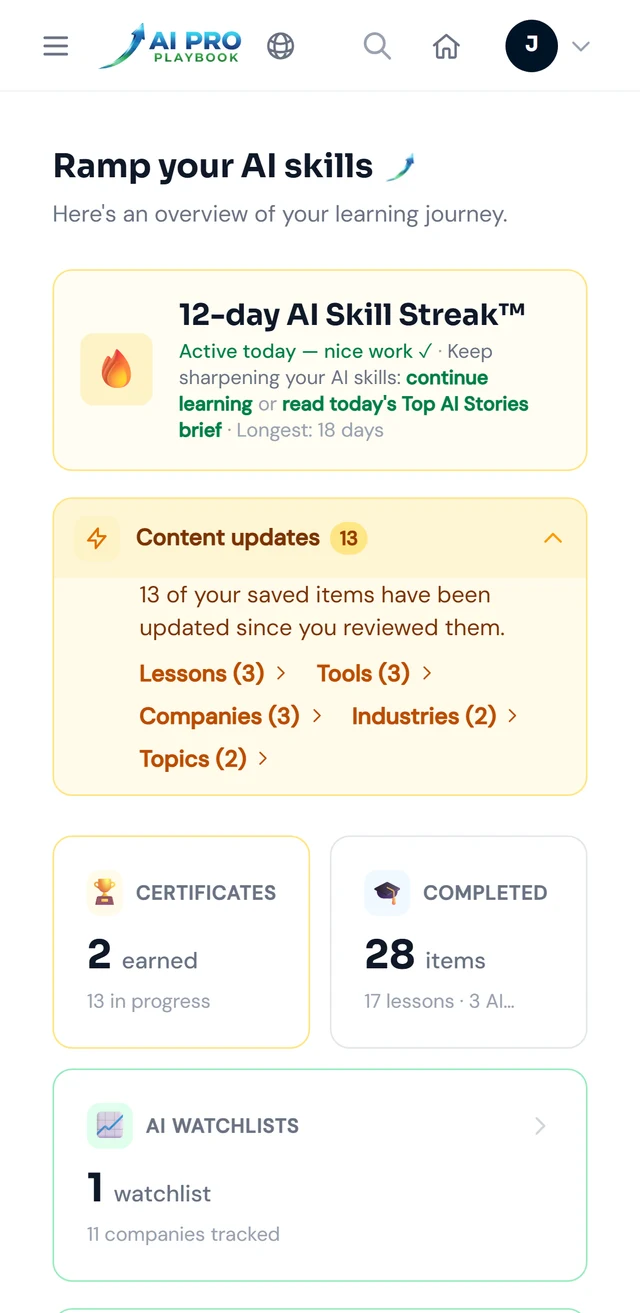

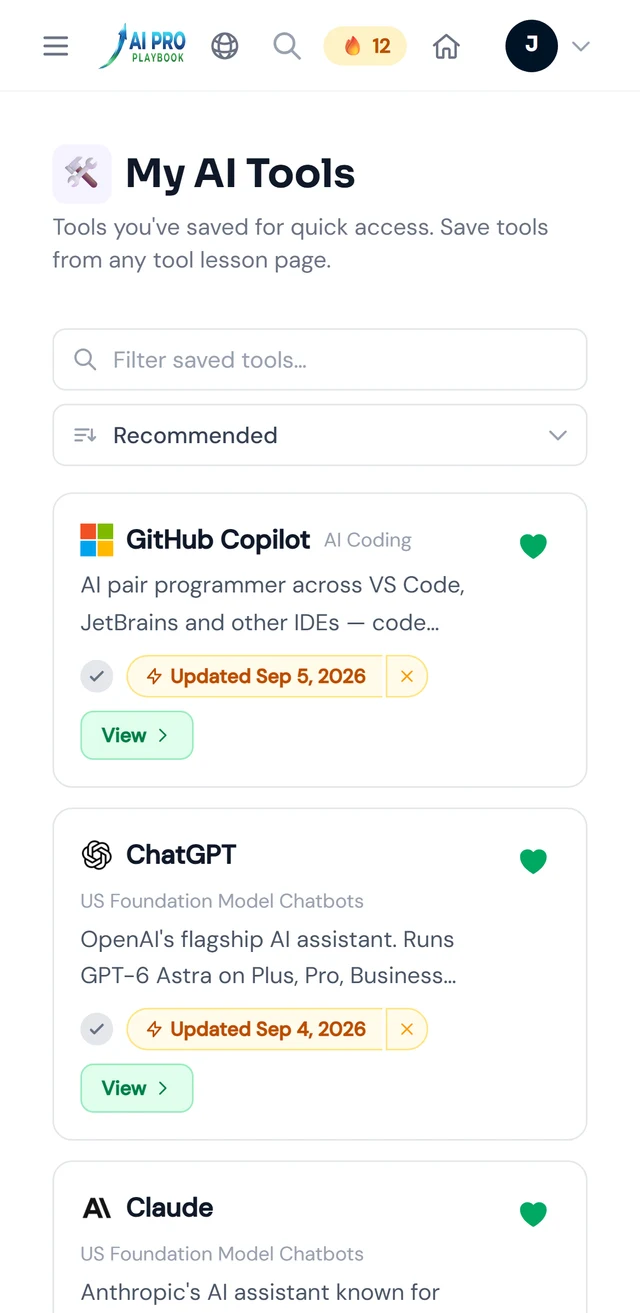
Swipe for Recommended for you and My AI Tools
Your AI Hub — sample data. See desktop view example
🛠️Top AI Tools for This Topic
 1000 Kelvin AMAIZE
AI co-pilot for metal 3D printing that predicts build defects in near-real time and auto-generates machine-specific print files; integrated into EOS and Autodesk Fusion.
 Intellegens Alchemite
Materials and formulation AI whose Alchemite engine learns from sparse, noisy experimental data to guide materials discovery and process development.
 Citrine Informatics
Citrine Informatics is a materials-informatics platform that applies machine learning — sequential learning and generative models — to a company's experimental and literature data to predict new material and formulation properties and recommend the next experiment to run.