🏭Industry Overview
Updated May 16, 2026Manufacturing produces the physical goods that define modern life — from semiconductors and automobiles to pharmaceuticals and packaged foods. US manufacturing generates over $2.5 trillion in annual output and employs approximately 13 million workers, with global manufacturing output exceeding $16 trillion. The sector drives innovation, supports high-wage employment, and underpins national security through defense industrial capacity.
💡The AI Opportunity
Manufacturing has been the leading adopter of industrial automation for decades, but the current AI wave goes far beyond robotic assembly lines. AI-powered quality control, predictive maintenance, supply chain optimization, and generative product design are transforming how factories operate at every level. The economics are compelling: a single hour of unplanned downtime in a major automotive plant costs over $1 million, making predictive maintenance AI one of the fastest-payback technology investments in the sector. The fourth industrial revolution — combining physical automation with digital intelligence — is well underway.
🤖AI in Action
Computer vision systems inspect products for defects at speeds and accuracy impossible for humans. Predictive maintenance AI monitors machinery vibration, temperature, and sound to predict failures. Digital twins simulate entire production lines to optimize throughput. Collaborative robots (cobots) work alongside humans on assembly lines. Supply chain AI from companies like o9 Solutions and Blue Yonder optimizes inventory, sourcing, and logistics. Generative AI is accelerating product design and engineering documentation.
📊Impact on Jobs
Manufacturing is experiencing one of the most significant AI-driven transformations of any sector. Routine assembly and inspection roles face automation pressure. However, demand is growing for robot technicians, process engineers, and AI systems operators. The World Economic Forum estimates manufacturing will see net job creation through 2030 as new AI roles offset automation losses — but significant reskilling is required.
Keep track of AI in your sector
- Save the sectors you follow
- Get ⚡ alerts when their tools and companies change
- The AI tools that actually ship here, from 900+ AI tool profiles
- Today’s top AI Stories — the day’s most important AI news, free
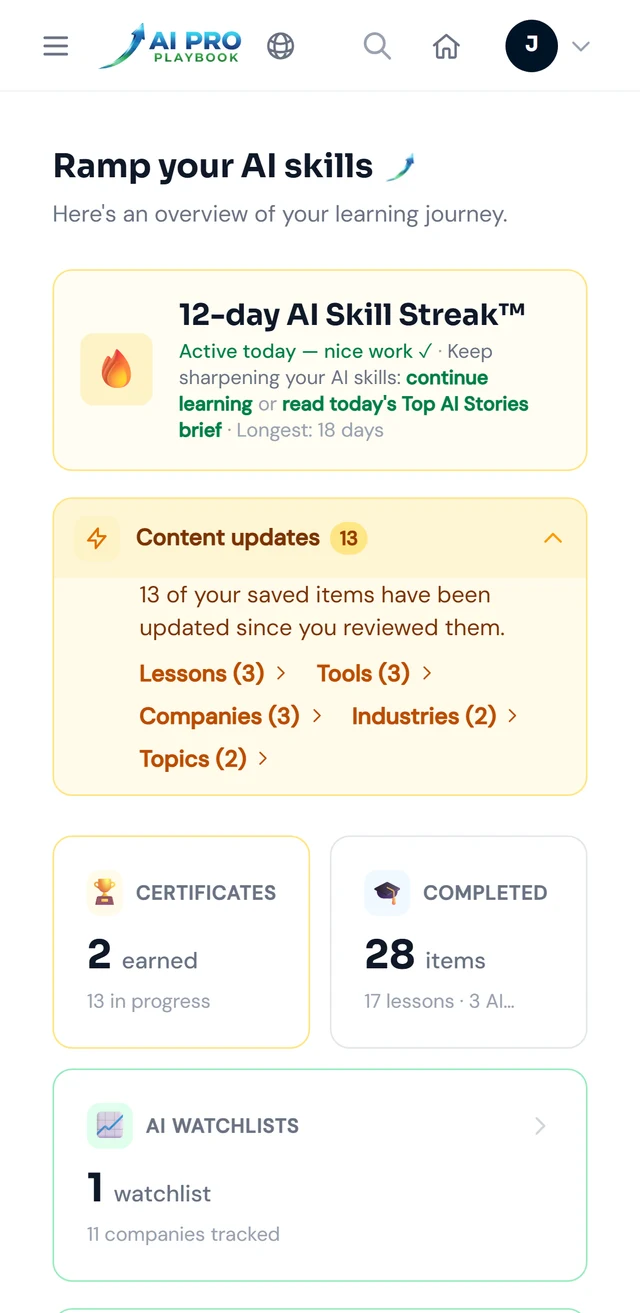

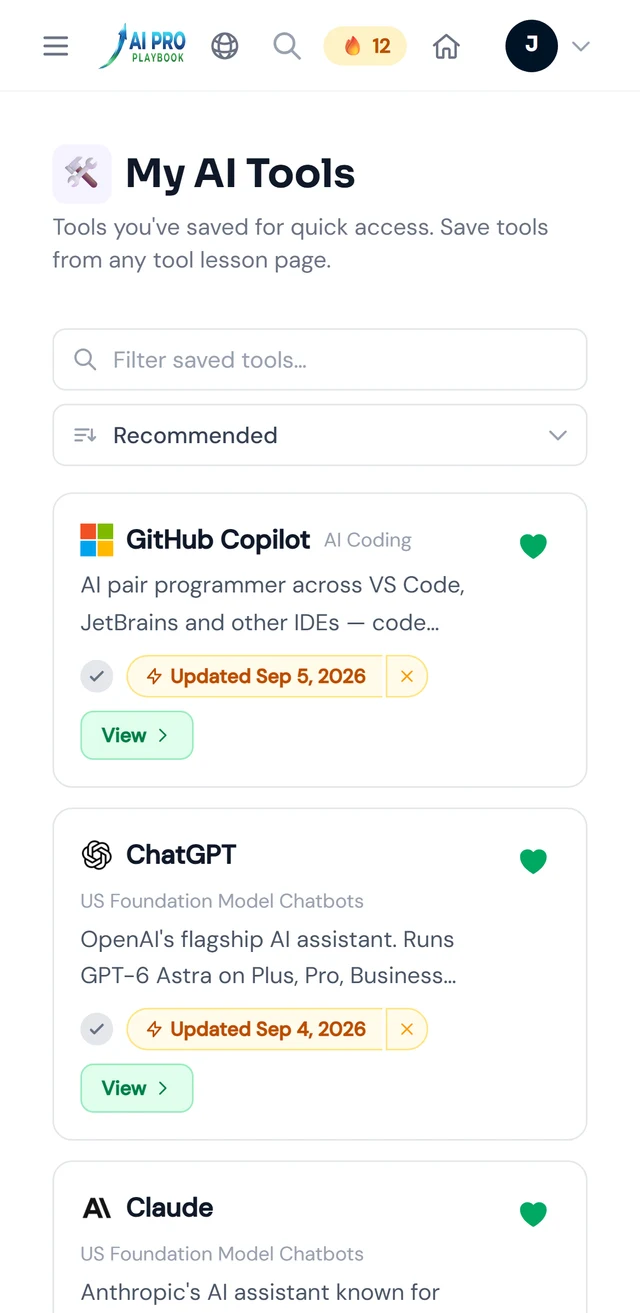
Swipe for Recommended for you and My AI Tools
Your AI Hub — sample data. See desktop view example
🛠️Top AI Tools in This Industry

 Sight Machine
Manufacturing analytics platform that digitizes production data from machines and people, applying AI to identify quality issues, optimize throughput, and reduce unplanned downtime.

 LandingLens
Andrew Ng’s AI-native visual-inspection platform that trains defect-detection models from very few images using a data-centric workflow.
 Dexterity
Physical-AI robots that use learned perception and grasp planning to load, unload, palletize, and sort variable objects.

 o9 Solutions
Enterprise integrated-planning platform (Digital Brain) combining a knowledge graph with ML demand and supply forecasting.
 Augury
Machine health platform using AI, vibration sensors, and IoT to predict equipment failures weeks before they cause downtime, deployed in major manufacturing facilities worldwide.
 Mistral Physics AI
Data-driven foundation models for industrial engineering — learning from physics-solver outputs to predict the behavior of physical systems in seconds on a single GPU. Launch partners include Airbus, ASML, Safran, and Siemens Energy.
 Mujin
MujinMujinOS robot-intelligence controller giving multi-brand industrial robots real-time perception and autonomous motion planning.
 Path Robotics
Autonomous robotic welding using vision-based scanning and AI weld-path planning for high-mix metal fabrication.
 1000 Kelvin AMAIZE
AI co-pilot for metal 3D printing that predicts build defects in near-real time and auto-generates machine-specific print files; integrated into EOS and Autodesk Fusion.