🏭Industry Overview
Updated May 16, 2026US motor-vehicle manufacturing generates over $700 billion in annual revenue across the legacy Big Three (Ford, GM, Stellantis), Tesla, transplants (Toyota, Honda, Hyundai, Nissan), and emerging EV startups (Rivian, Lucid). Annual US production exceeds 10 million vehicles. The industry is undergoing two simultaneous transformations: electrification (EV transition) and autonomy (Level 3-4 driving systems). Both are AI-intensive at the product level; AI is also reshaping the manufacturing workflow itself.
🤖AI in Action
Tesla Full Self-Driving (FSD) leads in autonomous-vehicle AI — over 1.5 million vehicles run FSD-capable hardware. Waymo (Alphabet) operates commercial robotaxi service in multiple cities. Aurora Innovation and Zoox compete in the autonomous-trucking and ride-hailing markets. Factory-robotics AI (FANUC, KUKA, ABB) handles welding, painting, and assembly. NVIDIA DRIVE provides the dominant compute platform for vehicle autonomy. Tesla's in-factory AI (Optimus humanoid robot tests, Dojo training cluster) targets manufacturing-floor automation. Quality-control AI (Cognex, Keyence) inspects parts at line speed. In-cabin AI distribution accelerated dramatically in April 2026: Google rolled Gemini into roughly 4 million 2022-and-newer Cadillac, Chevrolet, Buick, and GMC vehicles via free over-the-air update — the largest single AI deployment yet inside cars, replacing the older Google Assistant with Gemini Live's open-ended voice mode for directions, climate control, music, and vehicle diagnostics. The deal is structured to expand to other automakers on similar terms.
📊Impact on Jobs
Skilled assembly-line workers see partial automation in repetitive tasks (welding, painting, basic assembly); complex assembly remains human. Junior automotive-engineering roles face increasing AI augmentation. Software-engineering and AI/ML roles inside automakers have grown enormously — Tesla, GM Cruise (now consolidated), and Ford employ thousands of AI engineers. Maintenance and skilled-trades roles remain hard to automate. New roles: autonomous-vehicle safety engineer, factory-AI integration lead, AI-powered quality auditor.
Keep track of AI in your sector
- Save the sectors you follow
- Get ⚡ alerts when their tools and companies change
- The AI tools that actually ship here, from 900+ AI tool profiles
- Today’s top AI Stories — the day’s most important AI news, free
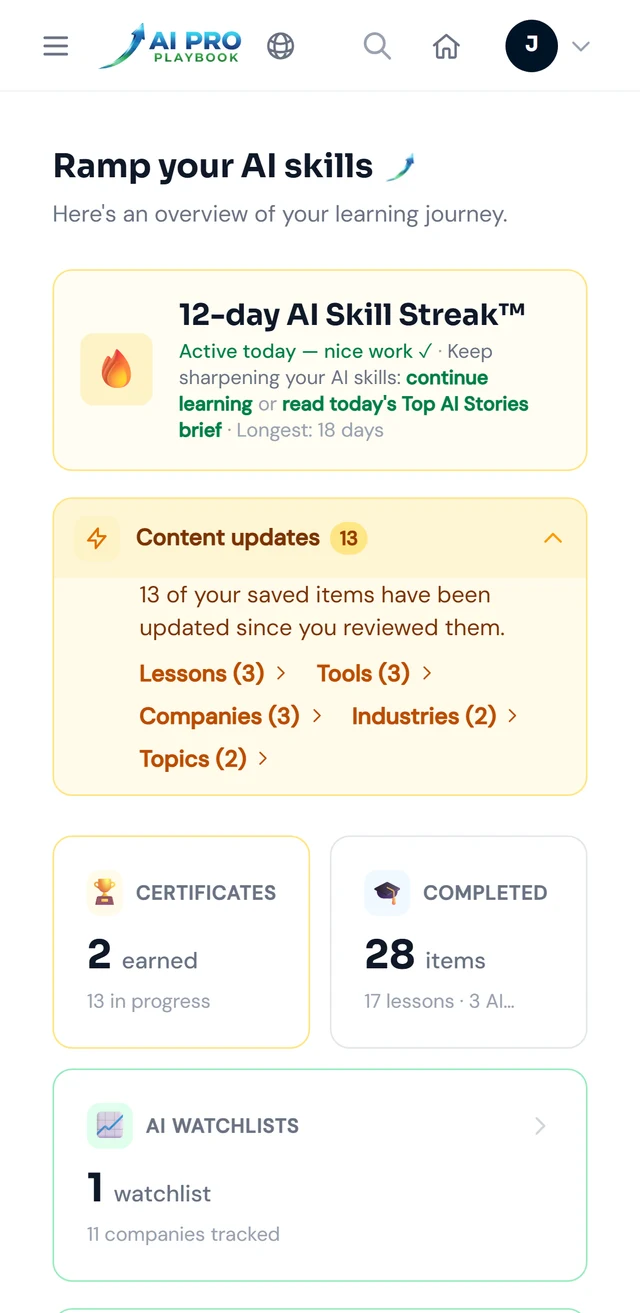
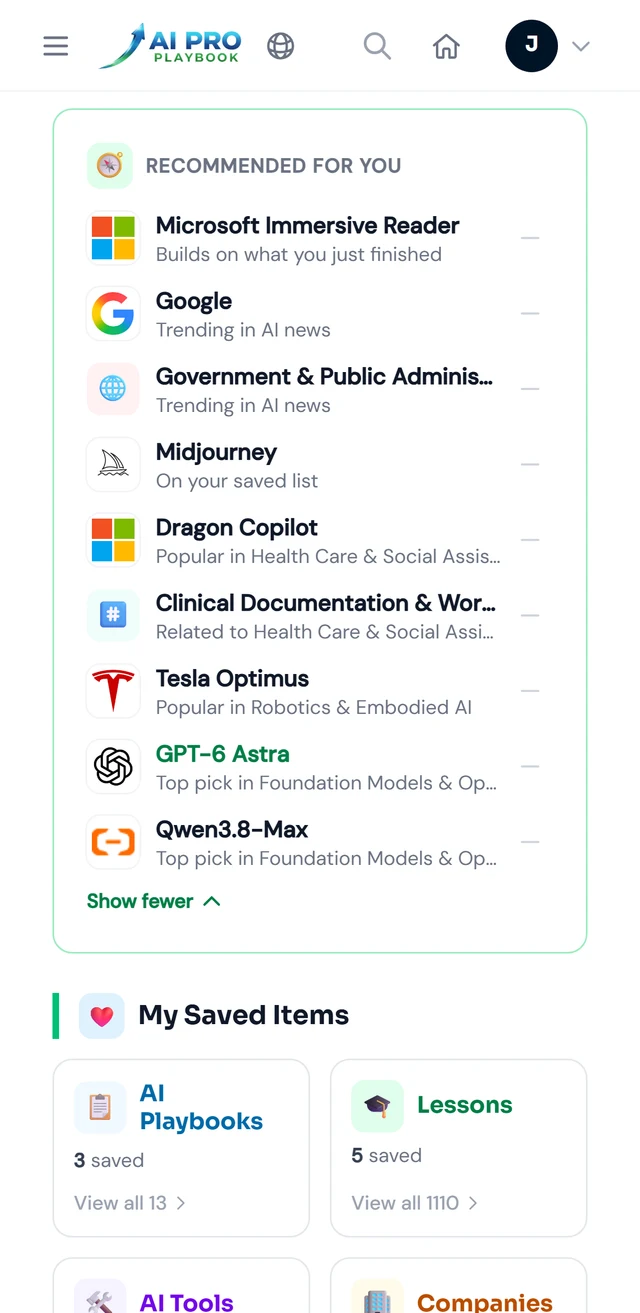
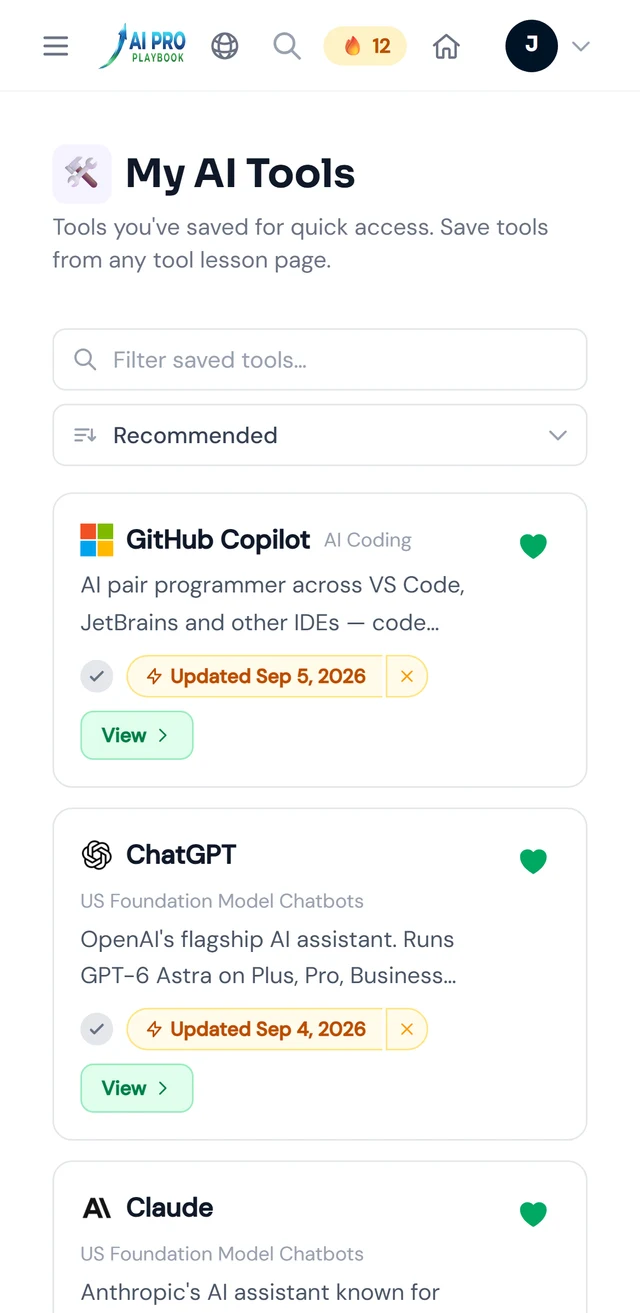
Swipe for Recommended for you and My AI Tools
Your AI Hub — sample data. See desktop view example
🛠️Top AI Tools in This Industry

Tesla's Full Self-Driving technology and purpose-built Cybercab robotaxi, in production since April 2026 and carrying paying riders in Austin since September 3, 2026 under an open NHTSA audit of Tesla's self-certification. Vision-only autonomous driving across ~2M FSD-capable vehicles.
 Waymo One
Most commercially advanced autonomous robotaxi service. Operating in 10+ US cities with 170M+ fully autonomous miles driven. 91% fewer serious-injury crashes vs human drivers.



 Tractable
AI for auto and property claims assessment, enabling insurers to evaluate vehicle and property damage from photos within seconds rather than the traditional weeks-long process.
 ChatGPT
OpenAI's flagship AI assistant. Runs GPT-6 Astra on Plus, Pro, Business and Enterprise since September 3, 2026, with GPT-5.6 Luna still the free default and unlimited free text chats. Includes GPT Image 2, full-duplex voice, Deep Research, ChatGPT Health, Sites for building and hosting web apps, and an auto-enrolled restricted mode for under-18s.
 Claude
Anthropic's AI assistant known for long-context reasoning, coding, and following nuanced instructions, with a 1 million token context window. Offers the current Claude lineup from the economical Opus tier up to the Fable flagship. Strong safety and helpfulness balance.
 Musashi AI
Deep-learning automated optical inspection for automotive-component manufacturing, offered partly as robots-as-a-service.
 Path Robotics
Autonomous robotic welding using vision-based scanning and AI weld-path planning for high-mix metal fabrication.
 Dexterity
Physical-AI robots that use learned perception and grasp planning to load, unload, palletize, and sort variable objects.