🏭Industry Overview
Updated June 14, 2026Automobile and light-duty vehicle manufacturing is a $700+ billion US industry covering passenger cars, SUVs, light trucks, and vans. Production is dominated by the Detroit Three (GM, Ford, Stellantis), Japanese majors (Toyota, Honda, Nissan, Subaru, Mazda), European premium brands (BMW, Mercedes-Benz, Volkswagen, Volvo, Audi), Korean producers (Hyundai, Kia, Genesis), and the US EV-native tier led by Tesla with challengers Rivian and Lucid. Each major OEM operates 5-15 high-volume assembly plants in North America with deeply integrated supply chains stretching to Tier 1 / Tier 2 / Tier 3 component suppliers worldwide. The transition to electric vehicles has compressed historical platform-development cycles from 5-7 years to 2-3 years at the most aggressive players. Production economics depend on platform sharing across nameplates, just-in-time supply chain orchestration, and ruthless cost discipline at the per-unit level.
🤖AI in Action
Automotive AI deployment in 2026 spans three structural fronts: in-vehicle autonomy, factory-floor manufacturing and AI-driven workforce restructuring, and in-cabin AI distribution at scale. On the autonomy side, Tesla FSD & Cybercab represents the most aggressive vertically-integrated AI bet — Tesla's end-to-end neural-network approach to self-driving plus the 2024 Cybercab robotaxi launch. Waymo One operates the most mature commercial robotaxi service, with rides in Phoenix, San Francisco, Los Angeles, and Austin. Zoox Robotaxi (Amazon-owned) targets a custom-built purpose-vehicle for ride-hailing. NVIDIA DRIVE provides the dominant compute platform across Volvo, Mercedes, Hyundai, BMW, and dozens of other OEMs and AV startups. Mobileye remains the most-deployed driver-assist platform globally — installed in over 200 million vehicles across 50-plus OEM partners.
On the factory side, Tesla Optimus represents the most ambitious humanoid-robot manufacturing bet — Tesla plans to deploy thousands inside its own factories before commercializing. In-cabin AI distribution has accelerated through 2026: General Motors rolled Gemini Live into roughly 4 million Cadillac, Chevrolet, Buick, and GMC vehicles via a free over-the-air update, replacing the older Google Assistant, and Apple CarPlay-equipped vehicles will pick up the new Gemini-backed Siri experience after WWDC June 2026.
The auto industry's third AI front is workforce transition. Ford, General Motors, and Stellantis have together eliminated more than 20,000 U.S. salaried positions — roughly 19% of their combined office workforces — while simultaneously hiring for AI-native development, data engineering, cloud engineering, agent and model development, and prompt engineering. GM specifically has cut its IT department by roughly 10% to fund the AI hiring pivot. Beyond these structural moves, most majors continue to deploy ChatGPT, Claude, and Microsoft Copilot for engineering documentation, supply-chain analytics, and dealer-facing customer service — but the Detroit Big Three are leading the sector's shift toward AI engineering as a core white-collar competency.
📊Impact on Jobs
The economic stakes are enormous. Autonomous-vehicle technology represents the largest single transformation in 100+ years of automotive history — if Tesla, Waymo, or Cruise succeed at full Level 4 commercialization, the personal-car-ownership economy could shift fundamentally toward subscription/ride-hailing models. Factory-floor AI is generating 10-15% productivity gains at OEMs running advanced predictive-maintenance and AI-assisted quality inspection. Workforce pressures are real: traditional automotive manufacturing roles (assembly-line workers, quality inspectors) face automation pressure while new roles emerge (AI/ML engineer, autonomy validator, robotics technician). UAW agreements signed in 2023 secured language around AI-disclosure and worker-protection provisions but did not block adoption. The Detroit Three face the steepest competitive challenge — they have legacy union contracts and slower platform-development cycles vs. Tesla's vertical integration and the Chinese tier (BYD, Geely, Nio) that ships AI-rich vehicles at lower price points. Vehicle software is becoming the primary product differentiator; the OEMs that win the next decade will be the ones that build software-engineering competence to match their manufacturing competence.
Keep track of AI in your sector
- Save the sectors you follow
- Get ⚡ alerts when their tools and companies change
- The AI tools that actually ship here, from 900+ AI tool profiles
- Today’s top AI Stories — the day’s most important AI news, free
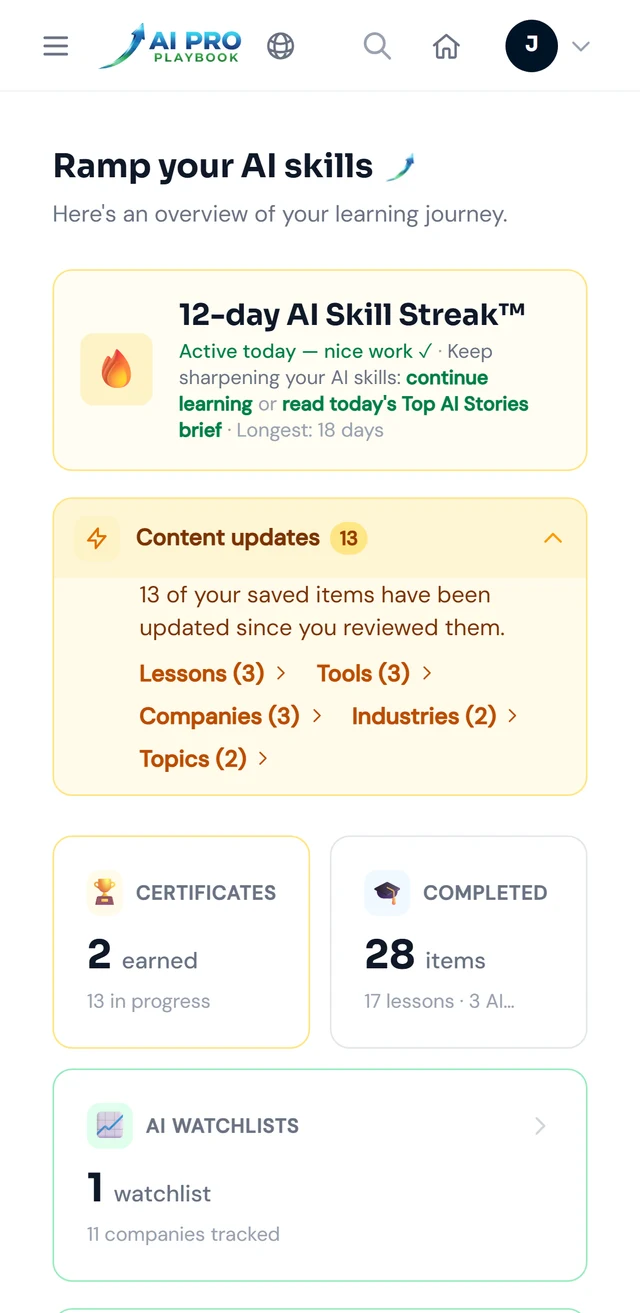
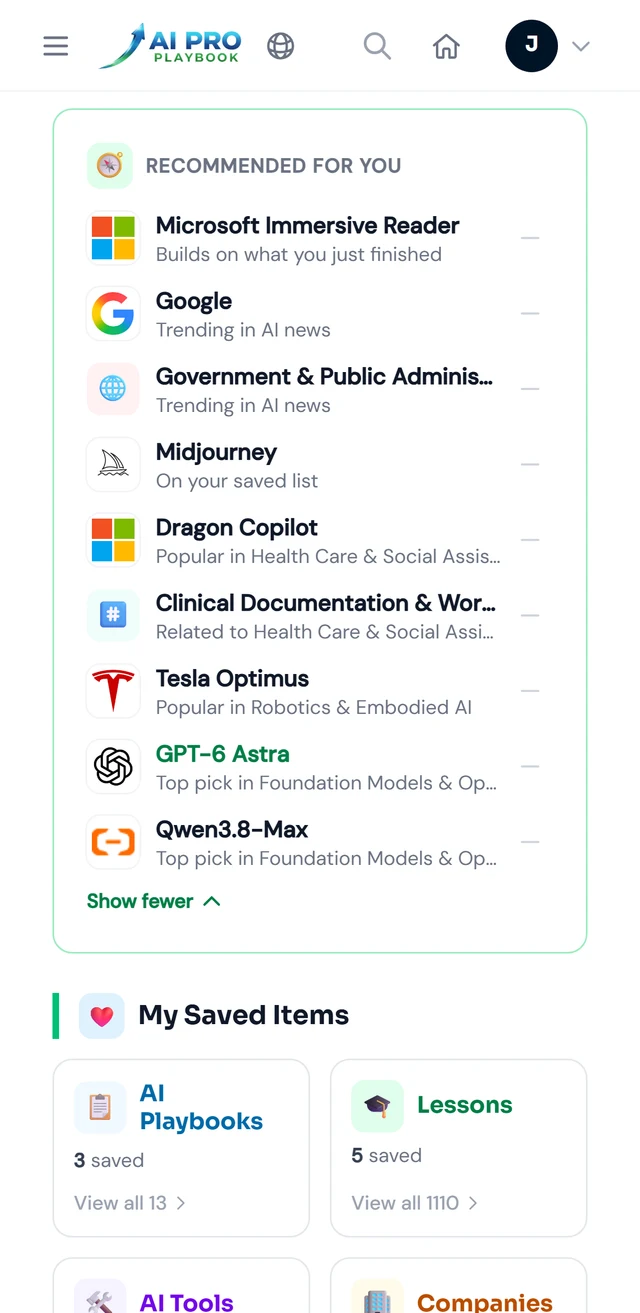
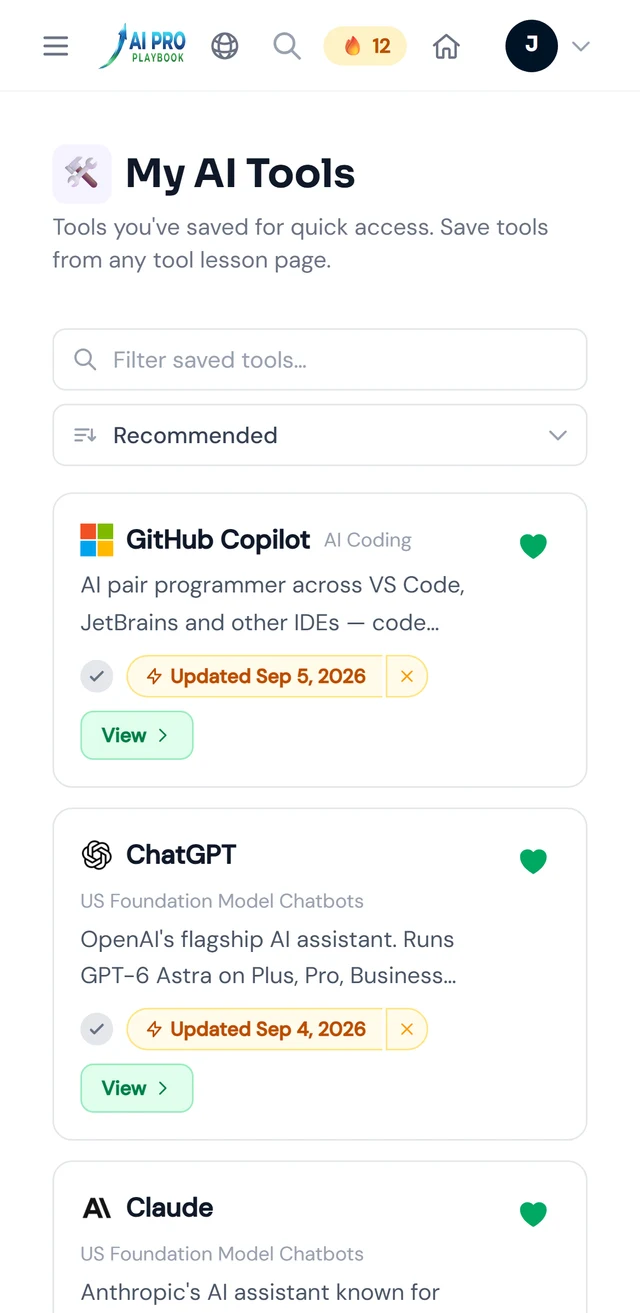
Swipe for Recommended for you and My AI Tools
Your AI Hub — sample data. See desktop view example
🛠️Top AI Tools in This Industry

Tesla's Full Self-Driving technology and purpose-built Cybercab robotaxi, in production since April 2026 and carrying paying riders in Austin since September 3, 2026 under an open NHTSA audit of Tesla's self-certification. Vision-only autonomous driving across ~2M FSD-capable vehicles.
 Waymo One
Most commercially advanced autonomous robotaxi service. Operating in 10+ US cities with 170M+ fully autonomous miles driven. 91% fewer serious-injury crashes vs human drivers.
 Zoox Robotaxi
Amazon's purpose-built autonomous robotaxi with bidirectional design. Operating in San Francisco and Las Vegas, expanding to Austin and Miami. Uber partnership.


 ChatGPT
OpenAI's flagship AI assistant. Runs GPT-6 Astra on Plus, Pro, Business and Enterprise since September 3, 2026, with GPT-5.6 Luna still the free default and unlimited free text chats. Includes GPT Image 2, full-duplex voice, Deep Research, ChatGPT Health, Sites for building and hosting web apps, and an auto-enrolled restricted mode for under-18s.
 Claude
Anthropic's AI assistant known for long-context reasoning, coding, and following nuanced instructions, with a 1 million token context window. Offers the current Claude lineup from the economical Opus tier up to the Fable flagship. Strong safety and helpfulness balance.

 Musashi AI
Deep-learning automated optical inspection for automotive-component manufacturing, offered partly as robots-as-a-service.