📘Overview
Updated July 30, 2026AI security is the newest frontier in cybersecurity: protecting AI systems themselves. As organizations deploy large language models, agents, and AI applications into production — often with access to data and the ability to take actions — these systems become high-value targets and introduce entirely new categories of risk. Securing them is a distinct discipline from traditional cybersecurity, and a fast-growing one, because the attack surface and failure modes are unlike anything before.
💡The AI Opportunity
AI systems can be manipulated through prompt injection, where hidden instructions hijack a model's behavior; through data poisoning that corrupts what a model learns; and through attacks that extract sensitive training data or jailbreak safety controls. As AI agents gain the ability to act — moving money, running code, accessing systems — the stakes rise sharply. A new layer of tools secures AI applications, monitors model behavior, and red-teams systems for these novel weaknesses. The discipline is defining itself in real time as AI deployment outpaces the security around it.
A distinct sub-discipline has formed around non-human identity: the credentials that belong to software rather than people. Service accounts, tokens, digital keys and AI agents all authenticate and act, and they now vastly outnumber human accounts inside most enterprises — but they are provisioned casually, rarely rotated, and often over-permissioned, which makes them an attractive path for an attacker. Agents sharpen the problem, because an agent that is handed broad credentials can take a long chain of actions before anyone reviews the first one. The market has priced this in: in July 2026 the data-security company Cyera, valued at $12 billion a month earlier, signed a letter of intent to acquire the non-human identity specialist Oasis Security for $1 billion. Practical controls look familiar in outline and different in detail — inventory every non-human identity, scope each to least privilege, rotate and expire credentials automatically, and log agent actions in a form a human can audit after the fact.
🤖AI in Action
Cisco AI Defense secures enterprise AI applications — protecting models and agents against prompt injection, data leakage, and misuse — and Cisco Secure AI Factory with NVIDIA builds security into the infrastructure that runs AI workloads. The assistants Claude and ChatGPT help security teams understand AI threats and design defenses, even as they are also the kind of system being protected. This is a young category, and the tooling is evolving as fast as the threats.
📊Impact on Jobs
AI security is among the fastest-emerging specialties in all of technology, because it barely existed a few years ago and is now essential as AI moves into production everywhere. The opportunity is large for security professionals who learn it: the skills are scarce, the demand is exploding, and the problems — securing systems that are probabilistic, manipulable, and increasingly autonomous — are genuinely new. The stakes climb as AI agents gain real-world capabilities, since a compromised agent can act on its access. This is the security frontier most specific to the AI era, and it is where defending AI and the broader project of building trustworthy, safe AI systems most directly meet.
Keep track of the topics you follow
- Save the topics you follow
- Get ⚡ alerts when their tools and companies change
- Curated tools for this topic, from 900+ AI tool profiles
- Today’s top AI Stories — the day’s most important AI news, free
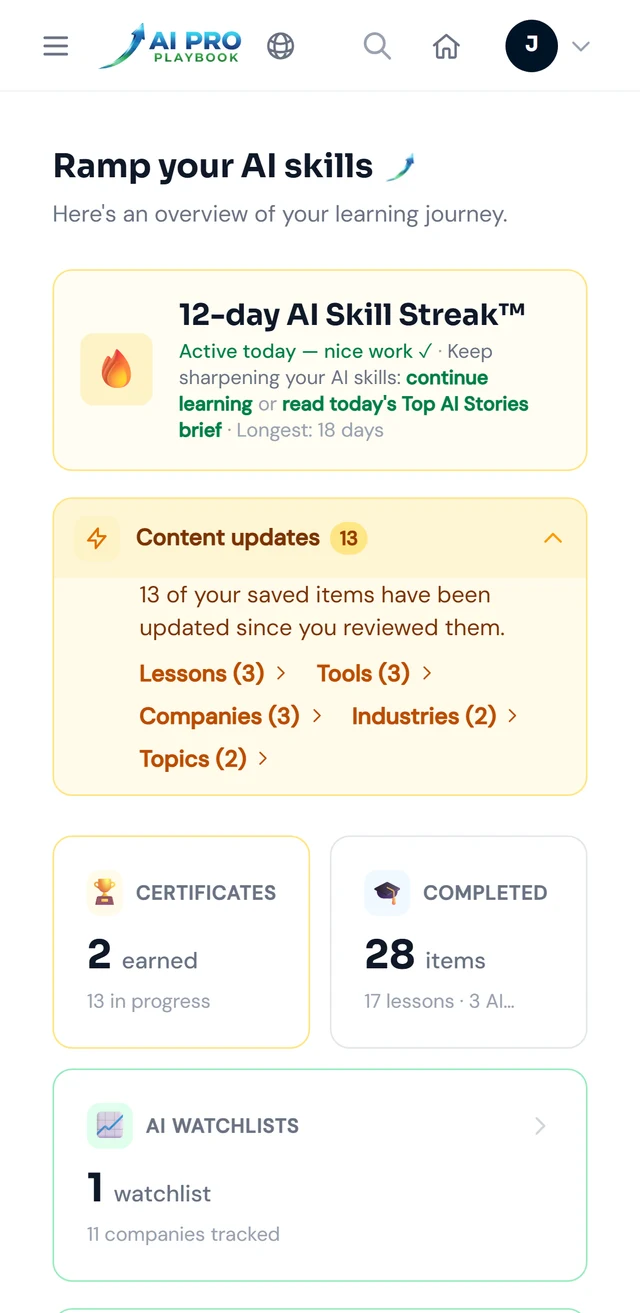
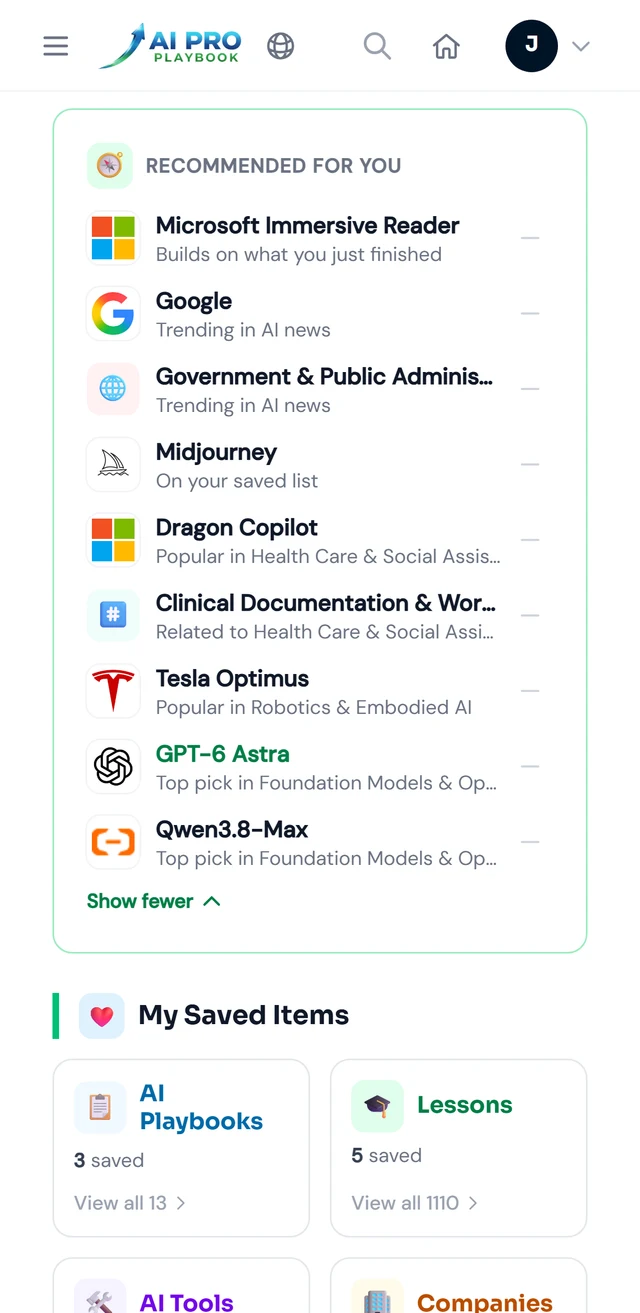
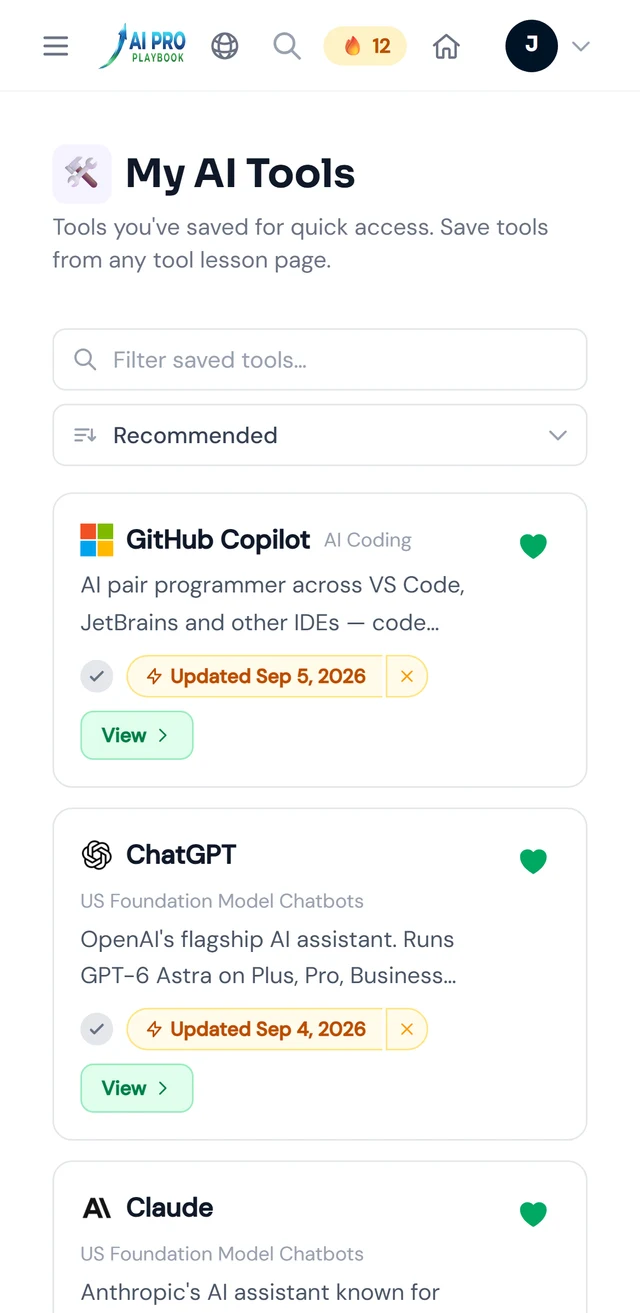
Swipe for Recommended for you and My AI Tools
Your AI Hub — sample data. See desktop view example
🛠️Top AI Tools for This Topic
Cisco's platform for securing the AI applications, models, and agents enterprises build and run. Algorithmic red-teaming and runtime guardrails (with NVIDIA NeMo Guardrails integration), model and MCP-server scanning for poisoned data and malicious tools, and real-time inspection of agentic traffic for memory poisoning, tool misuse, and intent hijacking. Includes the open-source DefenseClaw agent framework and MCP Scanner.
 HiddenLayer
Security for AI and ML systems — model-supply-chain scanning, adversarial-attack simulation, and runtime detection and response that protect models and agents in production.

Cisco's validated reference architecture for mass-scale AI data centers, co-engineered with NVIDIA. Combines Silicon One networking chips (G300 scale-out, P200 scale-across), 8000 Series and N9100/N9300 switches, and Hypershield security with NVIDIA accelerated computing — designed to connect AI accelerators scale-up in the rack, scale-out across rows, and scale-across between data centers hundreds of kilometers apart.
 Claude
Anthropic's AI assistant known for long-context reasoning, coding, and following nuanced instructions, with a 1 million token context window. Offers the current Claude lineup from the economical Opus tier up to the Fable flagship. Strong safety and helpfulness balance.
 ChatGPT
OpenAI's flagship AI assistant. Runs GPT-6 Astra on Plus, Pro, Business and Enterprise since September 3, 2026, with GPT-5.6 Luna still the free default and unlimited free text chats. Includes GPT Image 2, full-duplex voice, Deep Research, ChatGPT Health, Sites for building and hosting web apps, and an auto-enrolled restricted mode for under-18s.