🏭Industry Overview
Updated May 16, 2026Building inspection covers two distinct workflows: code-compliance inspection during construction (third-party inspectors, building-department officials, special inspectors for structural and MEP systems) and condition assessment of existing buildings (real-estate due-diligence, insurance underwriting, facility-management deferred-maintenance audits). The sector employs roughly 100,000 inspectors across the US, with revenue around $4 billion annually. Inspectors typically hold ICC certifications (International Code Council) for code work or industry-specific credentials (ASHI, InterNACHI, ABPA) for residential and commercial property condition. The work has historically been visual, paper-clipboard, and judgment-based — a senior inspector walks a site, fills out a checklist, photographs deficiencies, and produces a written report. Time on-site is the binding constraint. AI is rapidly compressing the data-collection and analysis phases while leaving the regulatory-judgment role with the licensed inspector.
🤖AI in Action
Skydio's autonomous drones are widely deployed for building-envelope, bridge, and transmission-line inspection — pilots set the perimeter, the drone plans its own flight path, and computer vision flags anomalies in the captured imagery. Buildots and OpenSpace handle construction-site progress and quality monitoring: helmet-mounted 360° cameras capture the site once a week, AI compares the as-built reality to the BIM model, and the platform surfaces deviations, schedule slippage, and rework risk. DroneDeploy supports inspection workflows alongside its surveying focus. Procore AI integrates AI features into the construction-management platform that most general contractors run their projects on — including inspection logs and deficiency tracking. Bentley iTwin captures lifecycle digital twins for inspection over time. ChatGPT and Claude help inspectors draft narrative reports, look up code provisions, and summarize manufacturer documentation when assessing whether installed equipment meets spec.
📊Impact on Jobs
The economic impact is real but uneven across the inspector population. High-volume residential inspection — thousands of routine condition assessments per market per month — is being squeezed by AI-augmented platforms that let one inspector handle 50% more inspections per week. Specialty inspection (structural, building-envelope, fire-protection) is growing more slowly but adopting drone and computer-vision workflows in earnest. The biggest workforce pressure is on the bottom of the pyramid: technicians who collected field data for senior inspectors. Their work is being absorbed by drones and AI photo analysis. Senior inspectors gain leverage from AI-augmented productivity but face downward fee pressure as competitors deliver faster turnarounds. Regulatory liability remains the human inspector's moat — code interpretation, judgment calls on borderline conditions, and signed reports stay with licensed individuals. New roles: inspection-data engineer, AI-tooling lead at large firms.
Keep track of AI in your sector
- Save the sectors you follow
- Get ⚡ alerts when their tools and companies change
- The AI tools that actually ship here, from 900+ AI tool profiles
- Today’s top AI Stories — the day’s most important AI news, free
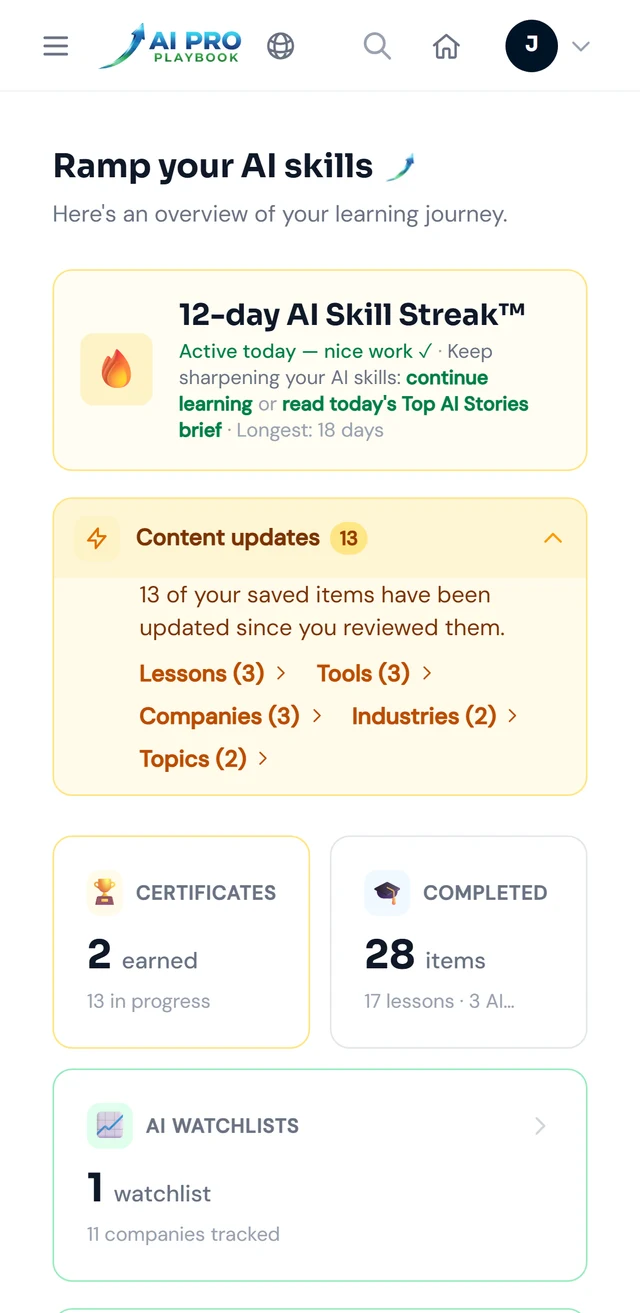
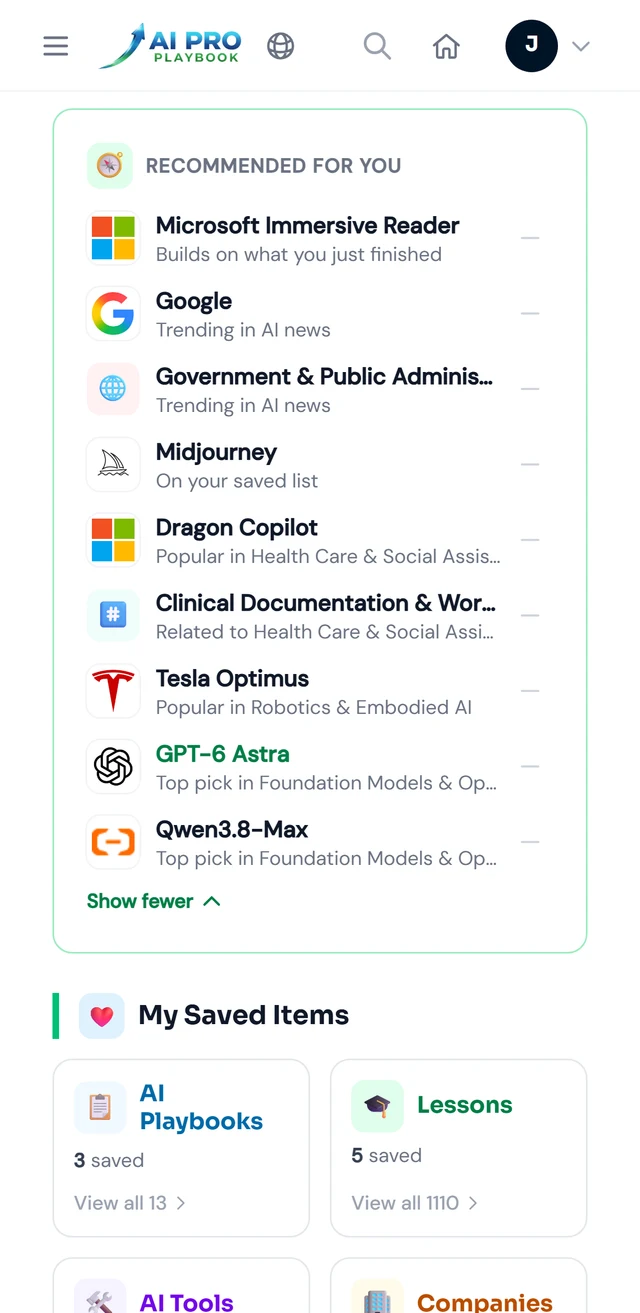
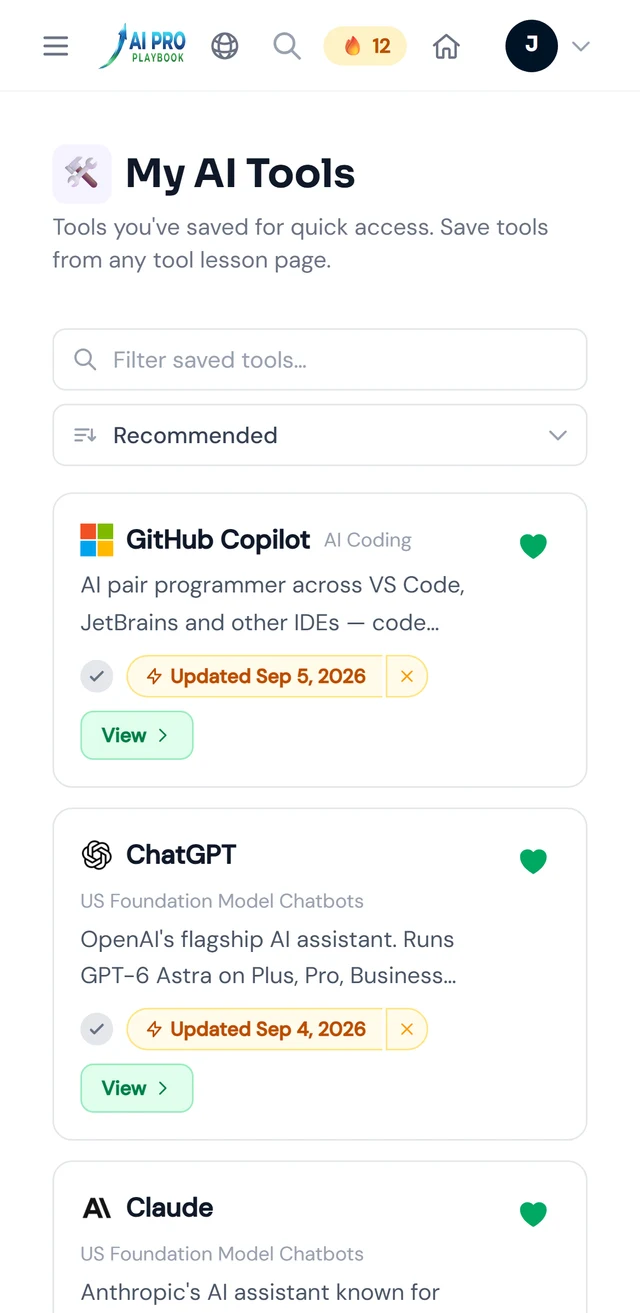
Swipe for Recommended for you and My AI Tools
Your AI Hub — sample data. See desktop view example
🛠️Top AI Tools in This Industry
 Skydio
Autonomous drones for industrial inspection, public safety, and defense — Skydio's flight-stack AI handles obstacle avoidance, path planning, and target tracking without a pilot in the loop. Widely used for bridge, transmission-line, and building-envelope inspection.
 Buildots
AI-powered construction progress tracking — captures site walks via 360° helmet cameras, then compares as-built reality to the BIM schedule to flag delays and rework risk before they cascade.
 OpenSpace
360° construction site capture with AI that automatically maps photos to BIM coordinates, tracks progress, and surfaces deviations between as-built reality and the design model. Used by ENR Top 400 contractors.
 DroneDeploy
Drone software platform for surveying, mapping, and construction site monitoring. AI-powered photogrammetry turns drone flights into 2D orthomosaics, 3D models, and progress reports tied to BIM.


 ChatGPT
OpenAI's flagship AI assistant. Runs GPT-6 Astra on Plus, Pro, Business and Enterprise since September 3, 2026, with GPT-5.6 Luna still the free default and unlimited free text chats. Includes GPT Image 2, full-duplex voice, Deep Research, ChatGPT Health, Sites for building and hosting web apps, and an auto-enrolled restricted mode for under-18s.
 Claude
Anthropic's AI assistant known for long-context reasoning, coding, and following nuanced instructions, with a 1 million token context window. Offers the current Claude lineup from the economical Opus tier up to the Fable flagship. Strong safety and helpfulness balance.