🏭Industry Overview
Updated May 16, 2026Department Stores (NAICS 4521) covers traditional department stores, warehouse clubs, and the broader multi-category general merchandise retailers. The category leaders are Walmart (~$680 billion in annual revenue across retail and e-commerce — the largest retailer in the world), Costco (warehouse club, ~$250 billion), Target (~$110 billion), and the surviving traditional department-store chains: Macy's, Nordstrom, Kohl's, JCPenney (private since 2020), Dillard's, and Belk. The off-price segment — TJX Companies (TJ Maxx, Marshalls, HomeGoods), Ross Stores, Burlington — has been the structural growth winner over the past 15 years as traditional mall-anchored department stores have struggled. International giants include Carrefour, Tesco, El Corte Inglés, Marks & Spencer, and the Japanese department-store conglomerates (Mitsukoshi, Takashimaya). Combined US department-store revenue exceeds $700 billion annually.
🤖AI in Action
AI is reshaping the operations stack at major retailers. Walmart's "Sparky" AI assistant (powered by Anthropic Claude) is deployed across associate-facing tools and the customer-facing Walmart app; Target's Generative AI tools support merchandising and supply-chain decisioning. Assortment planning AI (Symphony AI Retail, Blue Yonder, Oracle Retail) optimizes which products to carry by store and season. Dynamic pricing engines (Revionics, dunnhumby) test elasticity and respond to competitor moves in real time. Personalized marketing uses AI for email, app push, and digital-circular content (Walmart-Spark, Target Circle, Kroger 84.51°). Computer-vision is increasingly applied to store shelf-monitoring (out-of-stock detection, planogram compliance), self-checkout shrinkage detection (Mashgin, Standard Cognition, Amazon Just Walk Out for partner retailers), and store traffic analytics. The off-price chains apply AI heavily to inventory-allocation models (TJX's "treasure-hunt" assortment is powered by ML-driven distribution decisions). Generative AI also accelerates product copywriting and image generation for online catalogs.
📊Impact on Jobs
Department stores employ over 4 million people in the US (across all formats), making this one of the largest retail employer categories. Cashier roles are in long-term decline as self-checkout adoption grows. Sales-floor associate roles face mixed pressure — task-management AI improves productivity per associate but also reduces the headcount needed per store. Visual-merchandising and creative roles in the catalog/online segment are being heavily AI-augmented (generative product imagery, AI copy for catalog listings). Corporate buyer and merchandising roles are seeing role evolution rather than reduction — AI handles the analytical heavy-lifting (demand forecasting, allocation modeling), freeing buyers for strategic vendor relationships and trend identification. Loss-prevention and asset-protection roles are increasingly AI-augmented (computer vision in stores, ML on POS data). New roles emerging: AI-merchandising analyst, retail-data-science generalist, omnichannel-experience designer, AI-personalization marketer.
Keep track of AI in your sector
- Save the sectors you follow
- Get ⚡ alerts when their tools and companies change
- The AI tools that actually ship here, from 900+ AI tool profiles
- Today’s top AI Stories — the day’s most important AI news, free
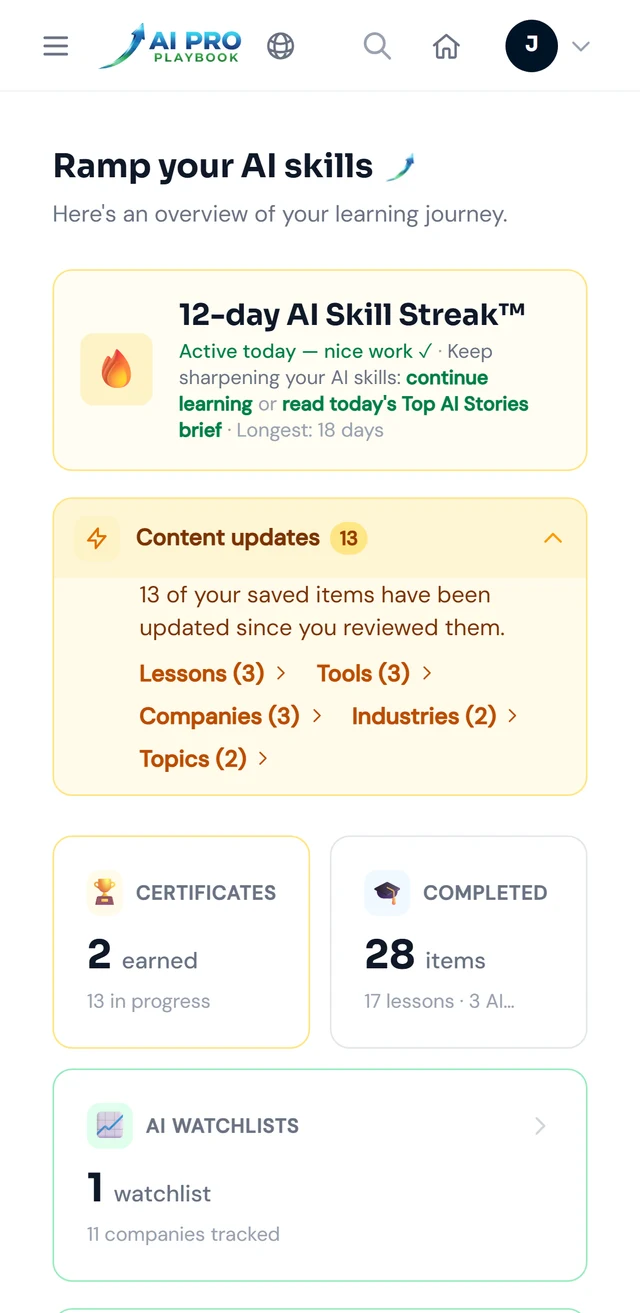
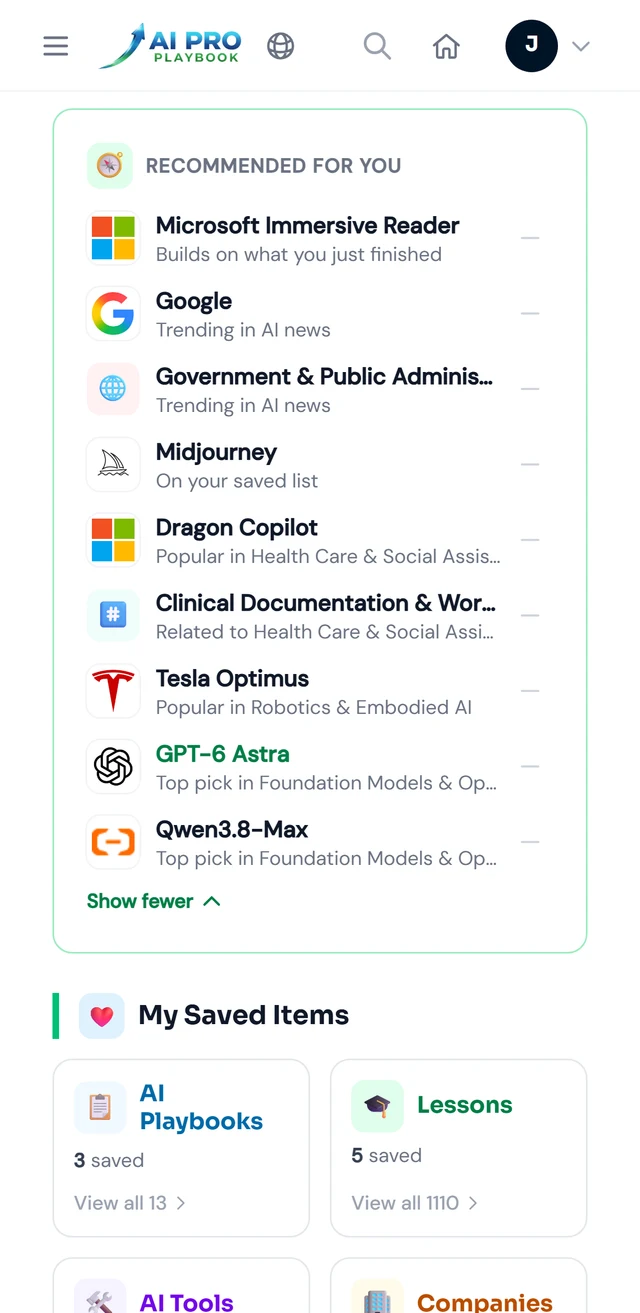
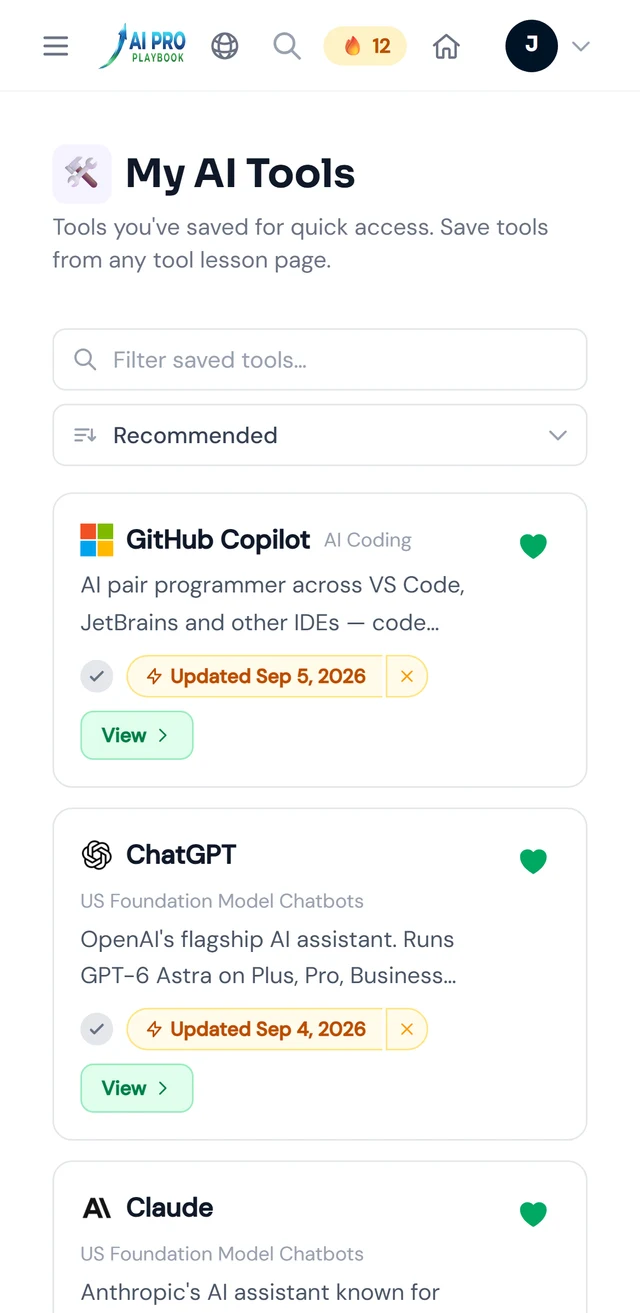
Swipe for Recommended for you and My AI Tools
Your AI Hub — sample data. See desktop view example
🛠️Top AI Tools in This Industry


 Dynamic Yield
AI-powered personalization platform for e-commerce and retail, delivering individualized product recommendations, content, and pricing to each visitor based on real-time behavioral signals.
 Nosto
NostoE-commerce personalization platform using AI to deliver hyper-personalized product recommendations, content, and pop-ups across online stores to increase conversion and average order value.

Klarna's AI shopping and customer-service assistant. Initially credited with doing the work of roughly 700 agents, Klarna later walked back its AI-only support stance and re-introduced human agents for complex cases after service-quality concerns — a noted lesson on the limits of AI customer service.
 ChatGPT
OpenAI's flagship AI assistant. Runs GPT-6 Astra on Plus, Pro, Business and Enterprise since September 3, 2026, with GPT-5.6 Luna still the free default and unlimited free text chats. Includes GPT Image 2, full-duplex voice, Deep Research, ChatGPT Health, Sites for building and hosting web apps, and an auto-enrolled restricted mode for under-18s.
 Claude
Anthropic's AI assistant known for long-context reasoning, coding, and following nuanced instructions, with a 1 million token context window. Offers the current Claude lineup from the economical Opus tier up to the Fable flagship. Strong safety and helpfulness balance.