🏭Industry Overview
Updated May 16, 2026Postproduction services covers everything that happens between principal photography wrap and final delivery: editing, sound design, music supervision, color grading, visual effects, dialogue replacement (ADR), captioning, and final mastering. The US postproduction industry generates roughly $5 billion annually across major studio in-house facilities (Skywalker Sound, Warner Post, Sony Pictures Post), independent post houses (Company 3, Technicolor, Light Iron), and a long tail of boutique editorial firms. Most projects move through 5-15 specialty vendors before final delivery, with each vendor handling one technical discipline. The discipline is highly unionized (IATSE Local 700 covers most editorial work) and historically hourly-billed — making it directly vulnerable to AI-driven productivity gains that compress total billable hours per project. Streaming-platform volume and tighter delivery windows have pushed the industry toward faster turnaround at lower per-hour rates.
🤖AI in Action
AI has automated the most labor-intensive postproduction tasks. Adobe's Sensei AI is now deeply embedded across Premiere Pro and After Effects — auto-rotoscoping, scene detection, automatic transcription with searchable timecodes, and color matching across shots that used to take hours of manual work. Adobe Podcast Enhance handles dialog cleanup at one-click quality that approaches what a sound editor would produce in 30 minutes of manual EQ and noise reduction. Descript transformed podcast and dialogue editing — text-based editing where deleting a word from a transcript automatically removes the corresponding audio. Runway ML brings generative video into the post pipeline — extending shots, generating fill backgrounds, and replacing elements that would have required VFX rotoscoping. ElevenLabs handles dialogue replacement and re-recording without bringing actors back into a studio. Adobe Firefly generates background plates, replacement elements, and stylized treatments. The horizontal models (ChatGPT, Claude) help editors write release notes, format delivery specs, and manage complex multi-vendor coordination.
📊Impact on Jobs
The labor economics are shifting fast. Junior editorial roles — assistant editor, transcriber, captioning specialist, color matcher — are the most exposed. A reality TV show that used to require five assistant editors handling overnight ingest, transcription, and selects-pulling can now run with two assistants and a heavier reliance on AI tools. Senior editors and colorists gain leverage from AI-augmented workflows but face downward fee pressure as competitors deliver tighter turnarounds at lower bid rates. The middle tier (10-15-year career professionals doing routine episodic work) faces the steepest squeeze. New roles emerging: AI-pipeline TD (technical director), AI-assisted-edit reviewer, prompt-design specialist for generative-video plates. The IATSE 2024 contracts secured AI-disclosure and consent provisions but did not block adoption — the industry is unionized into AI rather than shielded from it. Indie filmmakers and YouTube-native creators are the biggest net beneficiaries: post work that previously required engaging a $5,000-per-week post house can now be done at home with $200/month software subscriptions.
Keep track of AI in your sector
- Save the sectors you follow
- Get ⚡ alerts when their tools and companies change
- The AI tools that actually ship here, from 1,000+ AI tool profiles
- Today’s top AI Stories — the day’s most important AI news, free
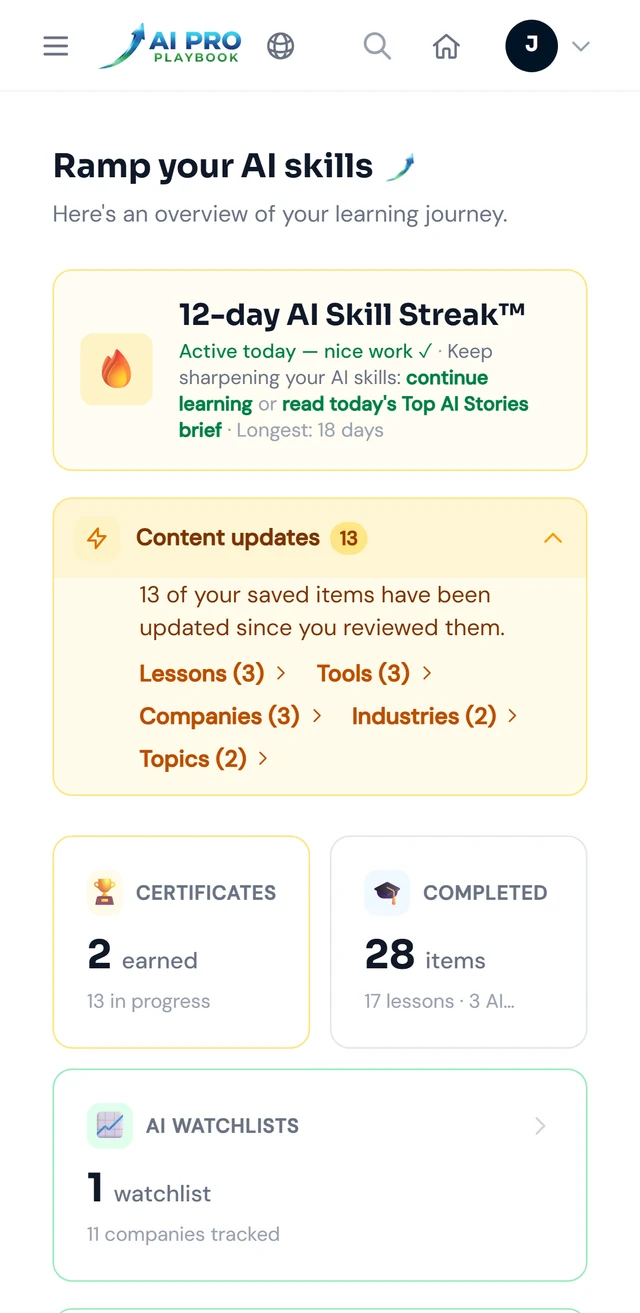
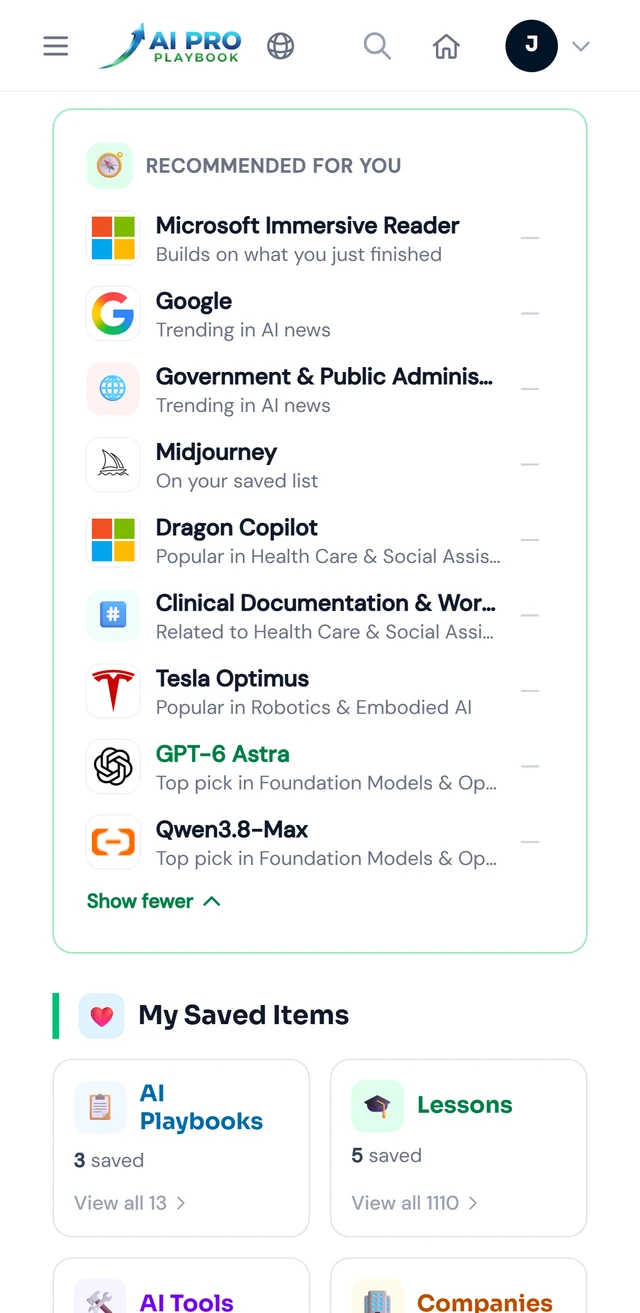
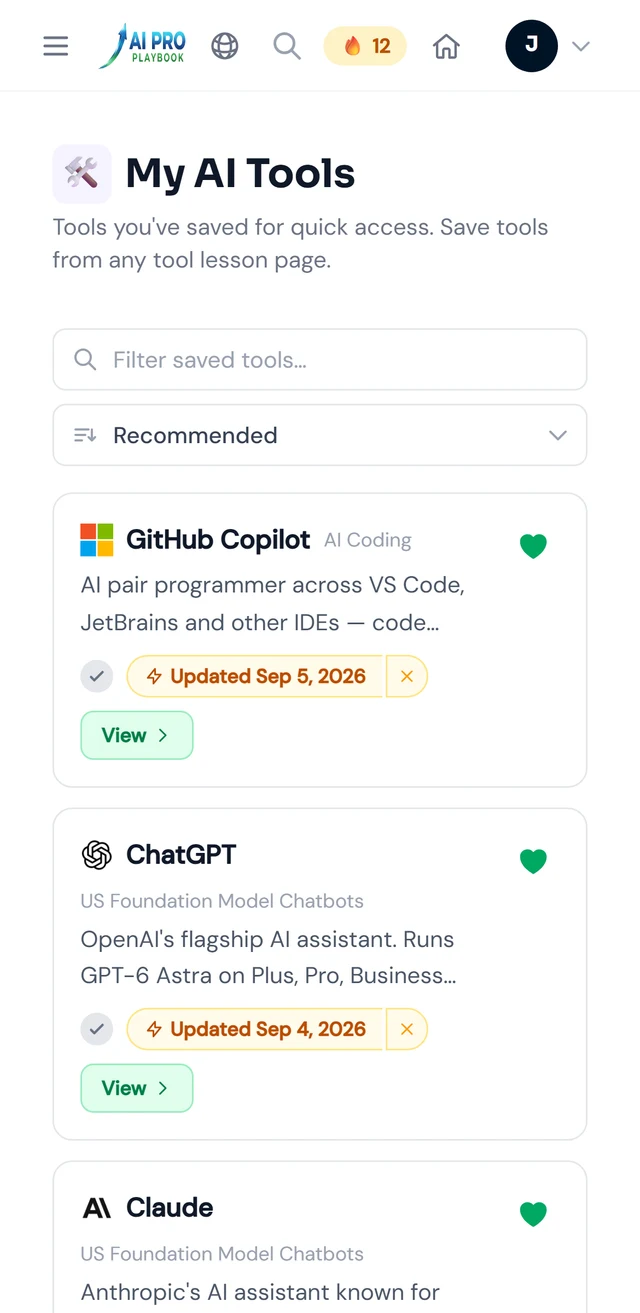
Swipe for Recommended for you and My AI Tools
Your AI Hub — sample data. See desktop view example
🛠️Top AI Tools in This Industry

Adobe AI model family powering Creative Cloud. Firefly Image Model 5 (GA March 2026) generates photorealistic 4MP images. Firefly Video Model adds commercially safe AI video (Text to Video, Image to Video, Generative Extend). 30+ model hub including Google, Runway, Kling. Custom Models in public beta. Generate Soundtrack + Speech. Unlimited generations for subscribers. Trained on licensed Adobe Stock — commercially safe.
 Descript
AI-powered video and podcast editing platform. Edit video like a doc, remove filler words, clone your voice, and create AI overdub replacements.
 Runway ML
Professional AI video creation platform used by major studios. Flagship Gen-4.5 (December 2025) tops independent text-to-video rankings, alongside Gen-4 Turbo for fast iteration, Aleph for in-context editing of real footage, and Act-Two for performance capture.
 ElevenLabs
The leading AI voice generation platform. Ultra-realistic text-to-speech in 32 languages, voice cloning, and a massive voice library. Used by 1M+ creators.
 ChatGPT
OpenAI's flagship AI assistant. Runs GPT-6 Astra on Plus, Pro, Business and Enterprise since September 3, 2026, adds GPT-6 Sol to paid chat from October 7, and makes GPT-6 Luna the free and Go default from October 8, with unlimited free text chats. Answers can include interactive diagrams, charts and calculators (Intelligent UI). Includes GPT Image 2, full-duplex voice, Deep Research, ChatGPT Health, Sites for building and hosting web apps, and an auto-enrolled restricted mode for under-18s. Since September 29, 2026 Pro and Business Premium plans include a Dot, an always-on personal agent.
 Claude
Anthropic's AI assistant known for long-context reasoning, coding, and following nuanced instructions, with a 1 million token context window. Offers the current Claude lineup from the economical Opus tier up to the Fable flagship. Strong safety and helpfulness balance.

Microsoft's AI assistant, built into Windows, Edge and Microsoft 365 and rebuilt in September 2026 around Home, Code and Autopilot tabs, drawing on models from OpenAI and Anthropic. In October 2026 Microsoft previewed Copilot acting on files stored on a PC, with Execution Containers to sandbox agents in Windows 11.