📘Overview
Updated July 22, 2026Behind every shipment is a web of decisions — which truck, which route, which supplier, and what could go wrong. Freight and logistics intelligence applies AI to those decisions: matching loads to trucks, predicting arrival times, automating carrier dispatch, and mapping the multi-tier supplier networks where disruption originates.
💡The AI Opportunity
This topic covers the software brains of freight and supply chains — pooled-freight matching, supply-chain visibility with predictive ETAs, decision-automation for carriers, and the risk-intelligence platforms that forecast where a supply chain will break.
🤖AI in Action
The AI takes several genuine forms: combinatorial optimization that fills trucks profitably, machine-learning ETA prediction, stochastic decision-automation for dispatch, and federated-graph and behavioral models that map and score supply-chain risk. The honest framing matters here — some logistics platforms bolt 'AI' onto track-and-trace or routing heuristics, so the topic leans on the players where machine learning is genuinely load-bearing (matching, prediction, decision-automation, risk graphs), noting where a product's core is visibility with an added predictive layer.
Keep track of the topics you follow
- Save the topics you follow
- Get ⚡ alerts when their tools and companies change
- Curated tools for this topic, from 900+ AI tool profiles
- Today’s top AI Stories — the day’s most important AI news, free
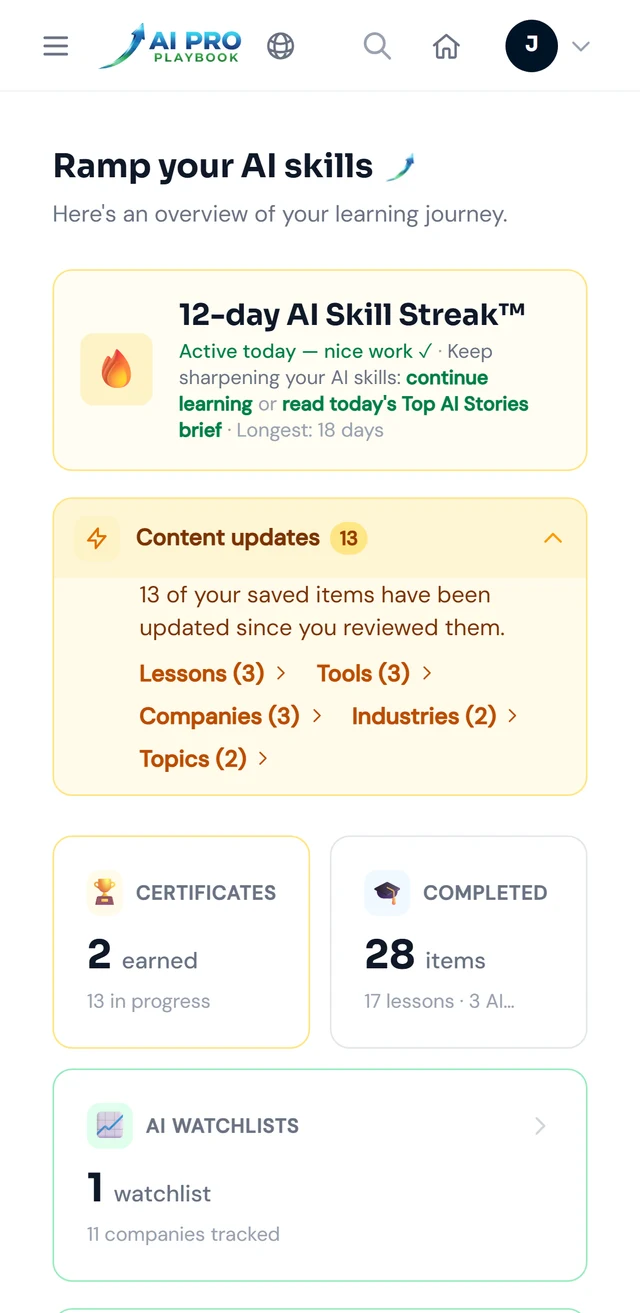
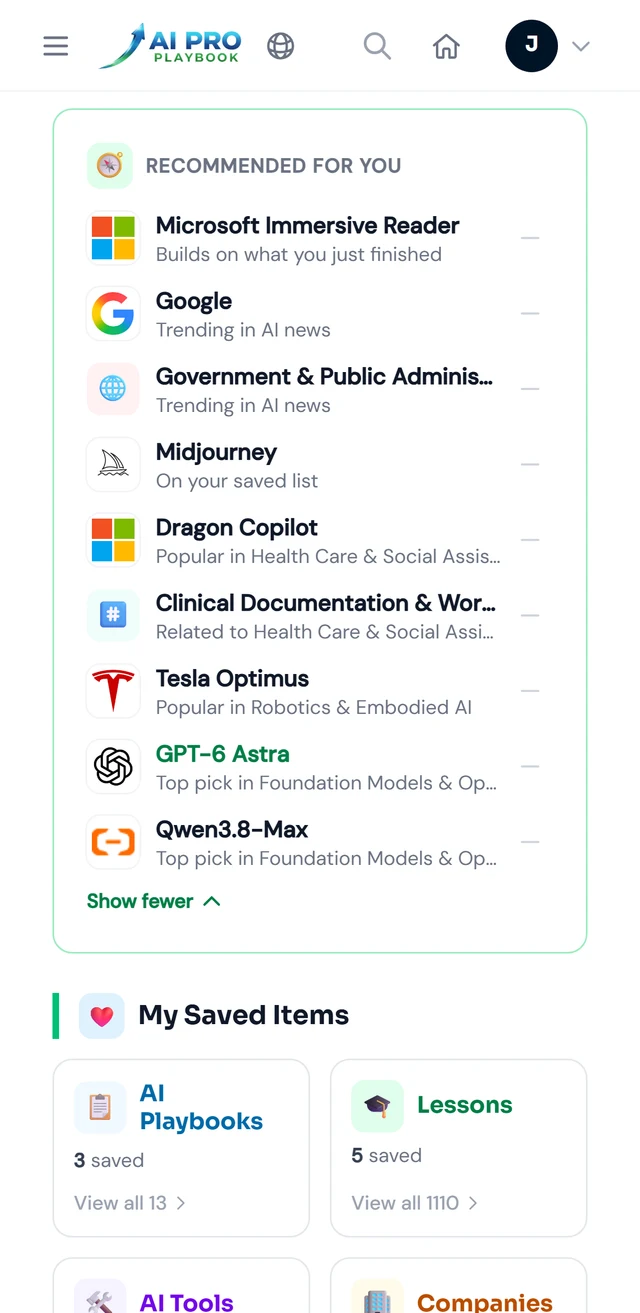
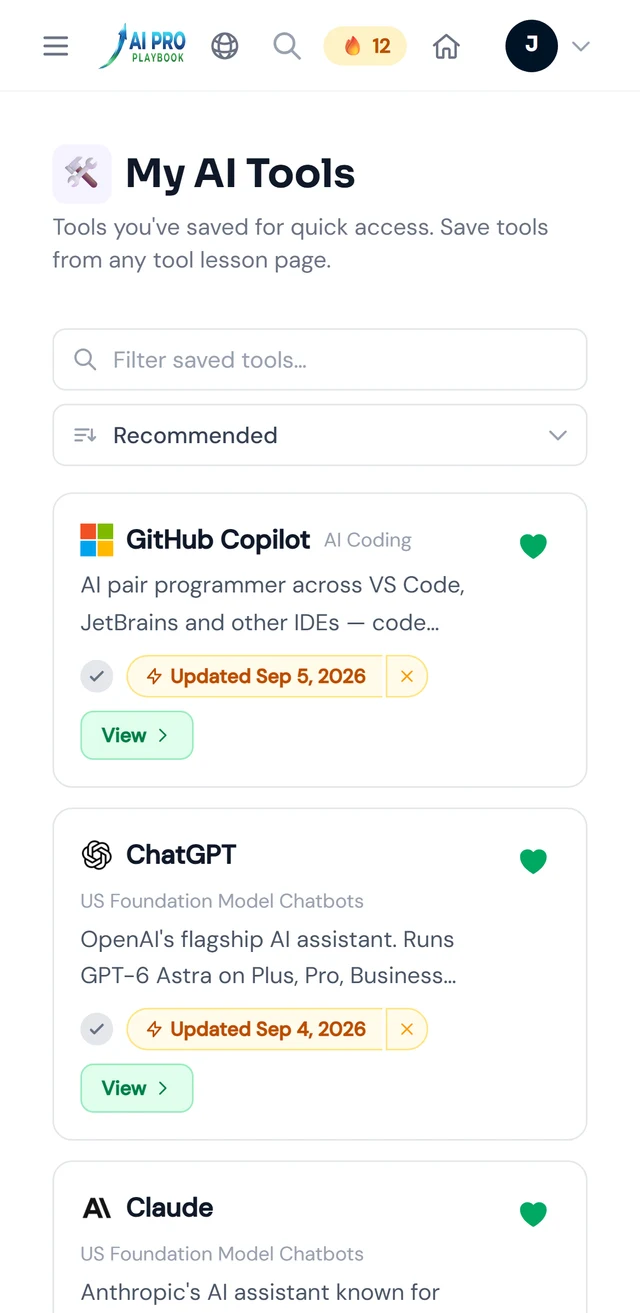
Swipe for Recommended for you and My AI Tools
Your AI Hub — sample data. See desktop view example
🛠️Top AI Tools for This Topic
 Flock Freight
AI pooled/shared-truckload freight matching evaluating trillions of combinations to fill trucks profitably.
 Altana
Federated-ML supply-chain intelligence ("the Google Maps of trade") mapping multi-tier value chains.
 FourKites
AI supply-chain visibility (Loft AI) with predictive-ETA machine learning and an agent layer.
 Optimal Dynamics
AI decision automation for carriers (Artificial Decision Intelligence) using stochastic optimization for load acceptance and dispatch.
 Interos
Predictive supply-chain-risk intelligence (iQ / i-Score) across six domains over a sub-tier supplier graph.
 Everstream Analytics
Predictive supply-chain disruption forecasting using ML over supply-chain and external data.
 Project44
Real-time supply chain visibility platform using AI to track shipments, predict delivery delays, and optimize logistics operations across global ocean, air, and ground freight networks.