🏭Industry Overview
Updated May 16, 2026Services for the Elderly and Persons with Disabilities covers nonresidential support — homemaker services, adult-day services, in-home companion services, transportation assistance, congregate-meal services, and personal-care attendant work. Delivered by a mix of public-sector Area Agencies on Aging, large for-profits (BAYADA, Right at Home, Comfort Keepers, Home Instead), nonprofits, and a vast informal economy of self-directed care funded by Medicaid waivers. The Direct Care Workforce — home health aides, personal care aides — is one of the fastest-growing US occupations, projected to add 800,000+ jobs by 2032. Wages are persistently low ($15-20 per hour typical) leading to chronic 60 percent+ annual turnover. Medicaid Home and Community Based Services (HCBS) waivers fund the bulk of services for low-income elderly and disabled individuals. Total US spend across this segment exceeds $200 billion when public-payer self-directed care is included.
🤖AI in Action
CarePredict deploys wearable AI for activity monitoring and fall detection in skilled nursing, assisted living, and home settings — ML models on continuous accelerometer data flag changes in routines that predict urinary tract infection, falls, and depression weeks before a human caregiver would notice. Inspiren's AUGi camera platform delivers AI vision for senior-living facilities — tracking falls, exit-seeking, and clinical events without requiring residents to wear devices. PointClickCare AI extends from skilled nursing into the broader elderly-services space with risk-prediction models for hospitalization and decline. MatrixCare AI provides clinical and operational AI across the long-term care continuum. Care-coordination platforms deploy AI for caregiver-client matching, scheduling, and quality monitoring across millions of home-care hours annually. Augmedix and Suki AI bring ambient documentation to home-health visits as 5G coverage improves. The horizontal models (ChatGPT, Claude, Microsoft Copilot) help agency staff with documentation, family communications, and care planning.
📊Impact on Jobs
The biggest near-term clinical impact is fall prediction and prevention. Falls are the leading cause of injury and hospitalization for adults over 65, with $50+ billion in annual US healthcare cost. Continuous AI monitoring (CarePredict, Inspiren, smart-home sensor platforms) is now showing 30-50 percent reductions in fall-related hospitalizations in well-deployed sites. The workforce question is sharper here than almost anywhere else in healthcare — the Direct Care Workforce is severely undersupplied, turnover is brutal, and AI augmentation may be the only realistic path to meet the projected demand wave from an aging population. AI-driven care coordination, scheduling, and documentation are unambiguous wins for both workers and families. The harder question is autonomy and surveillance — passive monitoring works clinically but raises real concerns about consent, dignity, and over-medicalization of aging. The platforms that will succeed are those that center elder agency and family choice while delivering the clinical-grade insights that make in-home aging viable.
Keep track of AI in your sector
- Save the sectors you follow
- Get ⚡ alerts when their tools and companies change
- The AI tools that actually ship here, from 900+ AI tool profiles
- Today’s top AI Stories — the day’s most important AI news, free
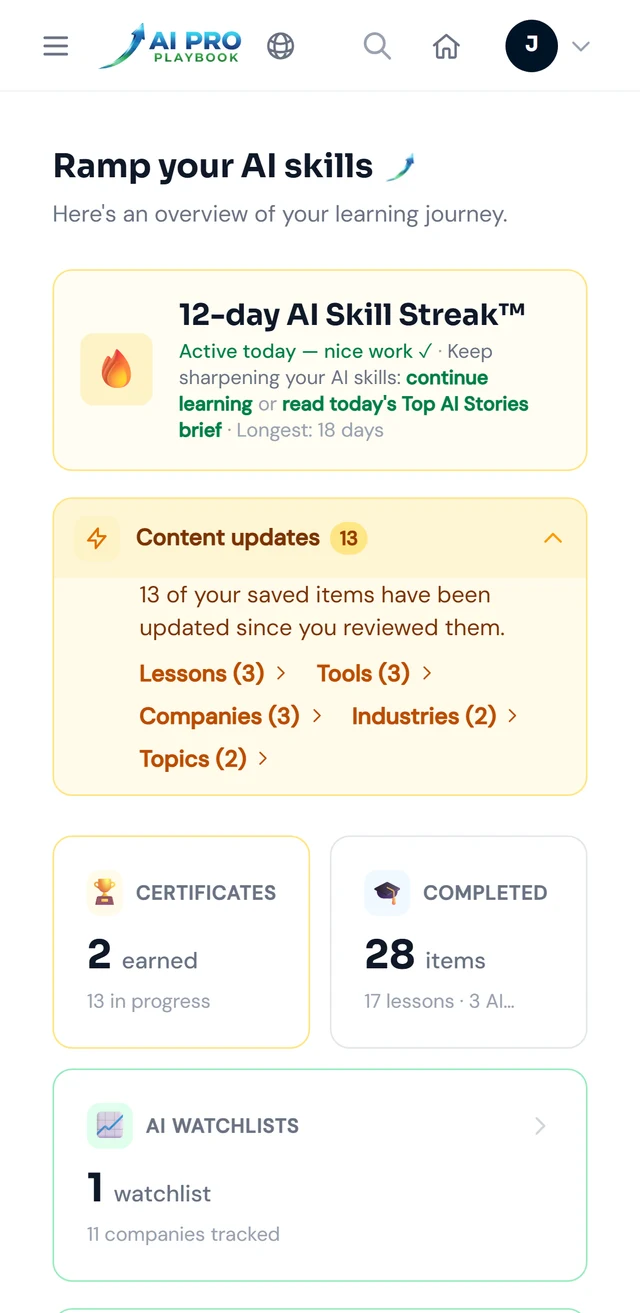
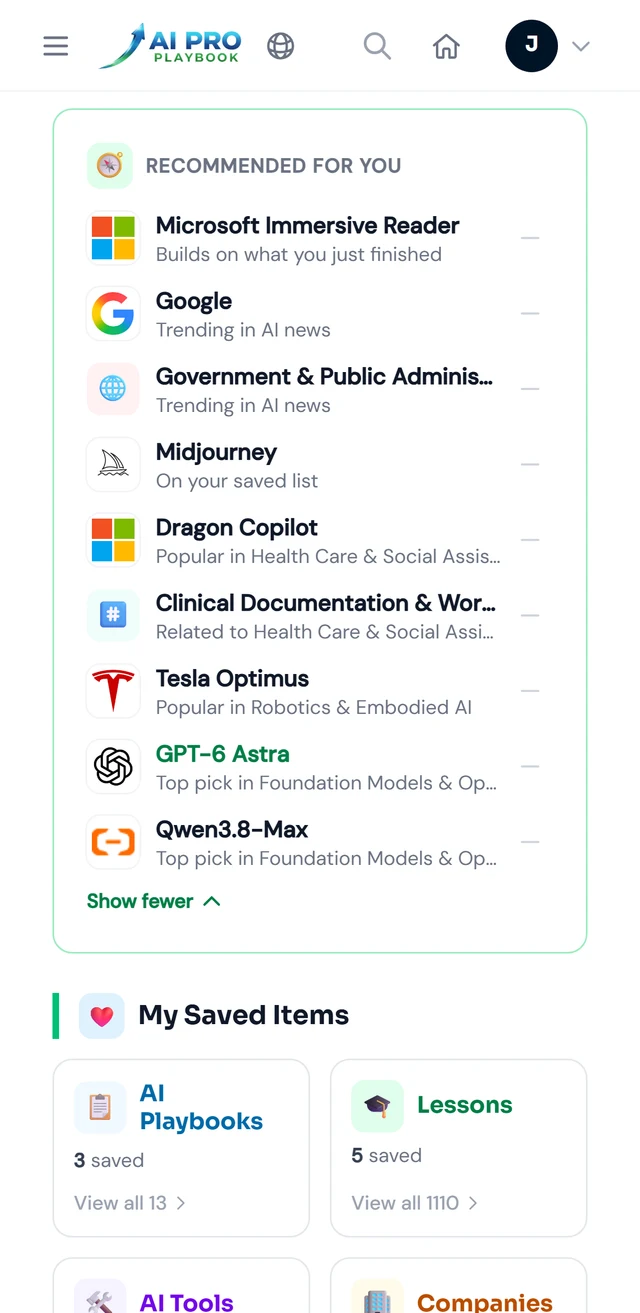
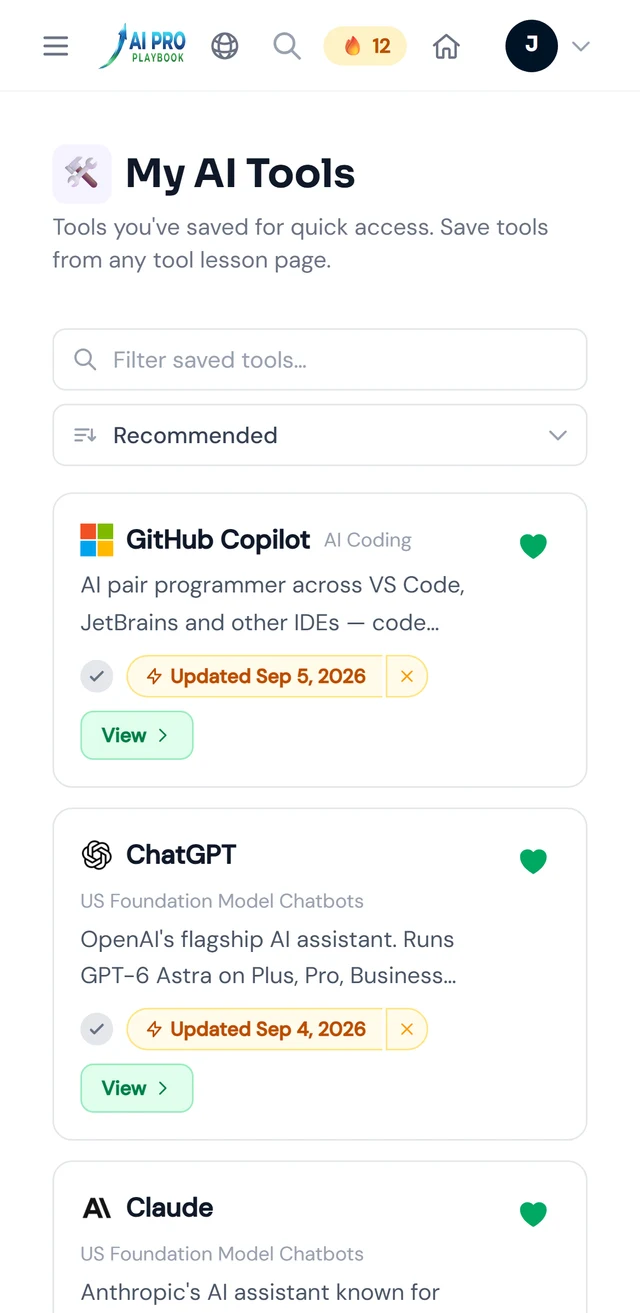
Swipe for Recommended for you and My AI Tools
Your AI Hub — sample data. See desktop view example
🛠️Top AI Tools in This Industry
 CarePredict
Wearable AI for activity, fall, and behavior-pattern monitoring in skilled nursing, assisted living, and home settings. ML models on continuous accelerometer data detect routine changes that predict urinary tract infection, falls, and depression days to weeks ahead of human observation.
 Inspiren
AI vision platform (AUGi) for senior-living facilities — tracks falls, exit-seeking, and clinical events from in-room cameras without requiring residents to wear devices. Used by Brookdale, Atria, and other large senior-living operators across thousands of resident rooms.
 PointClickCare AI
EHR and care-coordination platform for skilled nursing and senior living with AI features for resident risk prediction, regulatory compliance, and revenue cycle.
Long-term and post-acute care platform with AI features for clinical documentation, billing automation, and operational analytics.
 Augmedix
Ambient clinical-documentation AI used across acute care, ambulatory, and skilled-nursing facilities — combines AI scribes with human review for high-accuracy notes.
 ChatGPT
OpenAI's flagship AI assistant. Runs GPT-6 Astra on Plus, Pro, Business and Enterprise since September 3, 2026, with GPT-5.6 Luna still the free default and unlimited free text chats. Includes GPT Image 2, full-duplex voice, Deep Research, ChatGPT Health, Sites for building and hosting web apps, and an auto-enrolled restricted mode for under-18s.
 Claude
Anthropic's AI assistant known for long-context reasoning, coding, and following nuanced instructions, with a 1 million token context window. Offers the current Claude lineup from the economical Opus tier up to the Fable flagship. Strong safety and helpfulness balance.