🏭Industry Overview
Updated July 30, 2026Health care is the largest sector of the US economy at over $4.5 trillion in annual spending — nearly 18% of GDP. It encompasses hospitals, physician practices, pharmaceutical manufacturers, medical device companies, insurance, and social services. The US healthcare system faces persistent challenges: rising costs, physician burnout driven by administrative burden, diagnostic errors causing preventable harm, drug development costs exceeding $2 billion per approved drug, and stubborn health disparities across demographic groups.
💡The AI Opportunity
AI represents the most significant opportunity to improve health outcomes while reducing costs in the history of modern medicine. FDA-cleared AI now screens for diabetic retinopathy, certain cancers, and stroke with performance matching specialist physicians. Clinical documentation AI reduces physician note-writing time by over 50%, directly addressing the burnout epidemic. AI drug discovery companies are compressing the 12-year drug development timeline to 4–5 years. Genomics AI matches cancer patients with targeted therapies based on their tumor's molecular profile. The combination of richer health data, powerful AI models, and evolving regulatory clarity is accelerating adoption across the entire healthcare ecosystem.
🤖AI in Action
Medical imaging AI (Radiology: Aidoc, Viz.ai) detects anomalies in X-rays, CT scans, and MRIs with accuracy matching or exceeding radiologists. AlphaFold 3 (DeepMind) has transformed drug discovery by predicting protein-ligand interactions. Clinical documentation AI (Nuance DAX, Suki) transcribes physician-patient conversations into structured EHR notes, reducing physician burnout. Predictive AI identifies patients at high risk of sepsis, readmission, or deterioration. AI-powered virtual nursing assistants monitor patients between visits. In April 2026, Google DeepMind unveiled an AI co-clinician research initiative built on Gemini and Project Astra — a triadic care model where the AI works alongside a supervising physician with a separate "Planner" module monitoring safety boundaries. Academic collaborators include Harvard Medical School and Stanford Medicine, with phased trusted-tester evaluations planned across the US, India, Australia, New Zealand, Singapore, and UAE. Research-only at this stage, not approved for clinical diagnosis or treatment. On April 30, 2026, researchers at Harvard Medical School and Beth Israel Deaconess Medical Center published a peer-reviewed Science paper in which OpenAI's o1 reasoning model outdiagnosed two emergency-room physicians on text-only EHR inputs (67% versus 55% and 50% across 76 triage cases), with authors calling for prospective trials before any clinical use.
Anthropic's Beneficial Deployments team has committed $200 million across four years to the Gates Foundation, structured as a mix of grants, Claude usage credits, and technical support targeting global health (with polio, HPV, and preeclampsia and eclampsia among named disease targets), life sciences, education, and economic mobility — with regional focus on sub-Saharan Africa, India, and other low- and middle-income countries. Launch partners include the Institute for Disease Modeling and the Global AI for Learning Alliance. The commitment is the largest single philanthropic deployment from a frontier lab to date and represents a meaningful structural channel for frontier AI capability to land in global health workflows alongside the commercial-cloud distribution paths, signaling that frontier labs intend to be measured by social-impact deployments rather than only by commercial books.
In May 2026, Pennsylvania filed suit against Character.AI after a chatbot named "Emilie" claimed to be a licensed psychiatrist and produced a fabricated state medical license number while discussing depression treatment with state investigators. The complaint cites Pennsylvania's Medical Practice Act and is the first state action specifically targeting AI chatbots that impersonate licensed medical professionals — distinct from Kentucky's January 2026 Character.AI suit, which focused on harm to minors. For the broader healthcare and social-assistance category, the Pennsylvania filing sets a credentialing-fraud precedent that will likely shape how consumer-facing AI products represent themselves to users on any clinical or quasi-clinical topic, and expect platform-level disclosures and identity-verification flows to harden across the wider healthcare AI surface in response.
On the prevention side, AI is beginning to design vaccines directly. University of Cambridge researchers moved into human trials the first vaccine whose central component was AI-designed — a universal coronavirus candidate aimed at protecting against entire families of related viruses, including threats that have not yet emerged. Still early-stage, with a small safety trial followed by a larger immune-response study, it points toward AI-assisted pandemic preparedness as a complement to AI's established roles in diagnosis, imaging, and clinical documentation.
Enterprise deployment inside hospitals is also moving from pilots to whole-system rollouts. In July 2026 Sheba Medical Center in Ramat Gan became the first hospital outside the United States to deploy OpenAI's ChatGPT for Healthcare platform across its network, giving physicians, nurses, researchers and administrative staff a clinical-reasoning tool that synthesizes peer-reviewed studies and clinical guidelines and attaches citations with publication dates to each response so clinicians can verify the evidence. Sheba can load its own protocols so answers align with approved local standards, OpenAI does not train on the hospital's data, and clinicians retain the final decision. The governance details matter as much as the capability: the pattern emerging across large deployments is evidence with provenance, institution-specific grounding, data isolation, and an explicit human decision-maker — which is the difference between clinical AI and a general-purpose chatbot answering medical questions.
📊Impact on Jobs
Healthcare AI is primarily augmenting clinical roles rather than replacing them — physicians, nurses, and therapists remain essential. Medical transcription and coding roles face significant automation. Radiology and pathology workflows are changing as AI pre-reads studies. New roles in clinical AI validation, health AI product management, and medical data engineering are growing. The FDA has cleared over 900 AI-enabled medical devices.
Keep track of AI in your sector
- Save the sectors you follow
- Get ⚡ alerts when their tools and companies change
- The AI tools that actually ship here, from 900+ AI tool profiles
- Today’s top AI Stories — the day’s most important AI news, free
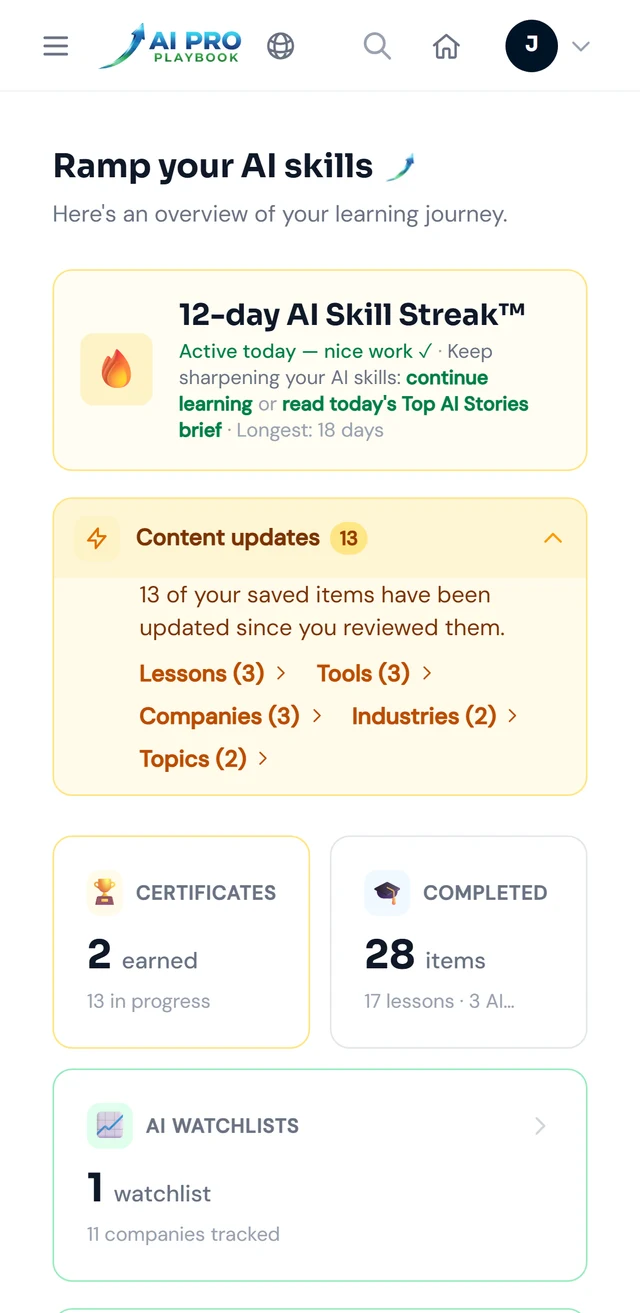
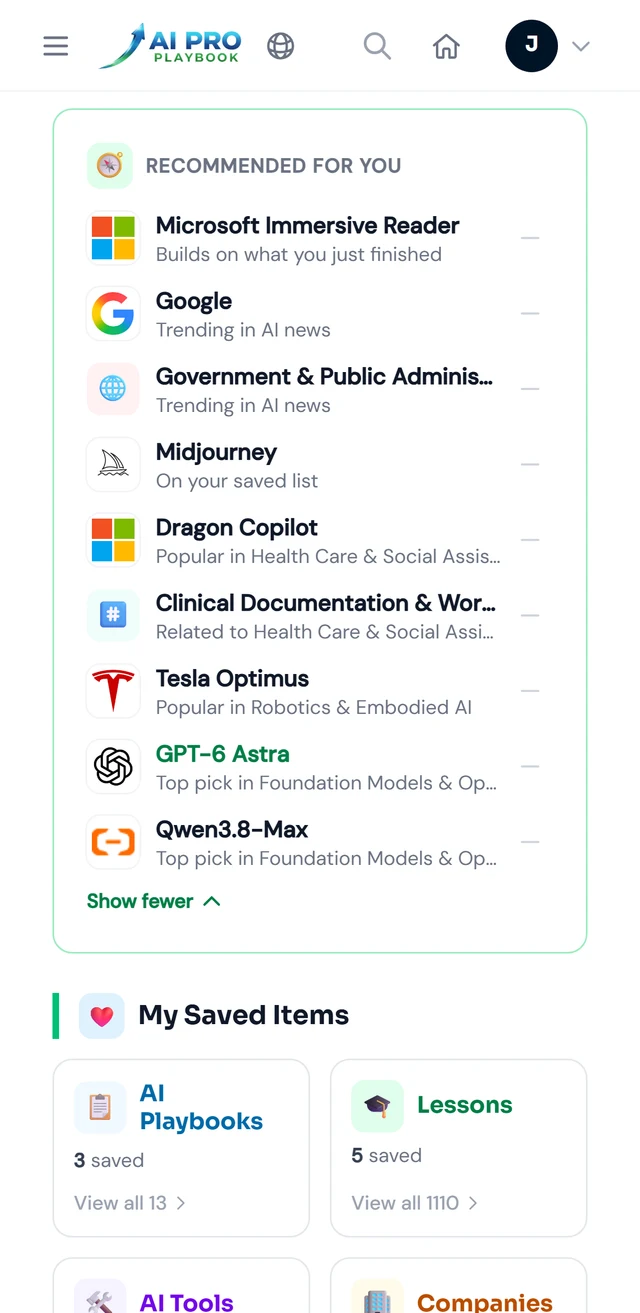
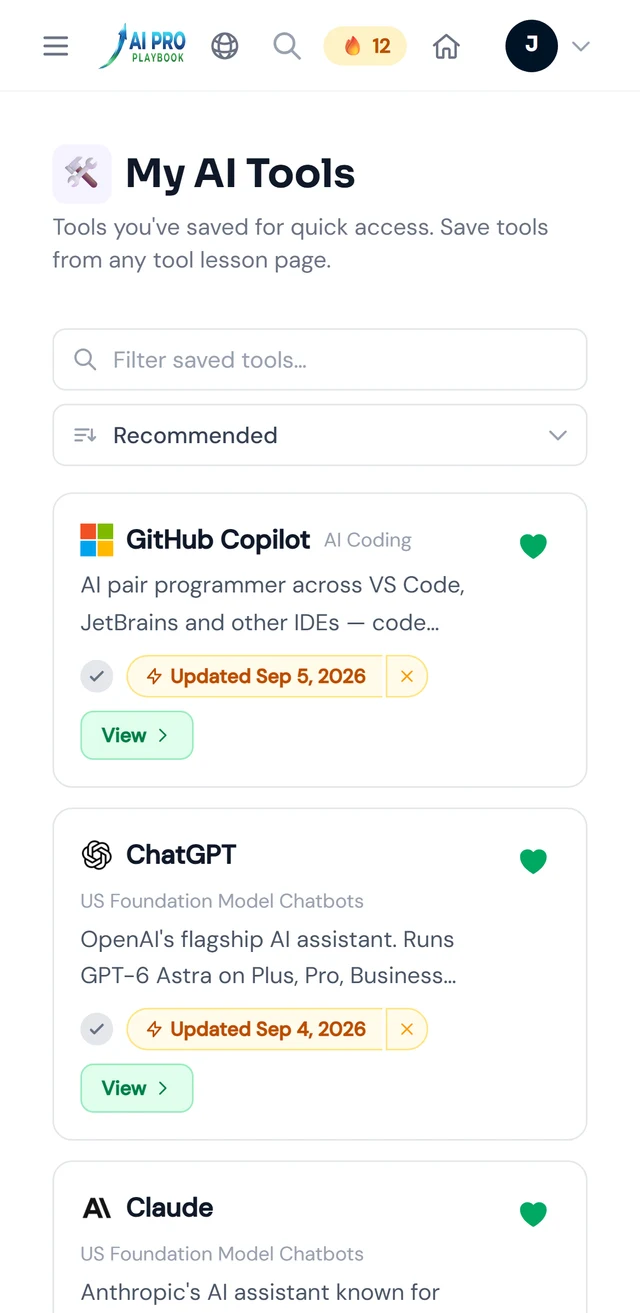
Swipe for Recommended for you and My AI Tools
Your AI Hub — sample data. See desktop view example
🛠️Top AI Tools in This Industry

Microsoft clinical AI assistant (formerly Nuance DAX) that listens to patient-physician encounters and auto-generates SOAP notes, visit summaries, referral letters, and after-visit instructions. Agentic capabilities handle prior authorizations and medication refills. Deployed at 600+ health systems.
 Abridge
Ambient clinical-documentation AI for physicians — listens to patient encounters and generates structured notes that integrate directly with the EHR.
 Suki AI
Voice-driven AI assistant for clinical documentation — used by physicians across primary care and specialty practices for hands-free note-taking.
 Ambience Healthcare
Enterprise ambient AI platform — drafts clinical notes from the visit conversation and supports coding and revenue-integrity workflows across health systems.
 Augmedix
Ambient clinical-documentation AI used across acute care, ambulatory, and skilled-nursing facilities — combines AI scribes with human review for high-accuracy notes.
 Nabla
NablaAmbient AI medical scribe (a European leader) that generates structured clinical notes from patient encounters and is expanding into agentic clinical workflows.
 Aidoc
AidocAI radiology triage platform with 30 FDA-cleared tools. First comprehensive foundation model AI triage detecting 14 critical findings from a single abdominal CT with 97% sensitivity.
 Viz.ai
Medical AI platform detecting time-sensitive conditions from imaging. Nearly 2,000 hospitals, 230 million lives covered. FDA-cleared tools for stroke, hemorrhage, pulmonary embolism, and more.
 RapidAI
Stroke and neurovascular imaging AI — automated large-vessel-occlusion detection, CT perfusion, and triage that speeds treatment across stroke networks. The principal Viz.ai rival.
 Qure.ai
Globally deployed radiology AI for chest X-ray, head-CT, and lung-nodule detection and triage — 26 FDA indications across 9 products, used in 100-plus countries.
 HeartFlow
FDA-cleared AI analysis of coronary CT — non-invasive FFR-CT blood-flow assessment and plaque analysis to diagnose heart disease, reimbursed and widely clinically validated.
 Cleerly
AI coronary-CT analysis that quantifies and characterizes arterial plaque (AI-QCT) to assess heart-disease risk; FDA-cleared with a Category I CPT code from January 2026.

 Rad AI
Generative-AI radiology workflow that drafts report impressions and automates reporting and worklist tasks, tuned to each radiologist's style.
 Paige.AI
AI for digital pathology — first FDA-approved AI for prostate cancer detection on whole-slide images, used by major academic medical centers and labs.
 PathAI
Digital pathology AI with FDA-qualified tools for clinical trials (AIM-MASH) and diagnostics (AISight Dx). Breakthrough Device Designation for dermatopathology (March 2026). Deployed at Labcorp.
 Lunit
LunitPublicly traded cancer-detection AI — FDA-cleared chest X-ray and mammography screening plus oncology pathology biomarkers, distributed globally and via imaging-device OEMs.

 DermaSensor
The first FDA-cleared AI skin-cancer detection device for primary care — a handheld spectroscopy tool that assesses lesions for all three common skin cancers at the point of care.
 LumineticsCore
The first-ever FDA-authorized autonomous AI diagnostic — detects diabetic retinopathy from retinal images in primary-care settings without a specialist read. By Digital Diagnostics.

FDA-cleared dental AI for radiograph interpretation and patient communication — used by dental service organizations and insurers.
FDA-cleared AI for dental radiograph analysis — detects caries, periapical lesions, and bone loss to support dentist diagnoses.
 OpenEvidence
AI clinical decision support — evidence-based answers to medical questions at the point of care, with citations to the primary literature. Used by a large share of US physicians.
 Glass Health
Clinician-facing decision support that generates ranked differential diagnoses and evidence-based care plans, plus ambient documentation — used by 100,000-plus US clinicians and trainees.

 K Health
Clinical-AI virtual care embedding AI clinical agents into health-system EHR workflows — powering in-EHR virtual urgent and primary care with Penn Medicine and Northwell.
 Epic Cosmos
Epic's embedded AI features — Cosmos research database (250M+ patient records), Inbox-message drafting, summarization, and predictive insights inside the Epic EHR.

 Innovaccer
Healthcare data and AI platform unifying clinical, claims, and operational data for hospitals — supports population health, care management, and physician workflows.
 Hippocratic AI
Safety-focused, patient-facing generative-AI agents that handle non-diagnostic clinical outreach — post-discharge calls, chronic-care check-ins, and care management — at scale, escalating to human staff when needed.
 Commure
AI-native healthcare platform unifying ambient documentation, revenue-cycle management, and hospital operations across hundreds of provider organizations; parent of ambient-scribe Augmedix.
 Qventus
AI operational assistants for hospitals that automate patient flow, discharge planning, and OR scheduling — targeting capacity, length-of-stay, and throughput.
 CodaMetrix
Autonomous AI medical coding for large health systems — translates clinical documentation into billing codes across specialties, with audit trails and human oversight.
 Cohere Health
AI prior-authorization and utilization-management automation for health plans and providers — speeding approvals for appropriate care and cutting denials and delays.
Voice-AI agents that automate healthcare phone calls to payers — benefit verification, prior-auth status, and member services — built on a knowledge graph from millions of calls.
 Regard
AI that reads EHR chart data to surface missed or under-documented diagnoses, draft care plans, and automate notes — improving diagnosis capture and documentation integrity.
 Bayesian Health
Continuous, real-time AI monitoring of inpatients for sepsis and clinical deterioration — with a landmark FDA clearance for continuous AI sepsis monitoring.
 Theator
Surgical-intelligence AI that analyzes operating-room video to support surgeon performance, training, and automated operative documentation across hundreds of thousands of procedures.
 PointClickCare AI
EHR and care-coordination platform for skilled nursing and senior living with AI features for resident risk prediction, regulatory compliance, and revenue cycle.
Long-term and post-acute care platform with AI features for clinical documentation, billing automation, and operational analytics.
 xCures
Health-AI platform whose Clinical Clarity Engine uses AI to turn scattered, unstructured medical records into structured, decision-ready clinical data for clinicians, researchers, and life-sciences teams.

 SWORD Health
AI virtual physical therapy with FDA-cleared motion-sensor technology and licensed PT supervision. Delivers in-clinic-quality care across MSK, women's health (Bloom), and post-surgical rehab to thousands of employer and health plan partners covering millions of members.
 Kaia Health
AI-driven digital therapeutics for back pain, knee pain, and COPD pulmonary rehab. Smartphone motion tracking provides exercise feedback comparable to a physical therapist. FDA-cleared for several indications and deployed across major US and European employer health benefits.
 Wysa
WysaConversational AI for mental-health support — clinically validated CBT-based chat assistant used by employers, health plans, and therapy services.
 Ash by Slingshot AI
Consumer AI therapy chatbot from Slingshot AI, grounded in CBT/DBT/ACT techniques — support, not a replacement for licensed care, in a category whose safety and efficacy are still being validated.
 CarePredict
Wearable AI for activity, fall, and behavior-pattern monitoring in skilled nursing, assisted living, and home settings. ML models on continuous accelerometer data detect routine changes that predict urinary tract infection, falls, and depression days to weeks ahead of human observation.
 Inspiren
AI vision platform (AUGi) for senior-living facilities — tracks falls, exit-seeking, and clinical events from in-room cameras without requiring residents to wear devices. Used by Brookdale, Atria, and other large senior-living operators across thousands of resident rooms.
 Neuralink N1
Brain-computer interface implant with ~20 patients. 1,024 electrode threads, 9+ bits/sec cursor control. Blindsight visual cortex device has FDA Breakthrough designation.
 Synchron Stentrode
Endovascular brain-computer interface — no open brain surgery. ~10 patients, COMMAND trial met safety endpoint. First BCI to control Apple Vision Pro.
 Precision Layer 7
Thin-film cortical interface with 1,024 electrodes placed on brain surface without penetrating tissue. FDA 510(k) cleared. Medtronic partnership.
 Paradromics
High-data-rate implantable brain-computer interface (Connexus) with an FDA-approved speech-restoration clinical trial — a leading Neuralink rival on a clear regulatory path.