🏭Industry Overview
Updated May 16, 2026Medical and diagnostic laboratories generate roughly $80 billion in US annual revenue, dominated by Quest Diagnostics, Labcorp, and Mayo Clinic Laboratories on the volume side, and specialty genomic players (Tempus AI, Foundation Medicine, Guardant Health, Natera) on the high-end side. Lab work spans clinical chemistry, hematology, microbiology, anatomic pathology (biopsies), and increasingly genomic and molecular diagnostics. Volume is enormous — Labcorp alone runs over 600 million tests per year. AI is uniquely well-suited to high-throughput pattern recognition tasks: tumor identification, blood-cell classification, and genomic variant interpretation.
🤖AI in Action
Tempus AI is the largest pure-play in oncology genomics + AI, handling biopsies for 35%+ of US oncologists. PathAI and Paige.AI lead in digital pathology — tumor detection, grading, and biomarker identification. Aidoc and Viz.ai dominate AI-enabled radiology triage (stroke, pulmonary embolism, intracranial hemorrhage). Roche, Siemens Healthineers, and Philips have integrated AI directly into their diagnostic-instrument platforms. Genomic-interpretation platforms (Foundation Medicine, Caris) use AI to match tumor profiles to therapy options.
📊Impact on Jobs
Pathologist and radiologist workloads are shifting from "review every image" to "review AI-flagged cases first." Junior medical-technologist and lab-tech roles face automation pressure on routine specimen handling and result entry. Specialty-trained pathologists (molecular, hematopathology) and AI-savvy radiologists gain leverage. Quality-assurance roles expand as labs need humans to validate AI outputs. New roles: clinical-AI validation scientist, lab-IT specialist for AI-pathology platforms, genomic-AI interpretation curator.
Keep track of AI in your sector
- Save the sectors you follow
- Get ⚡ alerts when their tools and companies change
- The AI tools that actually ship here, from 900+ AI tool profiles
- Today’s top AI Stories — the day’s most important AI news, free
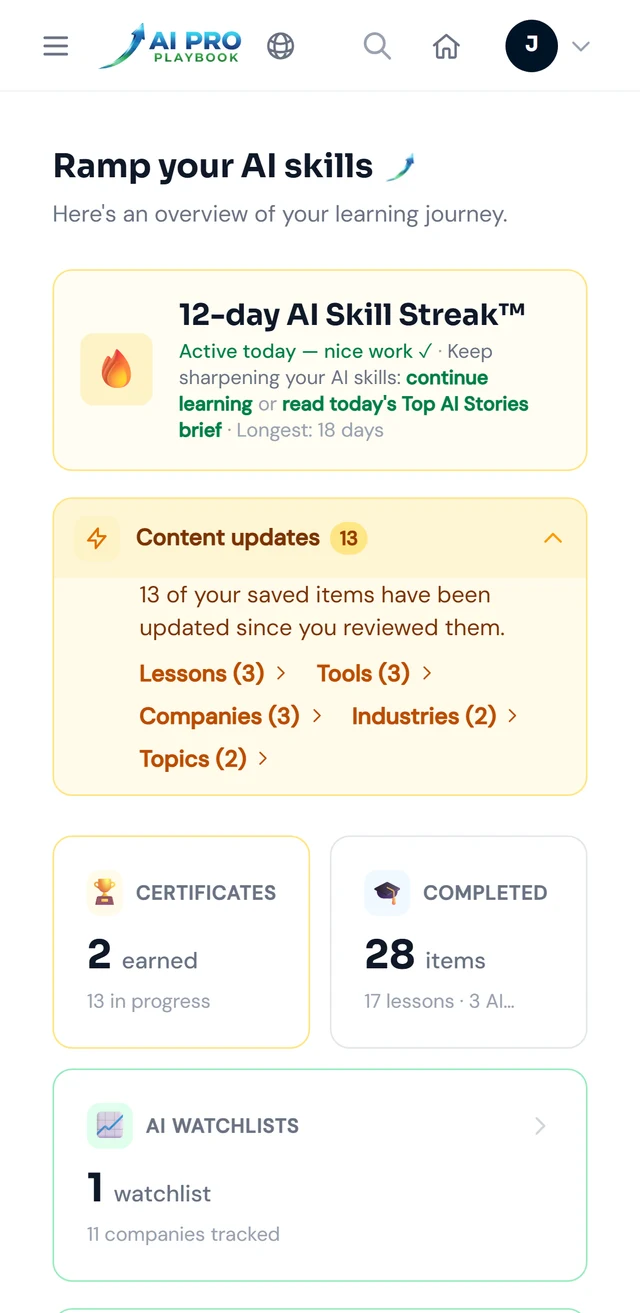
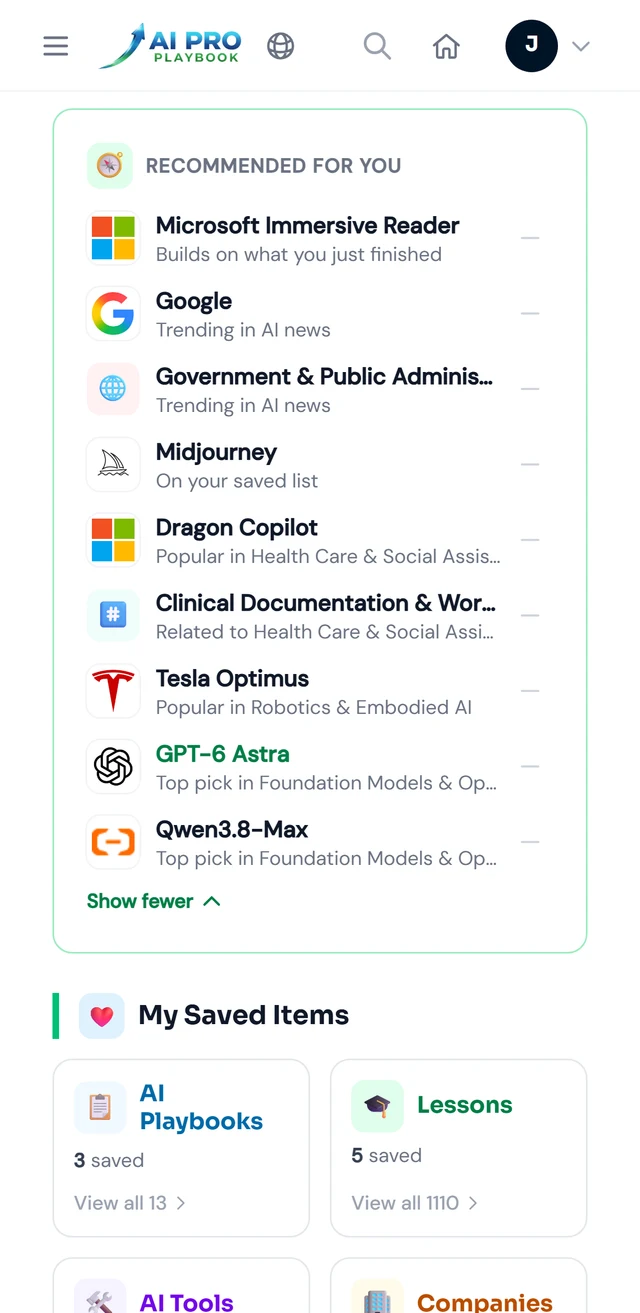
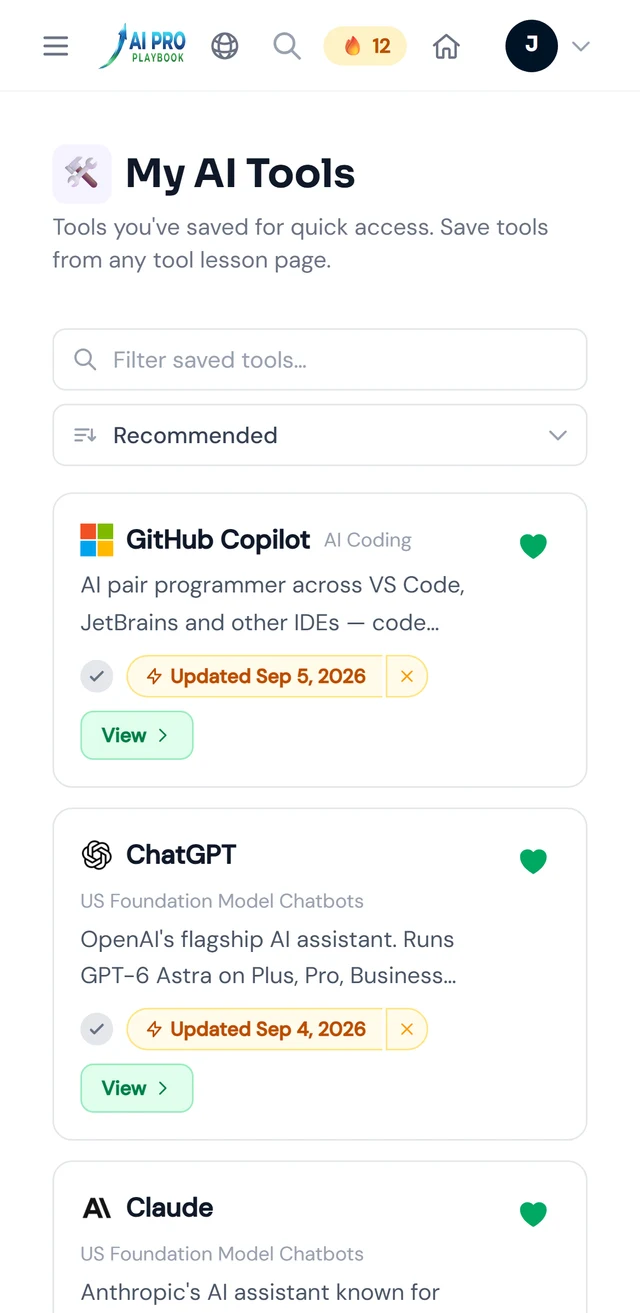
Swipe for Recommended for you and My AI Tools
Your AI Hub — sample data. See desktop view example
🛠️Top AI Tools in This Industry
 Paige.AI
AI for digital pathology — first FDA-approved AI for prostate cancer detection on whole-slide images, used by major academic medical centers and labs.
 PathAI
Digital pathology AI with FDA-qualified tools for clinical trials (AIM-MASH) and diagnostics (AISight Dx). Breakthrough Device Designation for dermatopathology (March 2026). Deployed at Labcorp.
 Aidoc
AidocAI radiology triage platform with 30 FDA-cleared tools. First comprehensive foundation model AI triage detecting 14 critical findings from a single abdominal CT with 97% sensitivity.
 Viz.ai
Medical AI platform detecting time-sensitive conditions from imaging. Nearly 2,000 hospitals, 230 million lives covered. FDA-cleared tools for stroke, hemorrhage, pulmonary embolism, and more.

 ChatGPT
OpenAI's flagship AI assistant. Runs GPT-6 Astra on Plus, Pro, Business and Enterprise since September 3, 2026, with GPT-5.6 Luna still the free default and unlimited free text chats. Includes GPT Image 2, full-duplex voice, Deep Research, ChatGPT Health, Sites for building and hosting web apps, and an auto-enrolled restricted mode for under-18s.
 Claude
Anthropic's AI assistant known for long-context reasoning, coding, and following nuanced instructions, with a 1 million token context window. Offers the current Claude lineup from the economical Opus tier up to the Fable flagship. Strong safety and helpfulness balance.

 Qure.ai
Globally deployed radiology AI for chest X-ray, head-CT, and lung-nodule detection and triage — 26 FDA indications across 9 products, used in 100-plus countries.
 RapidAI
Stroke and neurovascular imaging AI — automated large-vessel-occlusion detection, CT perfusion, and triage that speeds treatment across stroke networks. The principal Viz.ai rival.
 Rad AI
Generative-AI radiology workflow that drafts report impressions and automates reporting and worklist tasks, tuned to each radiologist's style.
 Cleerly
AI coronary-CT analysis that quantifies and characterizes arterial plaque (AI-QCT) to assess heart-disease risk; FDA-cleared with a Category I CPT code from January 2026.
 Lunit
LunitPublicly traded cancer-detection AI — FDA-cleared chest X-ray and mammography screening plus oncology pathology biomarkers, distributed globally and via imaging-device OEMs.

 DermaSensor
The first FDA-cleared AI skin-cancer detection device for primary care — a handheld spectroscopy tool that assesses lesions for all three common skin cancers at the point of care.
 LumineticsCore
The first-ever FDA-authorized autonomous AI diagnostic — detects diabetic retinopathy from retinal images in primary-care settings without a specialist read. By Digital Diagnostics.
