📘Overview
Updated June 25, 2026Precision medicine tailors treatment to the individual — using a patient's genomics, biomarkers, history, and the accumulated evidence of millions of similar cases to choose the therapy most likely to work. Clinical decision support is the adjacent discipline that puts the right information in front of a clinician at the moment of a decision. Both depend on synthesizing vast, messy, multi-source data — the kind of analysis humans cannot do at scale but AI can.
💡The AI Opportunity
AI now matches tumors to targeted therapies from genomic profiles, mines huge real-world datasets to predict how a given patient will respond, and surfaces evidence-based recommendations inside the clinical workflow. Large language models add the ability to query the entire medical literature in plain language. The pattern is consistent across the field: AI synthesizes and recommends, and the clinician decides — keeping accountability human while making far more of the available evidence usable.
🤖AI in Action
Tempus AI combines genomic sequencing with a vast clinical dataset to match patients, especially in oncology, to the most promising therapies. Innovaccer unifies health data across systems to power population-health and decision-support analytics, and Epic Cosmos turns the records of hundreds of millions of patients into real-world evidence at the point of care. SandboxAQ applies large quantitative models to biomarkers and diagnostics, and the assistants ChatGPT, Claude, and Gemini let clinicians query medical evidence in plain language.
📊Impact on Jobs
AI is making precision medicine practical by turning data overload into usable, patient-specific guidance — the right therapy, surfaced with the evidence behind it. The work shifts toward interpreting AI-generated recommendations and integrating them with clinical context, raising the value of clinicians who can judge when to trust a model and when to override it. The risks are real: models can embed bias from their training data, and a confident wrong recommendation is dangerous, so validation and human oversight are non-negotiable. Used well, decision support narrows the gap between what the evidence shows and what any one clinician can hold in their head.
Keep track of the topics you follow
- Save the topics you follow
- Get ⚡ alerts when their tools and companies change
- Curated tools for this topic, from 900+ AI tool profiles
- Today’s top AI Stories — the day’s most important AI news, free
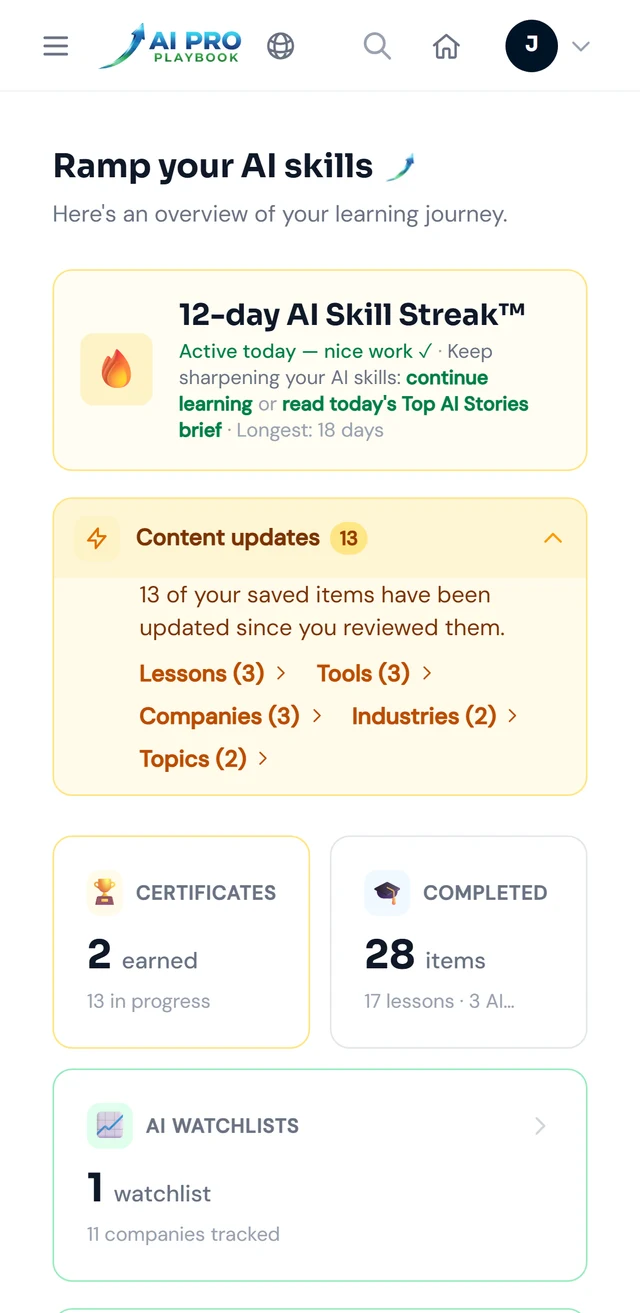
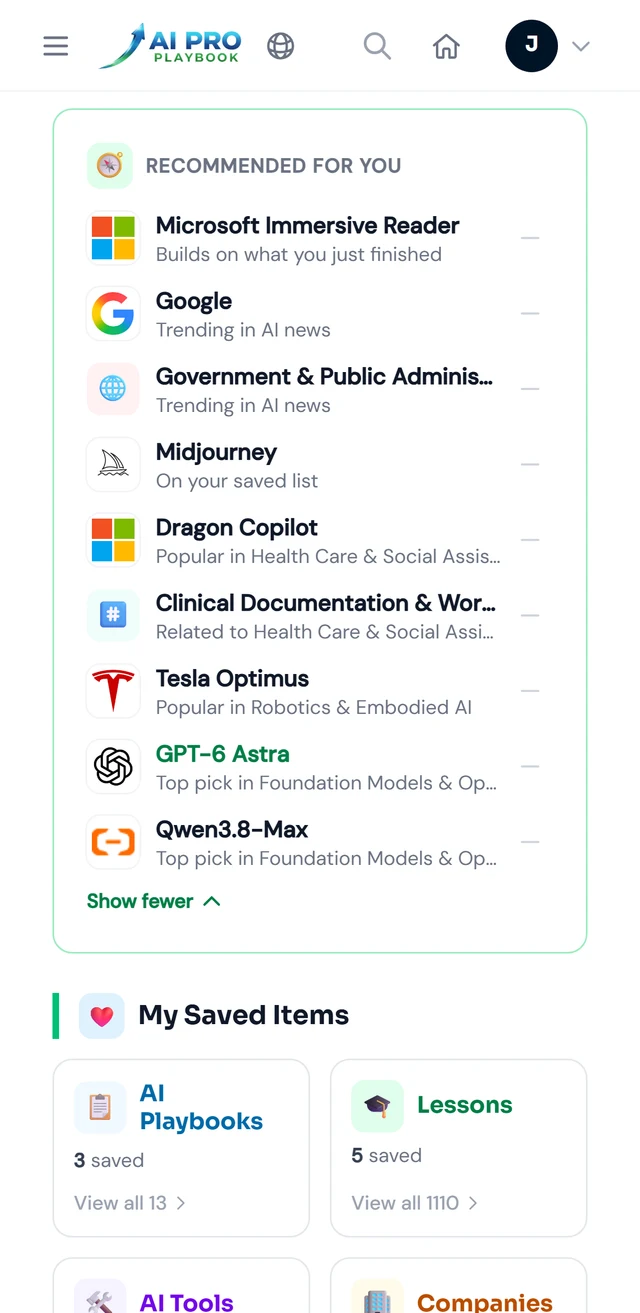
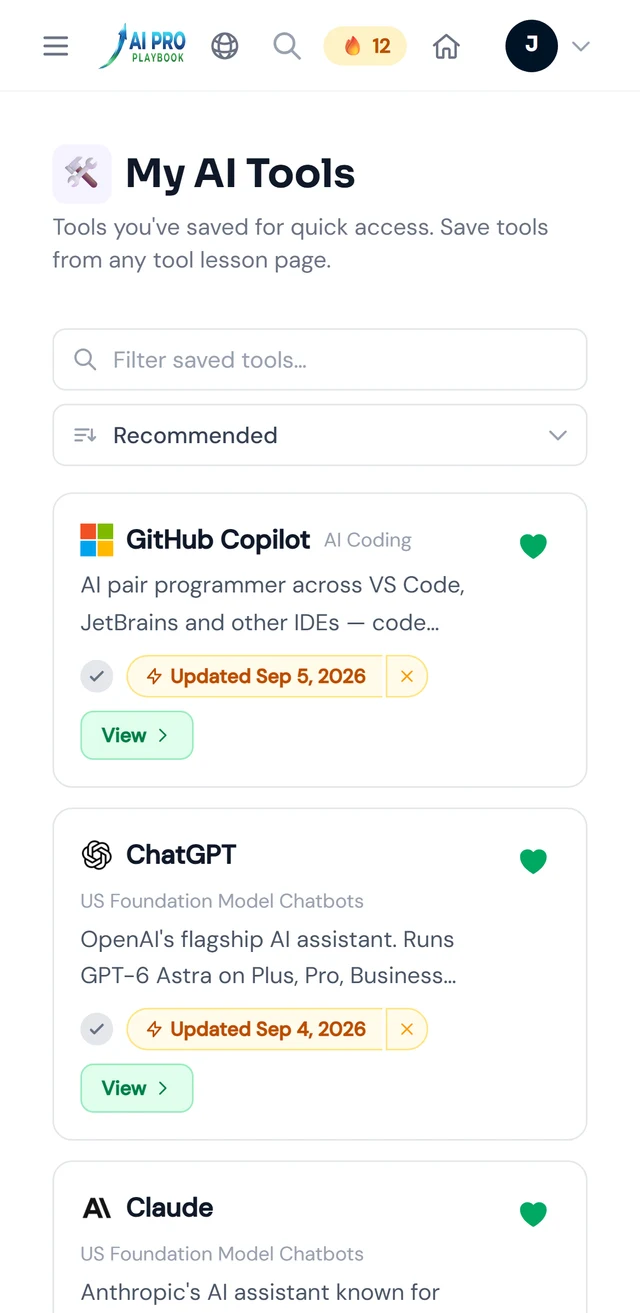
Swipe for Recommended for you and My AI Tools
Your AI Hub — sample data. See desktop view example
🛠️Top AI Tools for This Topic
 OpenEvidence
AI clinical decision support — evidence-based answers to medical questions at the point of care, with citations to the primary literature. Used by a large share of US physicians.

 Innovaccer
Healthcare data and AI platform unifying clinical, claims, and operational data for hospitals — supports population health, care management, and physician workflows.
 Epic Cosmos
Epic's embedded AI: the Art clinician assistant (In Basket drafting and Chart with Art ambient notes), the Penny revenue-cycle agent, the patient-facing Emmie, and the Curiosity predictive models built on the Cosmos research database of 310 million patients.
 SandboxAQ Large Quantitative Models
Simulation-grade physics and chemistry models (quantum chemistry, molecular dynamics, microkinetics) exposed through Claude as a conversational interface for drug discovery and materials science. Spun out of Alphabet in 2022; led by CEO Jack Hidary. Claude integration shipped May 2026.
 Claude
Anthropic's AI assistant known for long-context reasoning, coding, and following nuanced instructions, with a 1 million token context window. Offers the current Claude lineup from the economical Opus tier up to the Fable flagship. Strong safety and helpfulness balance.
 ChatGPT
OpenAI's flagship AI assistant. Runs GPT-6 Astra on Plus, Pro, Business and Enterprise since September 3, 2026, with GPT-5.6 Luna still the free default and unlimited free text chats. Includes GPT Image 2, full-duplex voice, Deep Research, ChatGPT Health, Sites for building and hosting web apps, and an auto-enrolled restricted mode for under-18s.

Google's AI assistant. Gemini 3.8 Flash reaches the app and Search AI Mode for AI Pro and Ultra subscribers while the free tier stays on 3.6 Flash, and Gemini 3.8 Live added a speech-to-speech layer in September 2026. Native multimodal, 1M token context, Deep Research, deep Google Workspace integration.
 xCures
Health-AI platform whose Clinical Clarity Engine uses AI to turn scattered, unstructured medical records into structured, decision-ready clinical data for clinicians, researchers, and life-sciences teams.
 Hippocratic AI
Safety-focused, patient-facing generative-AI agents that handle non-diagnostic clinical outreach — post-discharge calls, chronic-care check-ins, and care management — at scale, escalating to human staff when needed.
 Glass Health
Clinician-facing decision support that generates ranked differential diagnoses and evidence-based care plans, plus ambient documentation — used by 100,000-plus US clinicians and trainees.
 K Health
Clinical-AI virtual care embedding AI clinical agents into health-system EHR workflows — powering in-EHR virtual urgent and primary care with Penn Medicine and Northwell.
 Regard
AI that reads EHR chart data to surface missed or under-documented diagnoses, draft care plans, and automate notes — improving diagnosis capture and documentation integrity.