🏭Industry Overview
Updated May 16, 2026Offices of physicians — independent practices, multi-specialty groups, and hospital-affiliated outpatient clinics — employ over 700,000 physicians in the US and generate roughly $325 billion in annual revenue. Visit volume exceeds 900 million per year. Physicians spend an average of 2 hours on documentation and EHR work for every 1 hour of direct patient care, contributing to a sustained burnout crisis. Insurance prior authorization for medications and procedures consumes additional 14+ hours per physician per week. AI-driven documentation and workflow automation has rapidly become a strategic imperative rather than a nice-to-have.
🤖AI in Action
AI scribes are the dominant deployment: Microsoft Dragon Copilot (formerly Nuance DAX) leads with deployments at 600+ health systems; Abridge, Suki, and Nabla are fast-growing competitors. These ambient-listening tools auto-generate visit notes from physician-patient conversations in real time. Decision-support platforms — Epic's integrated AI, Glass Health, OpenEvidence — surface differential diagnoses and evidence-based recommendations during the visit. Prior-authorization automation (Cohere Health, Olive AI alumni products) handles routine approvals.
📊Impact on Jobs
Documentation burden is being significantly reduced — early evidence shows 40-60% time savings on note-writing for physicians using ambient AI scribes. Clinical decision support is shifting some routine triage and screening work from physicians to AI-augmented nurses and medical assistants. Coding and billing roles face automation pressure. New roles: clinical-AI integration specialist, prompt-engineering for medical workflows, AI-output medical reviewer. Burnout indicators have begun improving in early-adopter practices.
Keep track of AI in your sector
- Save the sectors you follow
- Get ⚡ alerts when their tools and companies change
- The AI tools that actually ship here, from 900+ AI tool profiles
- Today’s top AI Stories — the day’s most important AI news, free
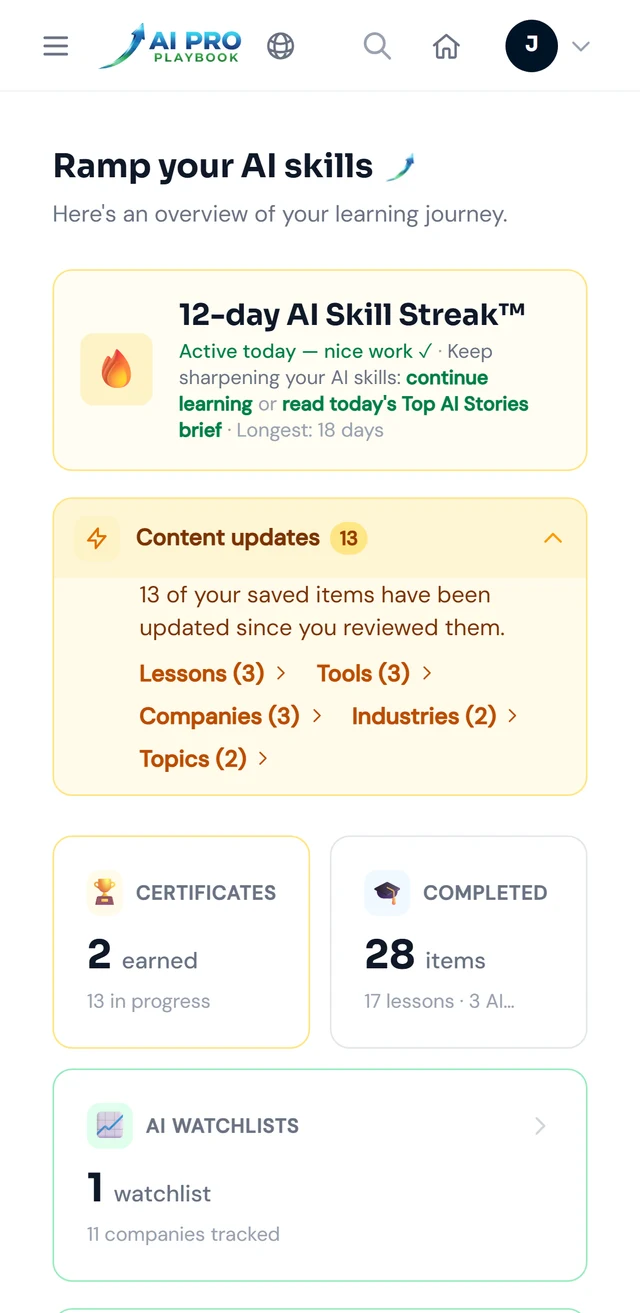
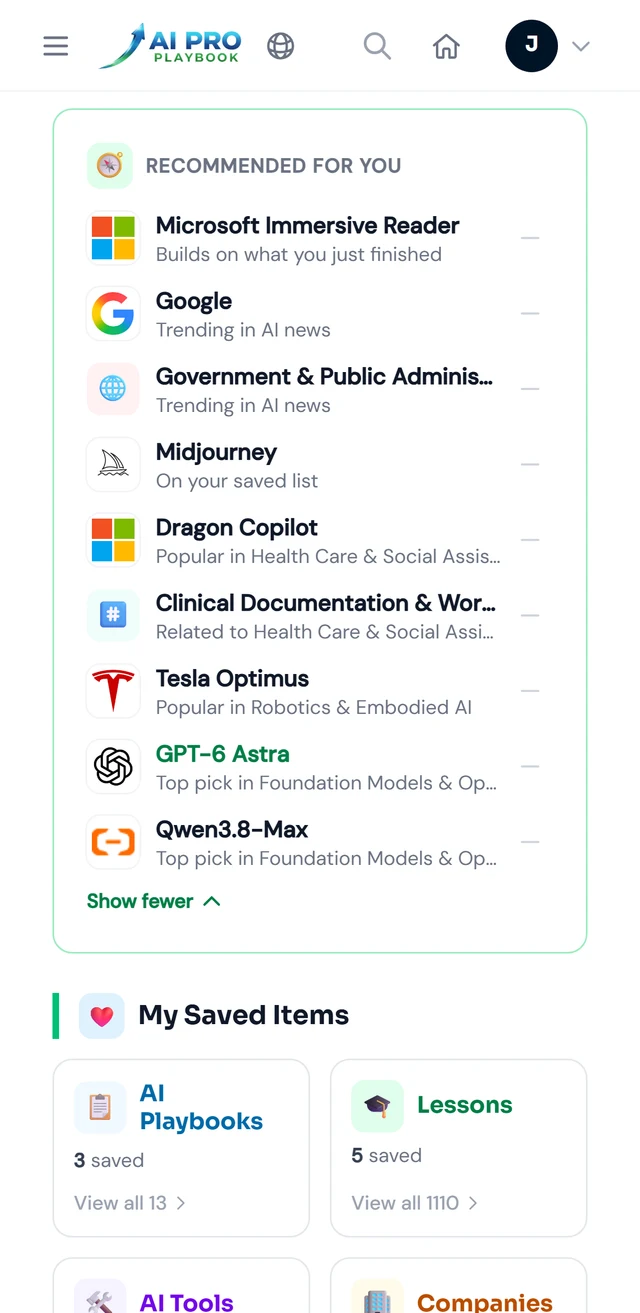
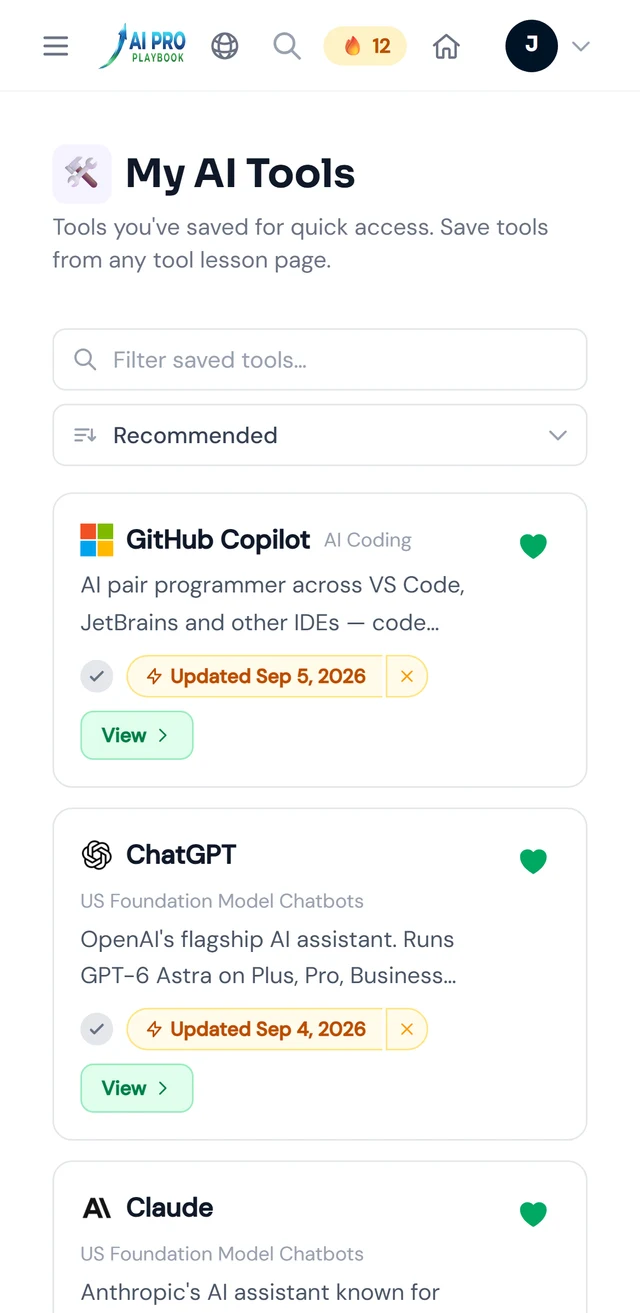
Swipe for Recommended for you and My AI Tools
Your AI Hub — sample data. See desktop view example
🛠️Top AI Tools in This Industry
 Abridge
Ambient clinical-documentation AI for physicians — listens to patient encounters and generates structured notes that integrate directly with the EHR.
 Suki AI
Voice-driven AI assistant for clinical documentation — used by physicians across primary care and specialty practices for hands-free note-taking.

Microsoft clinical AI assistant (formerly Nuance DAX) that listens to patient-physician encounters and auto-generates SOAP notes, visit summaries, referral letters, and after-visit instructions. Agentic capabilities handle prior authorizations and medication refills. Deployed at 600+ health systems.

 Aidoc
AidocAI radiology triage platform with 30 FDA-cleared tools. First comprehensive foundation model AI triage detecting 14 critical findings from a single abdominal CT with 97% sensitivity.
 Viz.ai
Medical AI platform detecting time-sensitive conditions from imaging. Nearly 2,000 hospitals, 230 million lives covered. FDA-cleared tools for stroke, hemorrhage, pulmonary embolism, and more.
 ChatGPT
OpenAI's flagship AI assistant. Runs GPT-6 Astra on Plus, Pro, Business and Enterprise since September 3, 2026, with GPT-5.6 Luna still the free default and unlimited free text chats. Includes GPT Image 2, full-duplex voice, Deep Research, ChatGPT Health, Sites for building and hosting web apps, and an auto-enrolled restricted mode for under-18s.
 Claude
Anthropic's AI assistant known for long-context reasoning, coding, and following nuanced instructions, with a 1 million token context window. Offers the current Claude lineup from the economical Opus tier up to the Fable flagship. Strong safety and helpfulness balance.
 Nabla
NablaAmbient AI medical scribe (a European leader) that generates structured clinical notes from patient encounters and is expanding into agentic clinical workflows.
 Glass Health
Clinician-facing decision support that generates ranked differential diagnoses and evidence-based care plans, plus ambient documentation — used by 100,000-plus US clinicians and trainees.

 K Health
Clinical-AI virtual care embedding AI clinical agents into health-system EHR workflows — powering in-EHR virtual urgent and primary care with Penn Medicine and Northwell.
 Hippocratic AI
Safety-focused, patient-facing generative-AI agents that handle non-diagnostic clinical outreach — post-discharge calls, chronic-care check-ins, and care management — at scale, escalating to human staff when needed.
 DermaSensor
The first FDA-cleared AI skin-cancer detection device for primary care — a handheld spectroscopy tool that assesses lesions for all three common skin cancers at the point of care.
 LumineticsCore
The first-ever FDA-authorized autonomous AI diagnostic — detects diabetic retinopathy from retinal images in primary-care settings without a specialist read. By Digital Diagnostics.