🏭Industry Overview
Updated May 16, 2026Newspaper publishing in the US is a $25 billion industry that has been in structural decline for two decades — print circulation peaked in the 1990s and has fallen by roughly two-thirds since. The survivors split into three camps: legacy national papers (NYT, WSJ, Washington Post) that have rebuilt around digital subscriptions and now run paywalled news products with millions of subscribers; regional and metro dailies that have either consolidated under chains (Gannett, Lee, Tribune) or shrunk into shells of their former selves; and a new wave of digital-native outlets (Politico, Axios, The Information, Substack-style independent journalism). The economic model has shifted from advertising-supported mass distribution to a hybrid of subscription revenue, branded events, and contextual advertising. Talent has bifurcated: high-paid star reporters and editors at top-tier outlets versus contract freelancers everywhere else.
🤖AI in Action
AI is now embedded across the newsroom workflow. The Associated Press has used Automated Insights' Wordsmith platform since 2014 to automatically produce thousands of quarterly-earnings stories per quarter — work that previously consumed bureau time and is now machine-generated in seconds. Bloomberg AI extends similar capabilities across financial reporting, with the platform drafting market summaries, generating chart captions, and surfacing news-worthy outliers in real-time data feeds. Otter.ai handles interview transcription, freeing reporters from the multi-hour transcribing task that used to dominate post-interview workflow. Grammarly catches copy errors at scale. Notion AI and ChatGPT handle research, briefings, and outline drafting. Reuters, Forbes, and Yahoo all run their own NLG pipelines for routine sports and finance coverage. The frontier work — investigative reporting, longform features, opinion writing — remains stubbornly human, but the production tail around it has been compressed dramatically.
📊Impact on Jobs
The economics are stark. Newspaper newsroom employment fell roughly 60% from 2008 to 2022; AI is accelerating the second half of that curve. Routine beats — earnings reports, sports recaps, weather summaries, real-estate transactions — are being automated outright. Wire services and hyperlocal newspapers, which historically produced commodity content, face existential pressure. Star reporters at top-tier outlets gain leverage from AI-augmented research and faster drafting, but the middle of the profession (mid-career city desk reporters, regional bureau chiefs, copy editors) is being squeezed hardest. New roles emerging: AI editor (curates and fact-checks AI-drafted copy), data-journalism specialist (builds AI pipelines for data-heavy beats), audience-personalization analyst (tunes recommendation models). The net effect is a smaller, more specialized workforce producing more content per head — but with growing concerns about misinformation, hallucinated quotes, and the loss of mid-tier institutional knowledge.
Keep track of AI in your sector
- Save the sectors you follow
- Get ⚡ alerts when their tools and companies change
- The AI tools that actually ship here, from 900+ AI tool profiles
- Today’s top AI Stories — the day’s most important AI news, free
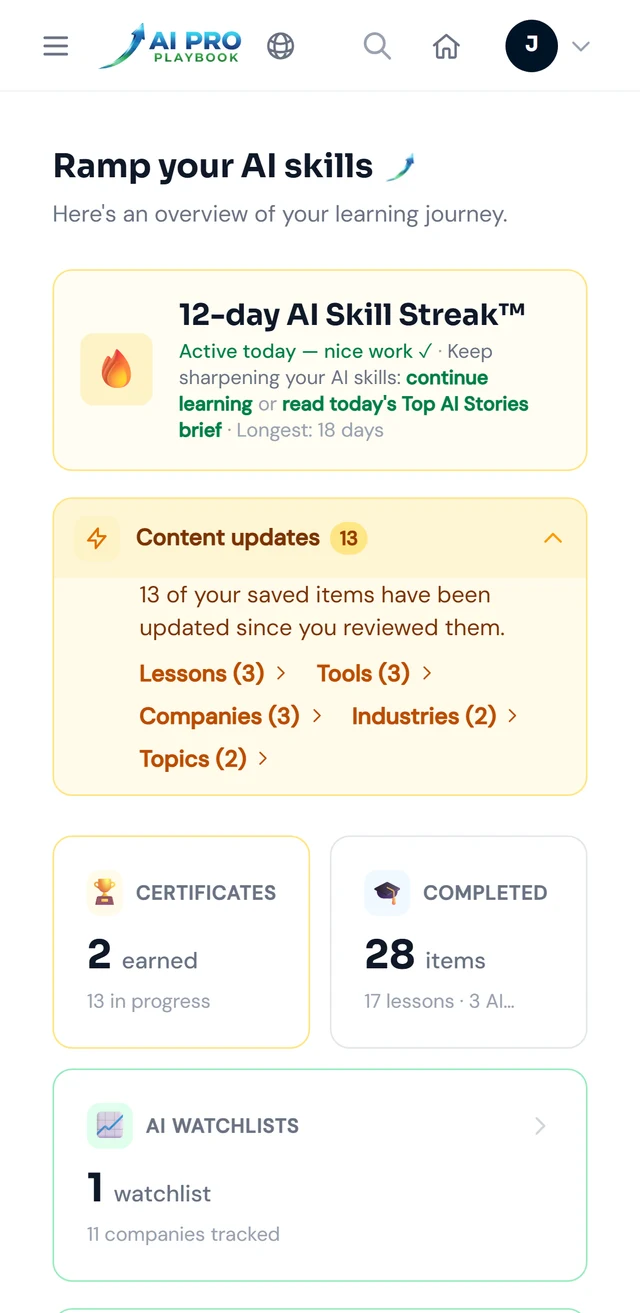
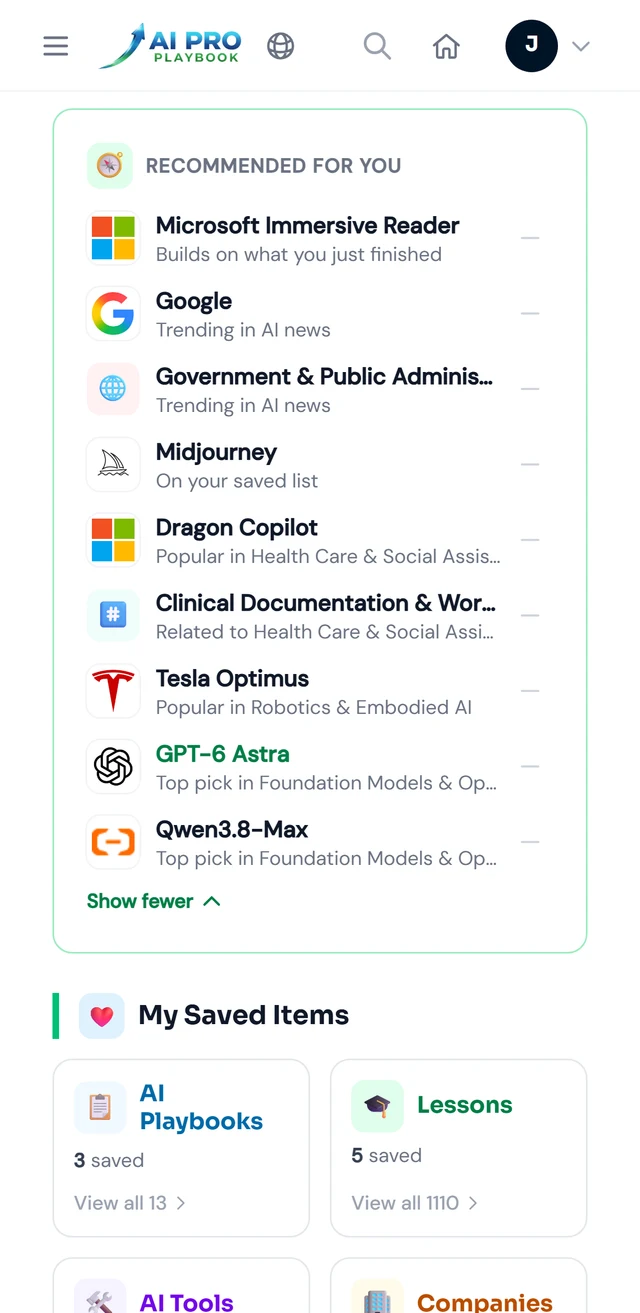
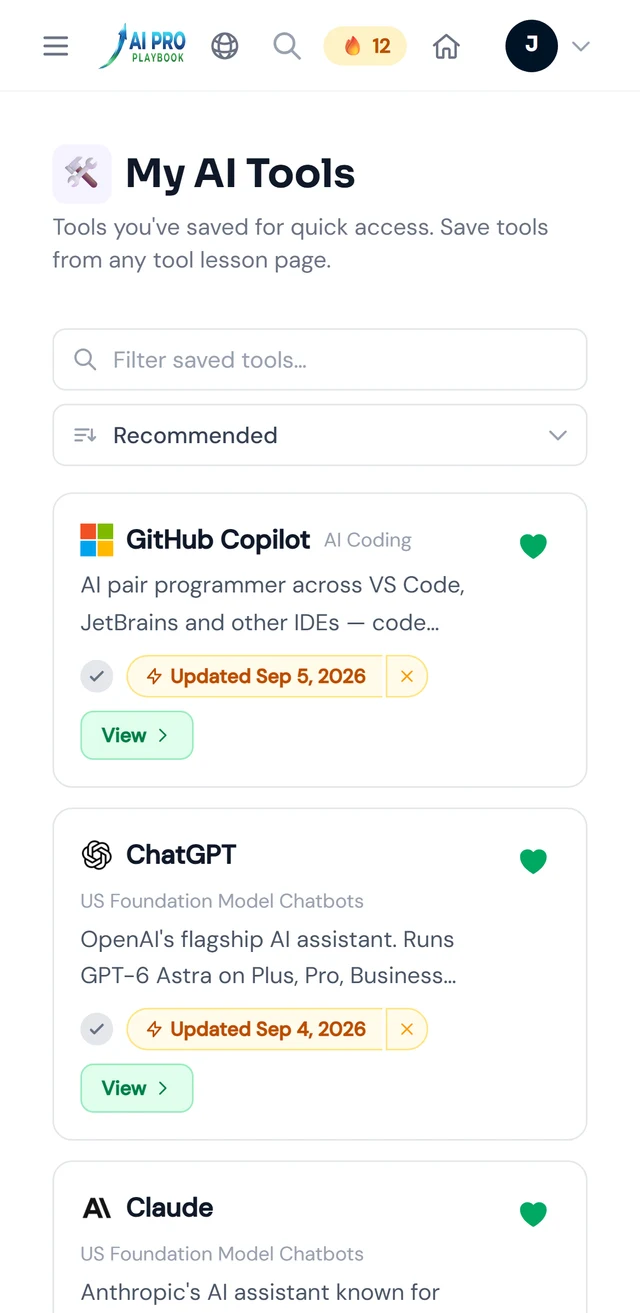
Swipe for Recommended for you and My AI Tools
Your AI Hub — sample data. See desktop view example
🛠️Top AI Tools in This Industry
 Bloomberg AI
AI features integrated across the Bloomberg Terminal — earnings-call summaries, document Q&A, and Bloomberg-trained financial NLP models.
 Automated Insights
Natural language generation platform (Wordsmith) that automatically writes data-driven news stories at scale. Powers the Associated Press's automated quarterly-earnings coverage, Yahoo's fantasy football recaps, and similar high-volume, structured-data journalism workflows.
 Otter.ai
Real-time AI meeting transcription for Zoom, Google Meet, and Teams. Auto-generates summaries, action items, and searchable transcripts.
 Grammarly
AI writing assistant for grammar, style, tone, and clarity. Available as a browser extension across every web app. Generative AI features for drafting and rewriting.
 Notion AI
AI writing, summarization, and Q&A built into Notion's workspace. Ask questions about your notes, auto-fill databases, and draft content in context.
 ChatGPT
OpenAI's flagship AI assistant. Runs GPT-6 Astra on Plus, Pro, Business and Enterprise since September 3, 2026, with GPT-5.6 Luna still the free default and unlimited free text chats. Includes GPT Image 2, full-duplex voice, Deep Research, ChatGPT Health, Sites for building and hosting web apps, and an auto-enrolled restricted mode for under-18s.
 Claude
Anthropic's AI assistant known for long-context reasoning, coding, and following nuanced instructions, with a 1 million token context window. Offers the current Claude lineup from the economical Opus tier up to the Fable flagship. Strong safety and helpfulness balance.