📘Overview
Updated June 24, 2026Civil engineering covers the built environment that everything else depends on — roads, bridges, water and wastewater systems, dams, railways, airports, and land development. Civil engineers translate a site survey and a set of requirements into drawings a contractor can build from, while clearing zoning, drainage, environmental, and public-safety reviews. The discipline spans huge multidisciplinary firms like AECOM, Jacobs, and WSP alongside thousands of regional practices, and a licensed Professional Engineer must seal the final design.
💡The AI Opportunity
The work has always been data-heavy — survey points, soil reports, hydrology models, traffic counts — which is exactly what makes it fertile ground for AI. The slow, expensive parts of a civil project are the iterative ones: laying out a road alignment, balancing cut and fill, sizing a stormwater network, and re-checking everything when the site constraints change. Those are the loops AI is now compressing.
🤖AI in Action
Design and site engineering. Autodesk Civil 3D and Bentley OpenRoads automate corridor design, grading, and quantity takeoffs, while Bentley OpenSite+ — described as the first generative-AI app for civil site design — evaluates thousands of grading and drainage scenarios at once. AutoCAD AI speeds documentation, and Autodesk Forma brings AI to early-stage planning of the built environment.
Digital twins and infrastructure asset AI. Bentley iTwin ingests sensor data from real bridges, pipes, and pavements to predict fatigue and failure risk, and Bentley Blyncsy uses computer vision to detect potholes, cracking, and damaged signs from crowdsourced street-level imagery — turning a drive-by into an asset-condition survey.
Geospatial, survey, and reality capture. Esri ArcGIS adds AI over geographic data and auto-extracts roads, buildings, and utilities from imagery; Trimble brings AI to surveying and civil construction; and autonomous drones from Skydio plus photogrammetry from Pix4D turn site flights into measurable 3D models for inspection and as-builts.
Construction intelligence and scheduling. Procore adds AI across construction management, while nPlan forecasts schedule risk from a vast dataset of past projects and ALICE Technologies uses generative AI to find the most efficient way to build.
Transportation and simulation. NoTraffic manages traffic signals autonomously with vision-and-radar AI, and Ansys simulates how structures and water systems behave under load. The horizontal assistants, ChatGPT and Claude, help with code lookups, technical memos, and summarizing geotechnical reports.
📊Impact on Jobs
The biggest shift is at the early-design and documentation stages, where AI compresses week-long iteration cycles into hours. Corridor studies and stormwater layouts that once tied up a junior engineer now arrive overnight, so teams flatten — fewer people producing variants, more engineers exercising judgment about which option to advance. AI is also moving civil work from build-and-inspect toward continuous monitoring: computer vision now inspects roads and bridges from imagery, predictive digital twins watch assets age, and generative scheduling optimizes how megaprojects are sequenced — creating new roles in infrastructure analytics, reality capture, and construction data science. The licensed Professional Engineer keeps the regulatory sign-off — a durable moat — but the supporting team is reshaping toward computational skills. Firms that adopt these workflows are winning bids by delivering more design options and tighter schedules for the same fee; those that do not face steady margin pressure.
Keep track of the topics you follow
- Save the topics you follow
- Get ⚡ alerts when their tools and companies change
- Curated tools for this topic, from 900+ AI tool profiles
- Today’s top AI Stories — the day’s most important AI news, free
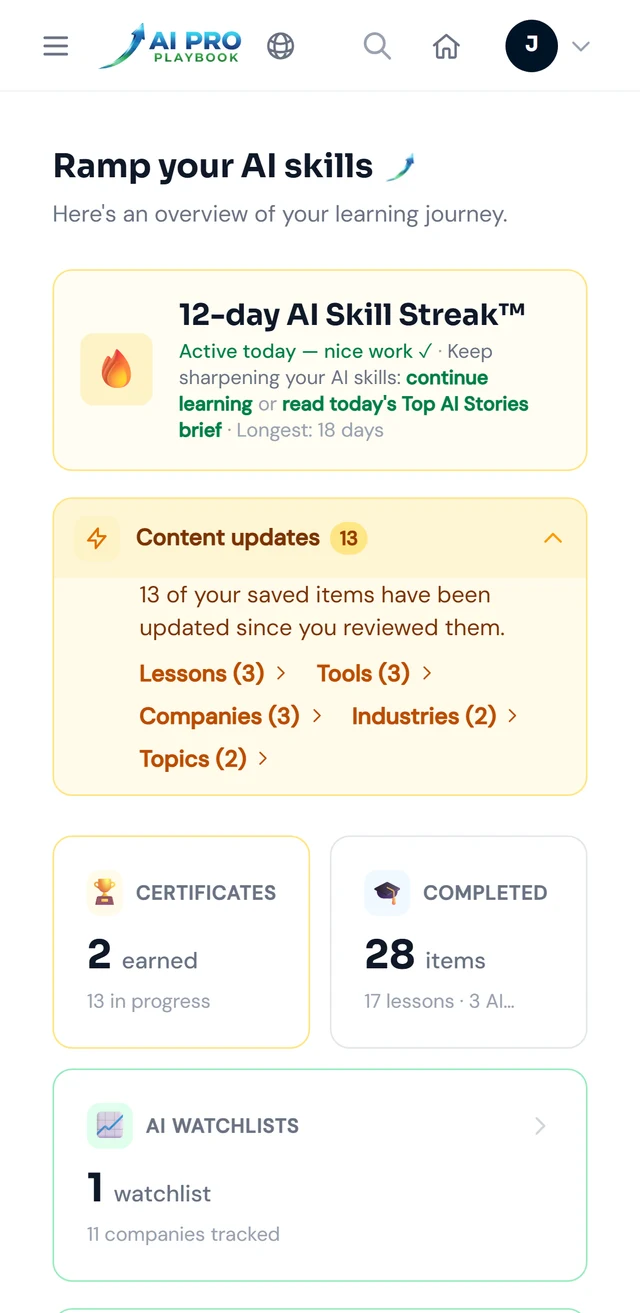
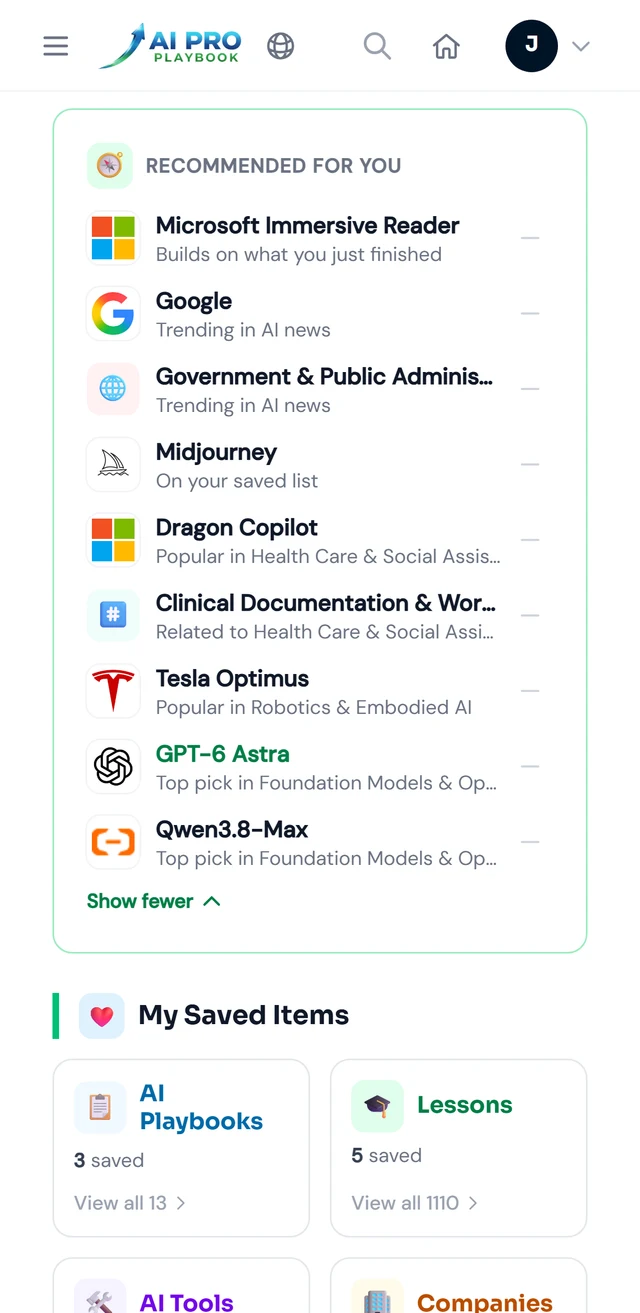
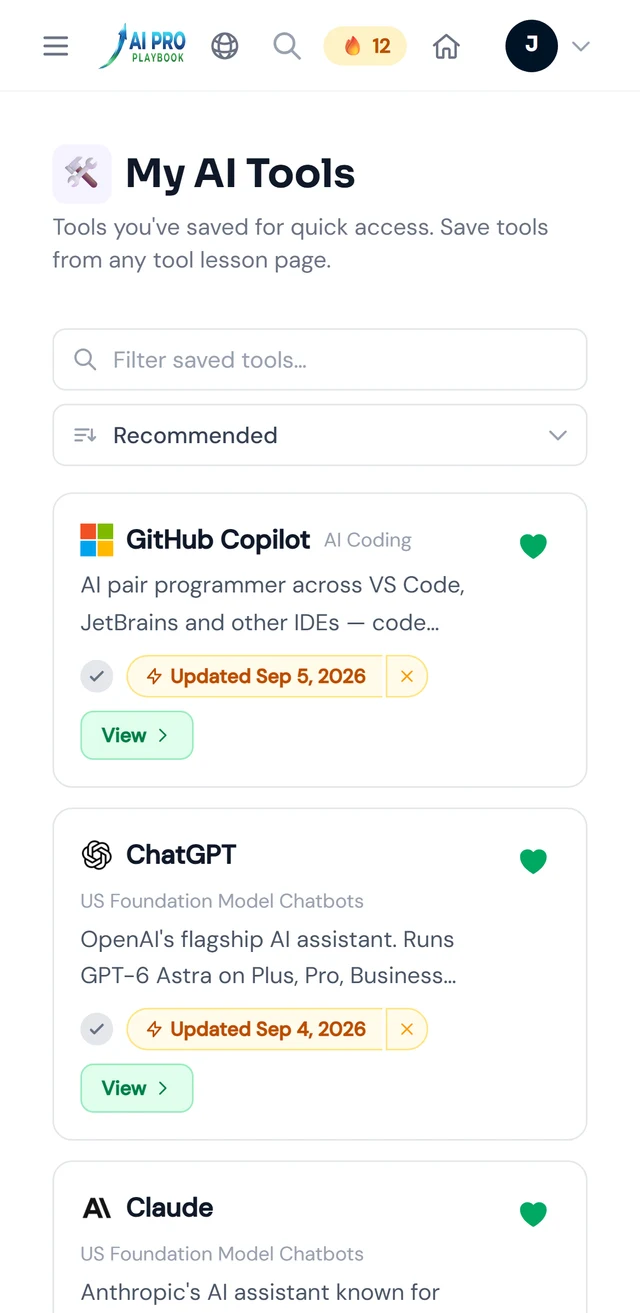
Swipe for Recommended for you and My AI Tools
Your AI Hub — sample data. See desktop view example
🛠️Top AI Tools for This Topic
Civil engineering design and documentation for roads, drainage, grading, and site development, with AI-assisted corridor design and automated quantity takeoffs that ripple through the model when constraints change.
Civil design for road and rail infrastructure that feeds Bentley iTwin digital twins, so as-designed models become AI-monitored real-world assets over their lifetime.


 Esri ArcGIS AI
GIS platform with embedded generative AI — natural-language query of spatial data, automated feature extraction from imagery, and predictive analytics for utilities, government, and infrastructure.

 Skydio
Autonomous drones for industrial inspection, public safety, and defense — Skydio's flight-stack AI handles obstacle avoidance, path planning, and target tracking without a pilot in the loop. Widely used for bridge, transmission-line, and building-envelope inspection.
 Pix4D
Pix4DPhotogrammetry software for drone mapping, surveying, agriculture, and construction. AI-driven structure-from-motion turns aerial imagery into orthomosaics, digital surface models, and 3D point clouds.

 nPlan
nPlannPlan trains deep-learning models on more than seven hundred thousand past project schedules to forecast how long activities will really take, flag the riskiest parts of a program, and quantify delay risk before construction begins on major infrastructure.
 ALICE Technologies
ALICE Technologies applies generative AI to construction scheduling — analyzing a project model and schedule to generate millions of ways to sequence the work and surface the most efficient, compressing timelines and balancing labor and equipment on heavy-civil projects.
 NoTraffic
NoTraffic pairs roadside vision-and-radar sensors with cloud AI to detect vehicles, pedestrians, cyclists, and transit in real time and adjust traffic-signal timing autonomously — moving intersections from fixed timing toward continuous, demand-driven control.
 Ansys
AnsysSimulation and engineering analysis across structural, fluid, electromagnetic, and thermal physics. Ansys SimAI and Ansys AI+ add machine-learning surrogate models that predict simulation results in seconds instead of hours of solving.
 ChatGPT
OpenAI's flagship AI assistant. Runs GPT-6 Astra on Plus, Pro, Business and Enterprise since September 3, 2026, with GPT-5.6 Luna still the free default and unlimited free text chats. Includes GPT Image 2, full-duplex voice, Deep Research, ChatGPT Health, Sites for building and hosting web apps, and an auto-enrolled restricted mode for under-18s.
 Claude
Anthropic's AI assistant known for long-context reasoning, coding, and following nuanced instructions, with a 1 million token context window. Offers the current Claude lineup from the economical Opus tier up to the Fable flagship. Strong safety and helpfulness balance.