📘Overview
Updated June 24, 2026Data engineering builds and maintains the pipelines that move, clean, and organize data so that analysts, data scientists, and AI systems can use it. Data engineers design warehouses and lakes, write the transformations that turn raw events into trustworthy tables, and keep it all flowing reliably at scale. As organizations have made data and AI central to how they operate, data engineering has become one of the most in-demand parts of the software world.
💡The AI Opportunity
Writing transformations, tuning queries, and wiring up pipelines is structured, repetitive work — and the modern data platforms have absorbed AI directly, so much of it can now be expressed in natural language. Ask for a transformation or an analysis and the platform writes the query; describe a pipeline and an assistant scaffolds it. That frees data engineers to focus on architecture, data quality, and governance — the parts that determine whether the data can actually be trusted.
🤖AI in Action
Databricks AI and Snowflake Cortex AI embed AI directly into the data platform, letting engineers and analysts build pipelines and run models in natural language right next to the data. Scale AI prepares and labels the high-quality datasets that train and evaluate models. Pinecone provides the vector database layer that powers semantic search and retrieval over a company's data, and Together AI offers the model infrastructure to run AI workloads against those datasets. Claude and ChatGPT help engineers write and debug complex queries and transformations.
📊Impact on Jobs
AI is lowering the floor for data work — natural-language querying lets more people get answers without a data engineer in the loop — while raising the ceiling on what data engineers own. The valued work moves toward designing reliable, well-governed data systems and toward building the retrieval and feature pipelines that feed AI applications, a fast-growing responsibility as companies put models into production. Routine pipeline-writing and one-off query work is shrinking; data architecture, quality, and the new discipline of preparing data for AI are expanding. Data engineers who understand how models consume data are increasingly central to the whole AI effort.
Keep track of the topics you follow
- Save the topics you follow
- Get ⚡ alerts when their tools and companies change
- Curated tools for this topic, from 900+ AI tool profiles
- Today’s top AI Stories — the day’s most important AI news, free
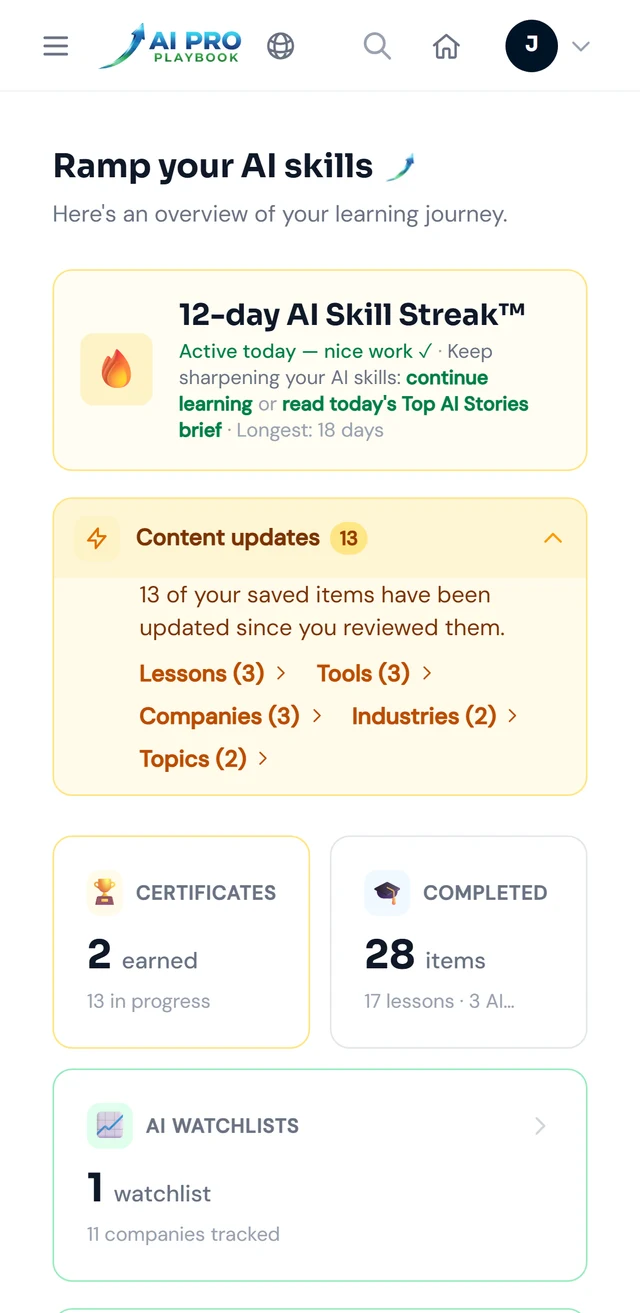
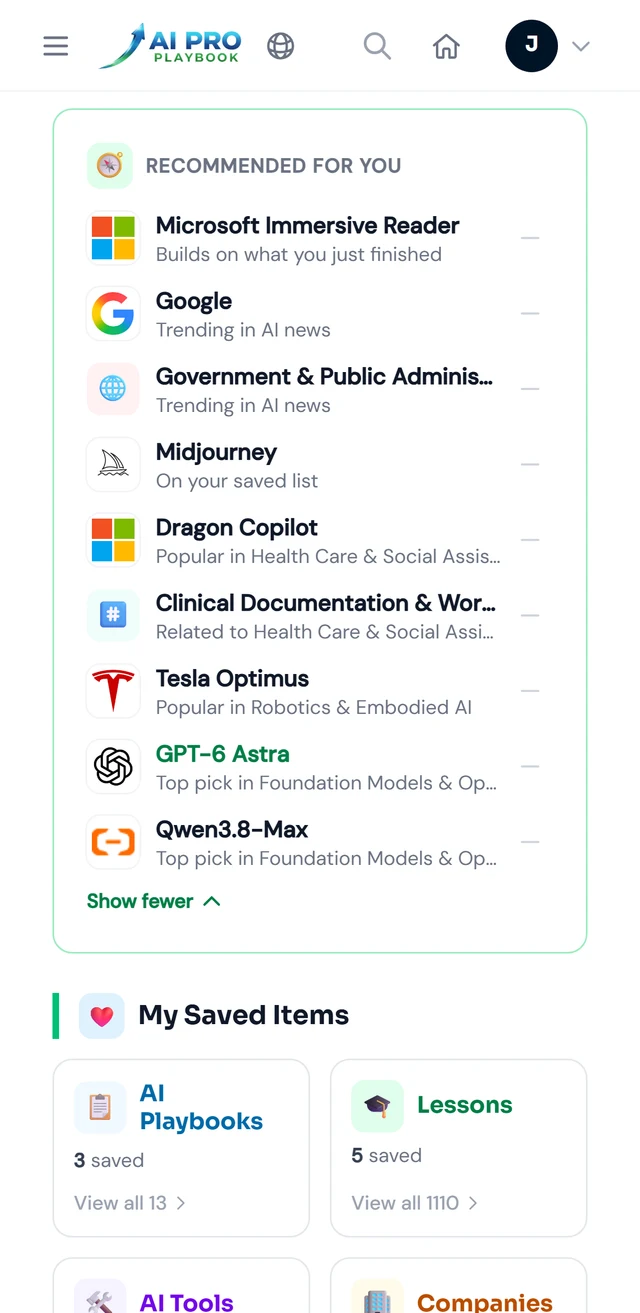
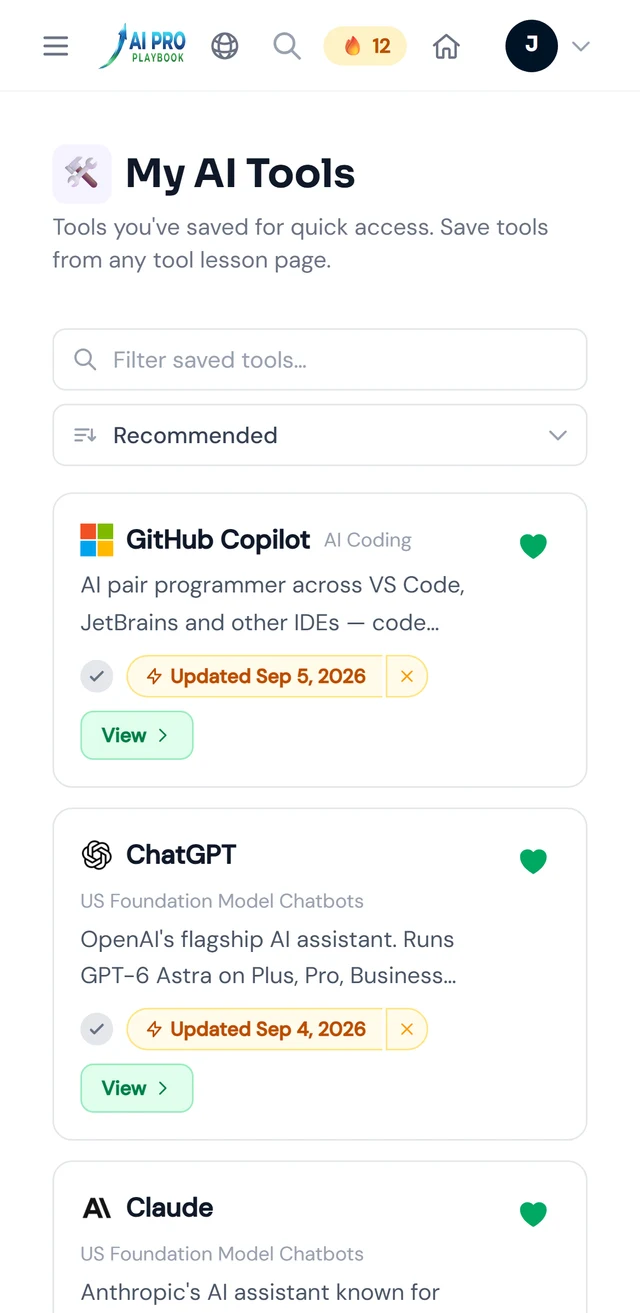
Swipe for Recommended for you and My AI Tools
Your AI Hub — sample data. See desktop view example
🛠️Top AI Tools for This Topic
 dbt
dbtThe standard framework for transforming data in the warehouse (the "T" in ELT) — version-controlled SQL models with testing and docs, plus dbt Copilot for AI-assisted model and test generation.
 Databricks AI
Unified data intelligence platform combining data lakehouse with AI/ML. Includes Mosaic ML for model training, DBRX open model, and Unity Catalog for AI governance. Used by 10,000+ organizations.

 Scale AI
AI data infrastructure platform providing data annotation, model evaluation, and deployment services for enterprises and government. Remotasks and Outlier platforms for expert human feedback at scale.
 Encord
Data platform for annotating, curating, and searching multimodal training data — images, video, audio, 3D point clouds, and sensor streams.
 Pinecone
The leading managed vector database for AI applications. Serverless pricing, 99.99% SLA, and billions of vectors at millisecond query speeds. Widely used in production RAG systems.
 Together AI
AI inference and training platform for open-source models. Fast, low-cost inference for Llama, Mistral, and other models. Fine-tuning and custom training services.
 Claude
Anthropic's AI assistant known for long-context reasoning, coding, and following nuanced instructions, with a 1 million token context window. Offers the current Claude lineup from the economical Opus tier up to the Fable flagship. Strong safety and helpfulness balance.
 ChatGPT
OpenAI's flagship AI assistant. Runs GPT-6 Astra on Plus, Pro, Business and Enterprise since September 3, 2026, with GPT-5.6 Luna still the free default and unlimited free text chats. Includes GPT Image 2, full-duplex voice, Deep Research, ChatGPT Health, Sites for building and hosting web apps, and an auto-enrolled restricted mode for under-18s.
LakebaseDatabricks' fully managed serverless Postgres for AI apps and agents — built on Neon, with zero-copy branching, scale-to-zero, pgvector, and native lakehouse sync.