🏭Industry Overview
Updated May 16, 2026Software Publishers (NAICS 5112) is the industry that designs, builds, and licenses computer software — including packaged applications, operating systems, productivity suites, enterprise SaaS, video games, and the rapidly-growing AI-native application layer. Global software industry revenue exceeds $700 billion annually, with public-software market capitalization in the trillions. Major incumbents include Microsoft (~$3 trillion market cap), Adobe, Salesforce, Oracle, SAP, ServiceNow, and Workday, alongside open-source projects (Linux Foundation, Apache, Python Software Foundation) and the dominant AI-native vendors (OpenAI, Anthropic, Google DeepMind, xAI, Meta AI). The industry has been moving from on-premise licensing to cloud-delivered SaaS for over 15 years, and is now in the middle of a second tectonic shift toward AI-native and AI-augmented products. Industry employment in the US alone exceeds 1.6 million, concentrated in California, Washington, Texas, and the Northeast corridor.
💡The AI Opportunity
A watershed validation of AI-augmented vulnerability discovery landed on May 7, 2026, when Mozilla disclosed that Anthropic's Claude Mythos Preview surfaced 271 of the security bugs fixed in Firefox 150 — including sandbox escapes, WebAssembly use-after-free issues, and bugs that had survived 15 to 20 years of traditional fuzzing in some of the most heavily audited code on the open web. The severity breakdown (180 sec-high, 80 sec-moderate, 11 sec-low) and Mozilla's "almost no false positives" quote made this the first peer-validated, large-scale external deployment of an autonomous AI security agent against mature production software. The reference case will set the bar that the next 12 months of browser, OS, and infrastructure vendors compare against — a structural shift in how security review work is staffed inside major software publishers.
🤖AI in Action
AI is now embedded across virtually every software product line. Microsoft Copilot brings generative AI to Office, Windows, Teams, and the Microsoft 365 platform; Adobe Firefly and Express ship generative-image and video tools across Creative Cloud; Salesforce Einstein and Agentforce embed AI agents across the CRM platform; ServiceNow AI integrates LLMs into ITSM workflows. AI-native vendors include OpenAI (ChatGPT, GPT-5.5, Codex), Anthropic (Claude family, Claude Code), Google DeepMind (Gemini, AlphaFold), xAI (Grok), and Meta AI (Llama). Foundation-model providers anchor an enormous downstream ecosystem — Cohere, Mistral, DeepSeek, Qwen, and many regional players. Tooling-layer companies (LangChain, LlamaIndex, Pinecone, Cursor, Windsurf, GitHub Copilot, Replit) build the developer infrastructure for AI applications. Product-layer SaaS companies are racing to embed AI features ahead of competitive pressure.
In May 2026, SAP signed a definitive agreement to acquire German AI startup Prior Labs and committed more than 1 billion euros over four years to scale Prior Labs into a globally leading frontier AI lab in Europe; the deal closes in Q2 or Q3 of 2026 pending regulatory approval. Prior Labs builds tabular foundation models (TFMs) — its flagship TabPFN is optimized for the structured data that lives inside enterprise systems rather than free-form text, a better technical fit for ERP, finance, and supply-chain workloads than horizontal LLMs. The same week, SAP also announced an agreement to acquire data-fabric vendor Dremio to unify SAP and non-SAP data sources for agentic AI, signaling a broader buying spree to bolster structured-data AI capabilities ahead of broader enterprise rollout.
📊Impact on Jobs
Software is one of the most AI-disrupted industries because the products themselves are software, and the workforce is among the most willing to adopt AI tools. Coding assistants (GitHub Copilot, Cursor, Claude Code) have become standard tooling at most software shops, with measurable productivity gains and a real reset in entry-level engineering hiring expectations. Junior developers face the steepest pressure as AI handles boilerplate work; senior engineers benefit from AI as a force-multiplier. Product management, technical writing, and QA roles are seeing AI-augmented workflows. Sales engineering and customer success are increasingly AI-assisted, with Glean and similar enterprise-knowledge tools changing internal-research patterns. New roles are emerging — AI evaluations engineer, prompt engineer, AI-platform-product-manager — even as some traditional roles compress. The industry is simultaneously the producer and the heaviest user of generative AI.
Keep track of AI in your sector
- Save the sectors you follow
- Get ⚡ alerts when their tools and companies change
- The AI tools that actually ship here, from 900+ AI tool profiles
- Today’s top AI Stories — the day’s most important AI news, free
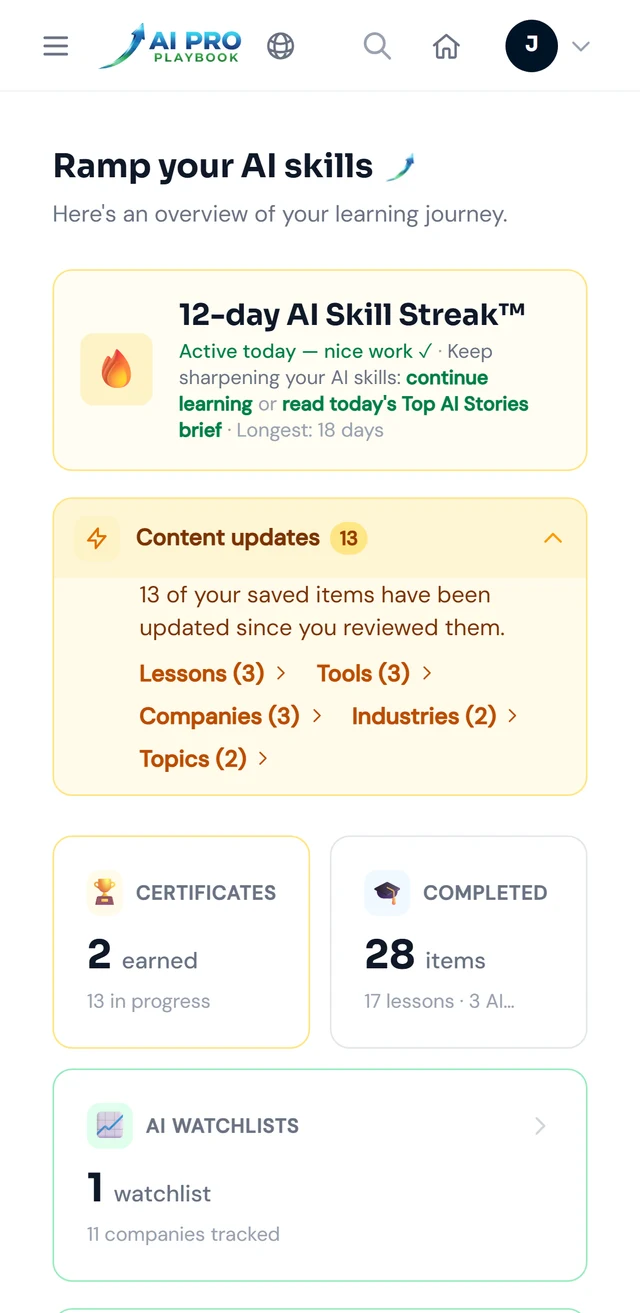
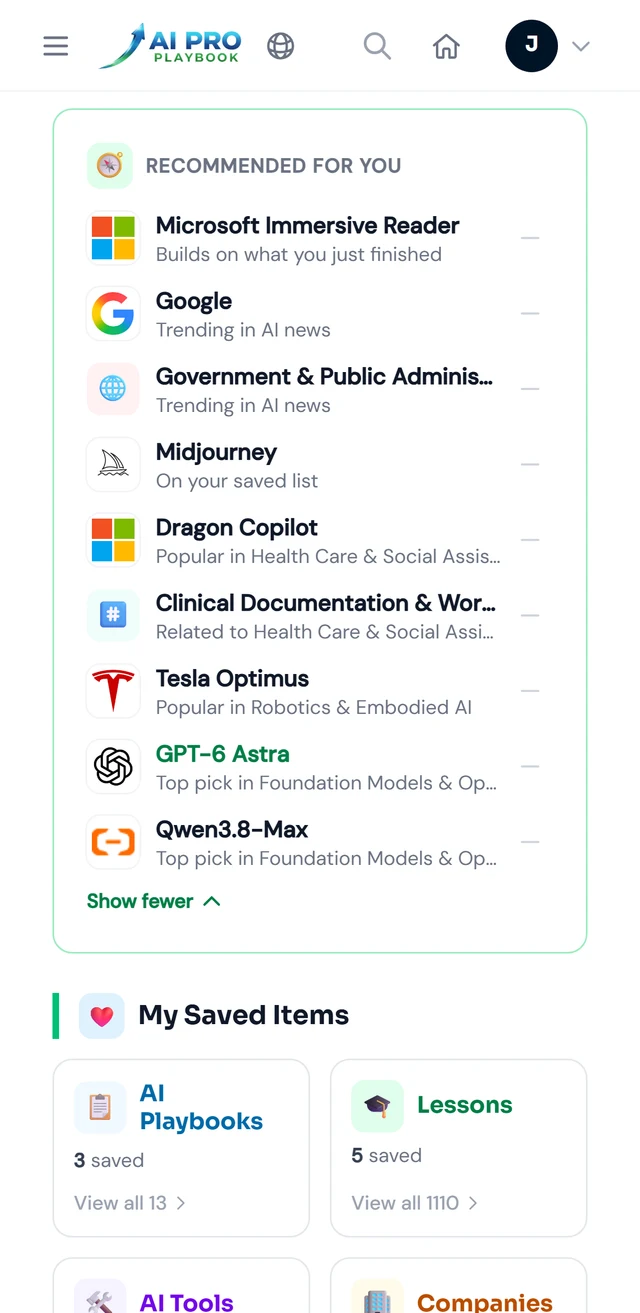
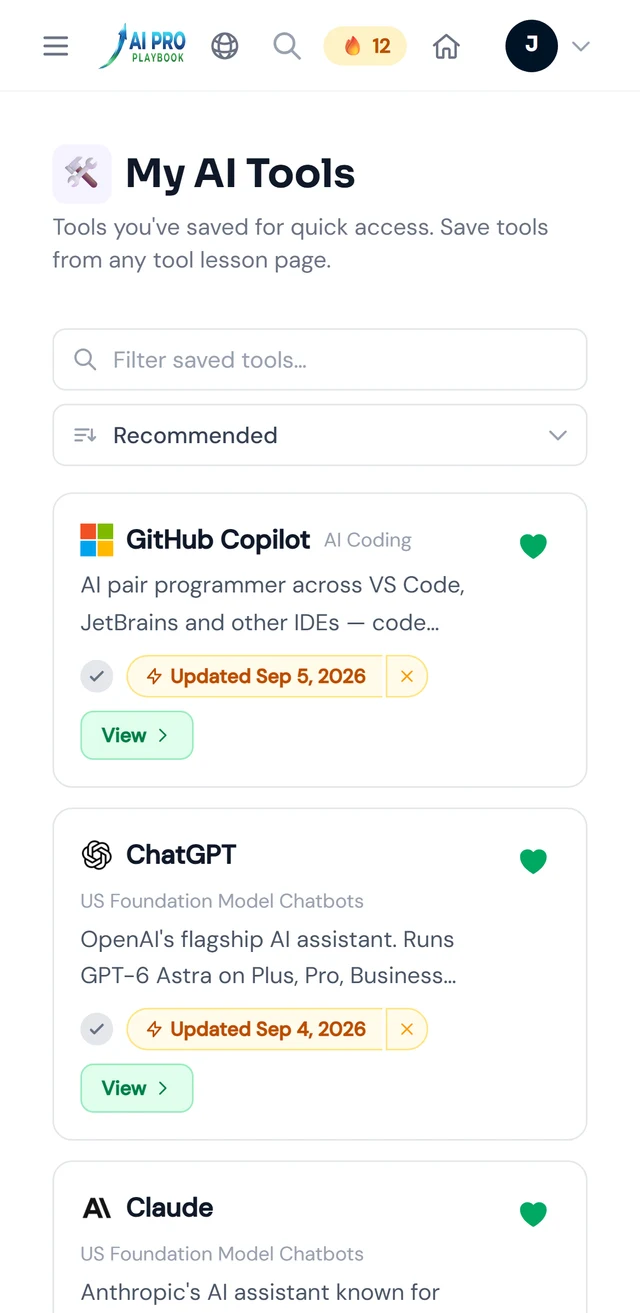
Swipe for Recommended for you and My AI Tools
Your AI Hub — sample data. See desktop view example
🛠️Top AI Tools in This Industry

 Claude Code
Anthropic's autonomous coding agent — multi-step coding, debugging, git and MCP tool use in the terminal or in cloud sessions, where redesigned projects split one goal into parallel threads. Runs on Anthropic's Claude Fable, Opus and Sonnet models.
 Cursor
AI-native code editor with Composer for agentic multi-file coding, embedded browser testing, and custom AI models. $2 billion+ ARR, 1 million+ daily active users, used by over half the Fortune 500. SpaceX closed its $60 billion acquisition of Cursor in August 2026; OpenAI is winding down model access from November 12, 2026, leaving Claude, Gemini and Cursor's own Composer line.
 Windsurf
AI-native IDE with Cascade for agentic multi-file editing. Generous free tier with AI autocomplete, chat, and coding assistance. Major competitor to Cursor. Supports VS Code and JetBrains.
 Devin
DevinThe first fully autonomous AI software engineer, from Cognition. Plans, writes, debugs and deploys code end-to-end from natural language, using browser, terminal and editor together. Runs on SWE-2 since September 2026, a model post-trained from Moonshot AI's open-weight Kimi K3.
 Replit AI
Cloud IDE with Ghostwriter AI assistant and Replit Agent for building full applications from natural language. AI-powered code generation, debugging, and one-click deployment. 30M+ developers.

 Tabnine Enterprise
Privacy-first AI code completion with on-premise deployment for regulated industries. Custom model fine-tuning on proprietary code. Supports 80+ languages across VS Code, JetBrains, and Neovim.
 Augment Code
Enterprise AI coding assistant with SOC 2 Type II compliance and on-premise deployment. Backed by Eric Schmidt. Designed for large development teams with strict security requirements.
Open-source git-integrated AI coding CLI. Every AI change auto-committed with explanatory message. Works with any LLM. Apache 2.0.
Pivoted from IDE extension to Continuous AI — open-source CLI running async agents on every PR. GitHub/Sentry/Snyk integration. Free.

 Harness AI
AI-native software delivery with specialized agents across CI/CD, cloud cost, and ops.