📘Overview
Updated June 24, 2026Machine learning and AI engineering is the work of building intelligent systems — and in the era of large language models, that increasingly means assembling production applications on top of foundation models rather than training models from scratch. AI engineers design retrieval pipelines, build agents, evaluate and secure model behavior, and wire models into real products. The role has splintered into specialties — large-language-model engineer, agent engineer, applied scientist, operations-focused machine-learning engineer — but they share a core: making AI work reliably outside a demo.
💡The AI Opportunity
What makes this discipline distinctive is that the tools and the product are the same technology. The hardest problems are no longer writing code — assistants do much of that — but making AI systems accurate, grounded, and verifiable. Retrieval-augmented generation, which feeds a model relevant private data so its answers are grounded rather than guessed, has become the single most in-demand pattern in production, and a whole tooling ecosystem has grown up to build, orchestrate, and serve these systems.
🤖AI in Action
The Claude Agent SDK provides the framework for building production agents, while LangGraph and LlamaIndex orchestrate multi-step agent workflows and retrieval over private data. Pinecone is the vector database at the heart of most retrieval pipelines. OpenAI Codex generates and reasons about code as part of these systems, and Baseten, Groq Cloud, and Together AI provide the infrastructure to deploy and serve models quickly and affordably. Together these form the modern stack for turning a foundation model into a dependable feature.
📊Impact on Jobs
AI engineering has gone from a niche to one of the highest-demand and highest-paid roles in software — by 2026 it has surpassed the traditional full-stack position in both, with agent-engineering specialists commanding pay well into the six figures. The shortage is acute because the skills are new: building software is easy now, but building intelligent systems that are robust, grounded, and safe is genuinely hard, and few engineers have done it at production scale. The opportunity is correspondingly large for developers who learn the patterns — retrieval, evaluation, agent design, and model operations — which are now among the most valuable skills in the entire field.
Keep track of the topics you follow
- Save the topics you follow
- Get ⚡ alerts when their tools and companies change
- Curated tools for this topic, from 900+ AI tool profiles
- Today’s top AI Stories — the day’s most important AI news, free
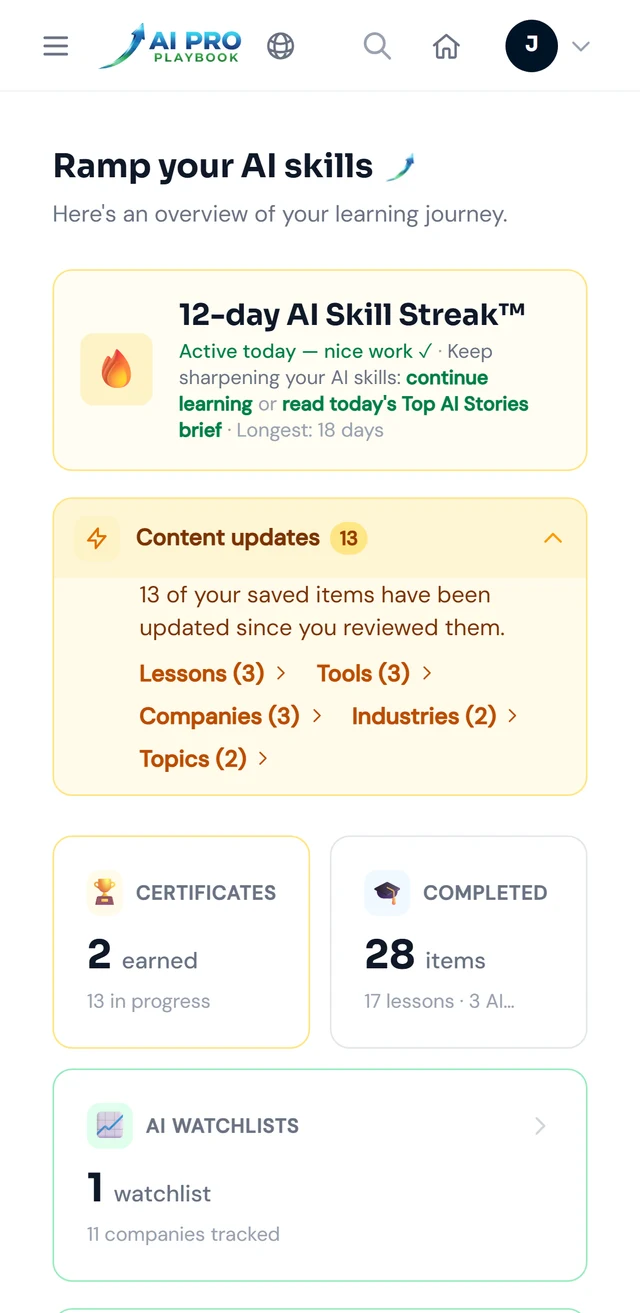
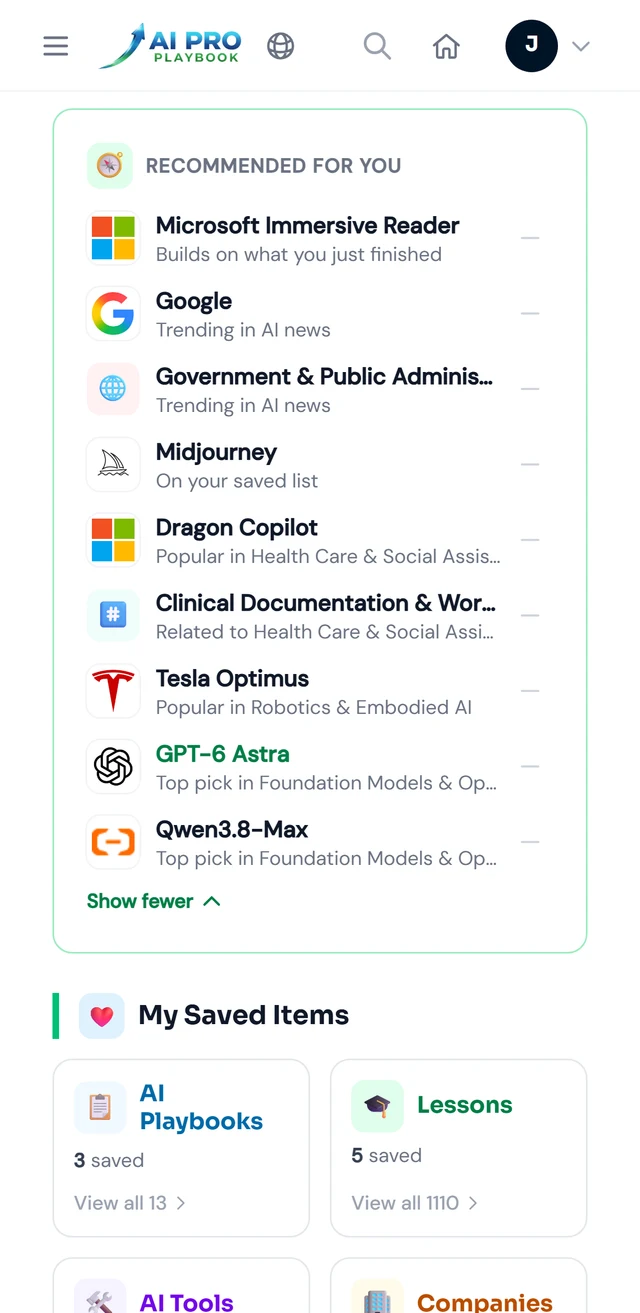
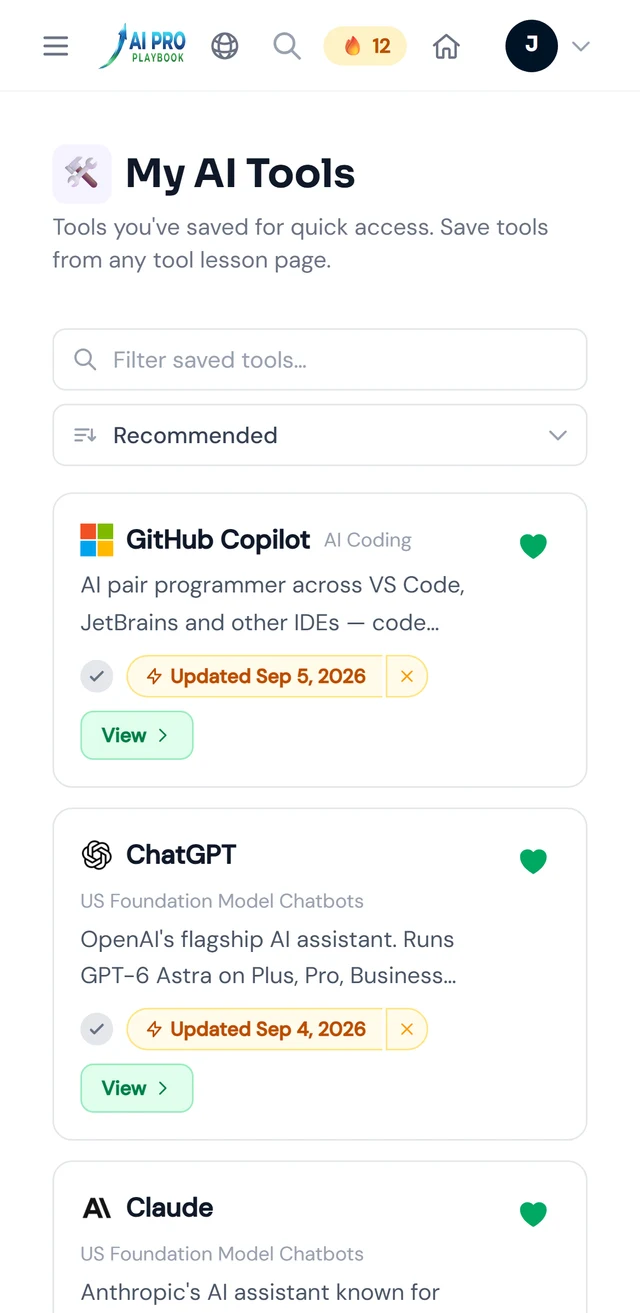
Swipe for Recommended for you and My AI Tools
Your AI Hub — sample data. See desktop view example
🛠️Top AI Tools for This Topic
 Hugging Face
The hub of open machine learning — millions of models and datasets, the Transformers library, and Spaces for demos. The default platform for finding, sharing, and running AI models.
 Claude Agent SDK
Anthropic's official SDK for building custom AI agents with Python and TypeScript. Built-in file operations, shell commands, web search, and MCP integration. Sub-agents, background tasks, and Xcode integration.
 LangGraph
Production-grade agent orchestration framework by LangChain. Models agent logic as stateful directed graphs with durable execution, human-in-the-loop checkpoints, and persistent memory. v1.0 reached early 2026.
 LlamaIndex
Open-source framework specialized for building RAG (Retrieval-Augmented Generation) systems and data-aware LLM applications. Strong for enterprise knowledge bases.
 Weights & Biases
The standard MLOps platform for experiment tracking, model evaluation, and (via Weave) LLM observability — logs every training run so AI development is reproducible and comparable.
LangSmithLLM and agent observability, evaluation, and debugging from LangChain — traces every step of an AI app, runs systematic evals, and manages prompts so teams can ship reliable AI.
 OpenAI Codex
OpenAI's agentic coding agent, defaulting to GPT-6 Astra since September 2026. Plans and executes multi-step work in sandboxed environments, and now extends beyond code into analytics, sales and finance via role plug-ins. Its harness is also sold directly as the public-beta Agents API, with hosted sandboxes, subagents and MCP tools.
 Pinecone
The leading managed vector database for AI applications. Serverless pricing, 99.99% SLA, and billions of vectors at millisecond query speeds. Widely used in production RAG systems.
 Baseten
High-performance AI model inference infrastructure backed by NVIDIA ($150M). Deploy, serve, and scale AI models in production with optimized GPU utilization and auto-scaling.
 Groq Cloud
Ultra-fast AI inference platform powered by custom LPU chips. Fastest token generation speeds in the industry for real-time applications. API access to major open-source models.
 Together AI
AI inference and training platform for open-source models. Fast, low-cost inference for Llama, Mistral, and other models. Fine-tuning and custom training services.
 Fireworks AI
Inference and fine-tuning platform for serving specialized open-source models at production scale — powered by the FireAttention kernel, speculative decoding, and the FireOptimizer adaptive engine. OpenAI-compatible API across Llama, DeepSeek, Qwen, and Mixtral.
 Prime Intellect
Full-stack platform for training and running your own AI agents — compute, a reinforcement-learning framework, and evaluation tools as modular building blocks. Pitched at enterprises that want agentic systems without routing proprietary data through frontier labs.
 River AI
API for customizing open-weight models — low-rank adaptation fine-tuning and hosted reinforcement learning across the Qwen, GLM and Kimi families, from xAI co-founder Igor Babuschkin.
 OpenRouter
Multi-model API gateway routing requests across 400+ LLMs from Anthropic, Google, OpenAI, xAI, DeepSeek, and others. Unified API, consolidated billing, and a public model leaderboard.
 Ramp Router
Ramp's model-routing layer: one API endpoint that sends each request to the cheapest model clearing a stated performance bar, with automatic failover between providers. Free routing through 2026; United States only at launch.
 Nscale Cloud
British neocloud running its own AI data centers across Norway, the UK and the US, with on-demand GPU instances, managed Slurm and Kubernetes, fine-tuning and inference endpoints. Counterparty to Microsoft's 1.35-gigawatt commission and a reported $45 billion Anthropic compute agreement.
 Jev
JevTypeSafe AI's first System One model (September 2026). Takes a block of state plus typed questions and returns structured choices, scores and yes-or-no probabilities with calibrated confidence, instead of generating text. Input is $0.042 per million tokens with output unbilled — far cheaper and faster than a frontier model, but less accurate (67.8% against 74.1% on TypeSafe's own evaluation). TypeSafe's API is waitlisted; Vercel AI Gateway and Cloudflare Workers AI carry it openly.
 Laya
LayaOpen-weight decision model from Convai Innovations (September 2026, Apache 2.0). Answers typed questions about a ticket, email or document with calibrated probabilities instead of text, in about 33 milliseconds on one GPU. The open, self-hosted counterpart to Jev. Comparisons with Jev are self-reported, and its best benchmark result comes from a fine-tuned checkpoint.