🏭Industry Overview
Updated May 16, 2026Heavy and Civil Engineering Construction (NAICS 237) covers transportation infrastructure (highways, bridges, tunnels, transit), water and wastewater infrastructure, and utility infrastructure (oil/gas pipelines, power transmission). Major US heavy-civil contractors include AECOM (also a major design firm), Granite Construction, Tutor Perini, Kiewit Corporation (one of the largest privately-held construction firms in the US), Fluor (which has been restructuring), Skanska USA Civil, Lane Construction (Webuild-owned), and Flatiron (operating across the Americas). The water-infrastructure specialists include Layne Christensen, Garney Companies, and Black & Veatch. Pipeline construction is led by Quanta Services, Mastec, Primoris Services, and Centuri. Combined US heavy-civil-construction revenue exceeds $500 billion annually. The industry is in the middle of a generational investment cycle driven by the 2021 Infrastructure Investment and Jobs Act ($1.2 trillion over 10 years), the CHIPS Act (semiconductor-fab construction), and the parallel data-center power-infrastructure build-out.
🤖AI in Action
AI is being applied across heavy-civil construction. Site-survey AI uses drone-based photogrammetry (Skydio, DroneDeploy) and lidar to generate 3D site models that feed BIM/civil-engineering platforms (Bentley OpenRoads, Bentley iTwin, Autodesk Civil 3D). Fleet-management AI (Trimble, Caterpillar VisionLink, Komatsu Smart Construction) tracks heavy-equipment utilization and predicts maintenance. Schedule-optimization AI (Bentley Synchro, Procore AI) handles complex multi-prime coordination. Pavement-condition AI (Stantec, RoadBotics) uses computer vision to assess existing infrastructure for repair prioritization. Bridge and tunnel inspection AI (Niricson, Visual Defect Studio) accelerates regulatory inspection workflows. Construction-equipment automation is the biggest AI frontier — Built Robotics (autonomous skid-steers and excavators), Caterpillar autonomous mining/quarry trucks, Komatsu autonomous-haulage systems are deployed at scale. Civil engineering design AI (Bentley OpenBridge, Skema for structural) accelerates the design phase.
📊Impact on Jobs
Heavy-civil construction employs ~1.7 million US workers. Operating-engineer and equipment-operator roles are seeing the most direct automation pressure — autonomous equipment is most mature in mining/quarry (Caterpillar deployments) and progressing in highway and earthwork applications. Field-engineering roles are AI-augmented but stable. Project-management and superintendent roles are growing in absolute headcount due to the infrastructure-investment cycle. Civil-engineering and design roles are heavily AI-augmented; the work has shifted toward higher-level integration as AI handles routine drafting and analysis. Inspector roles (DOT highway inspectors, bridge inspectors) face the most direct AI displacement as drone+computer-vision platforms handle routine condition assessment. Surveying roles are AI-augmented (drones+ML reduce field-survey time) but technical-surveyor work remains in demand. New roles: autonomous-equipment-operations specialist, drone-survey AI engineer, civil-AI-modeling engineer, infrastructure-condition-AI analyst at state DOTs.
Keep track of AI in your sector
- Save the sectors you follow
- Get ⚡ alerts when their tools and companies change
- The AI tools that actually ship here, from 900+ AI tool profiles
- Today’s top AI Stories — the day’s most important AI news, free
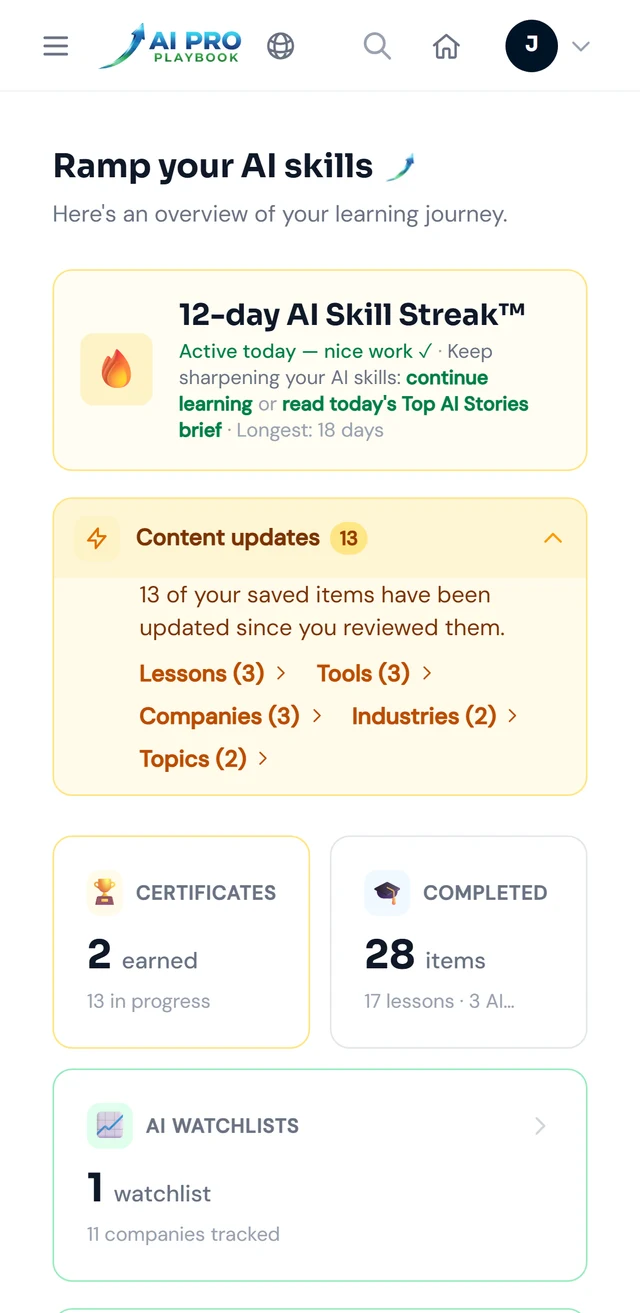
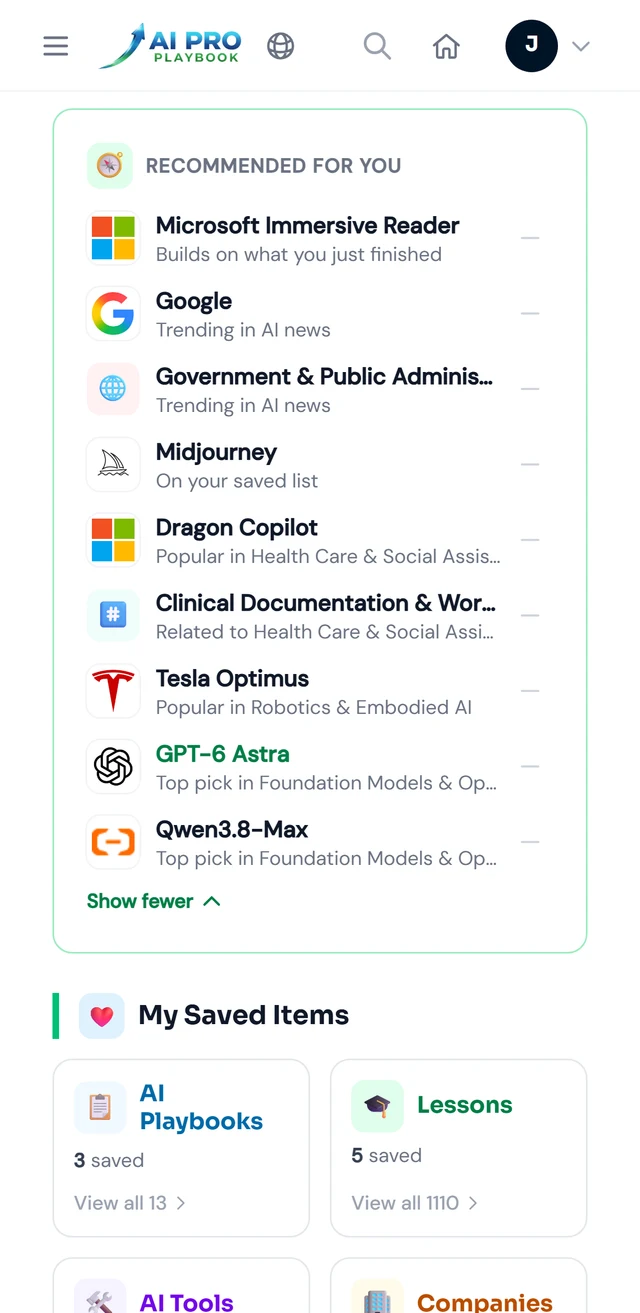
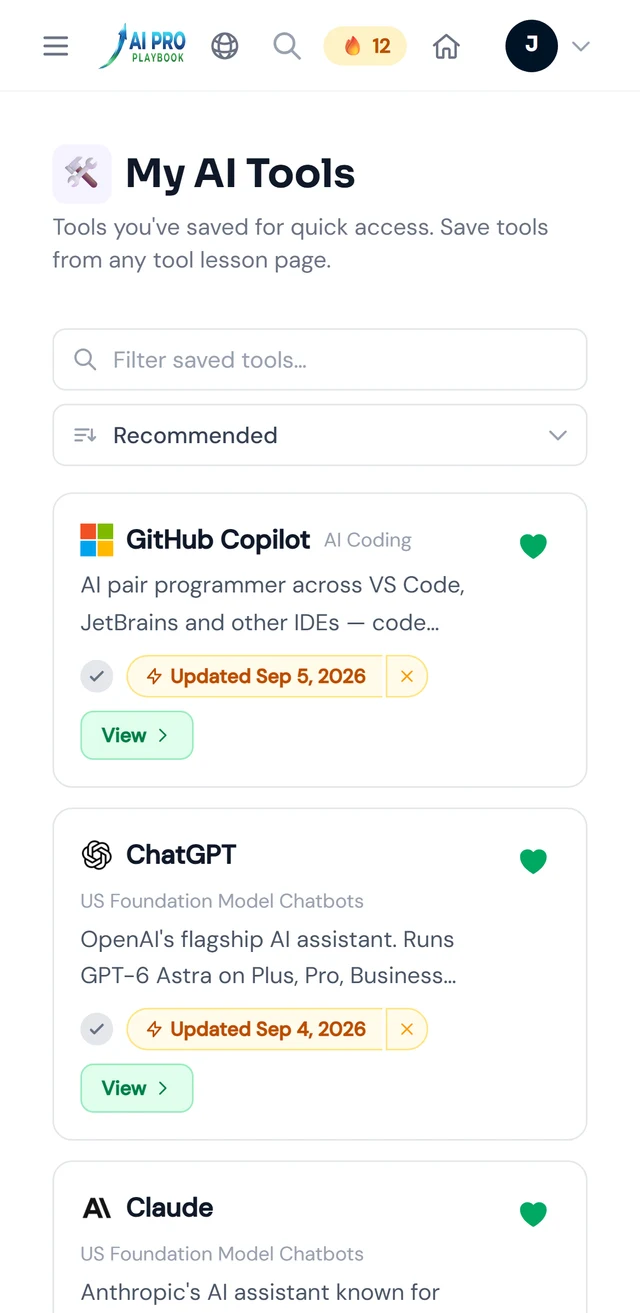
Swipe for Recommended for you and My AI Tools
Your AI Hub — sample data. See desktop view example
🛠️Top AI Tools in This Industry




 ChatGPT
OpenAI's flagship AI assistant. Runs GPT-6 Astra on Plus, Pro, Business and Enterprise since September 3, 2026, with GPT-5.6 Luna still the free default and unlimited free text chats. Includes GPT Image 2, full-duplex voice, Deep Research, ChatGPT Health, Sites for building and hosting web apps, and an auto-enrolled restricted mode for under-18s.
 Claude
Anthropic's AI assistant known for long-context reasoning, coding, and following nuanced instructions, with a 1 million token context window. Offers the current Claude lineup from the economical Opus tier up to the Fable flagship. Strong safety and helpfulness balance.