🏭Industry Overview
Updated May 16, 2026Construction is a $1.8 trillion US industry and a $14 trillion global sector that builds the homes, offices, factories, roads, bridges, and infrastructure shaping how society functions. Despite its enormous scale, construction has historically been one of the least digitized industries, with productivity growth lagging far behind manufacturing and agriculture over the past 50 years. The average large construction project finishes 80% over budget and 20 months behind schedule — a persistent challenge representing trillions in avoidable waste globally.
💡The AI Opportunity
Multiple structural factors drive construction's productivity problem: fragmented supply chains, project-based workforces, complex coordination among dozens of specialized trades, regulatory complexity, and highly variable site conditions. AI is beginning to address each of these challenges — from generative design tools that optimize structural efficiency, to computer vision systems that monitor site safety and track progress, to predictive analytics that flag cost and schedule risks weeks in advance. The stakes are high: construction projects underpin economic growth, housing affordability, and infrastructure resilience.
🤖AI in Action
Computer vision systems monitor construction sites for safety compliance — detecting workers without hard hats or unsafe proximity to machinery. AI-powered project management tools like Procore's Copilot predict schedule delays and cost overruns. Generative design tools (Autodesk) explore thousands of structural configurations to optimize materials. Robotic systems lay bricks, pour concrete, and inspect infrastructure. BIM (Building Information Modeling) platforms use AI to detect design clashes before construction begins.
📊Impact on Jobs
Construction remains labor-intensive, but AI is shifting demand toward workers who can operate and interpret AI systems. Project managers, site safety officers, and BIM coordinators are seeing AI tools augment their roles. Unskilled manual labor faces gradual automation pressure, particularly for repetitive tasks like bricklaying and welding.
Keep track of AI in your sector
- Save the sectors you follow
- Get ⚡ alerts when their tools and companies change
- The AI tools that actually ship here, from 900+ AI tool profiles
- Today’s top AI Stories — the day’s most important AI news, free
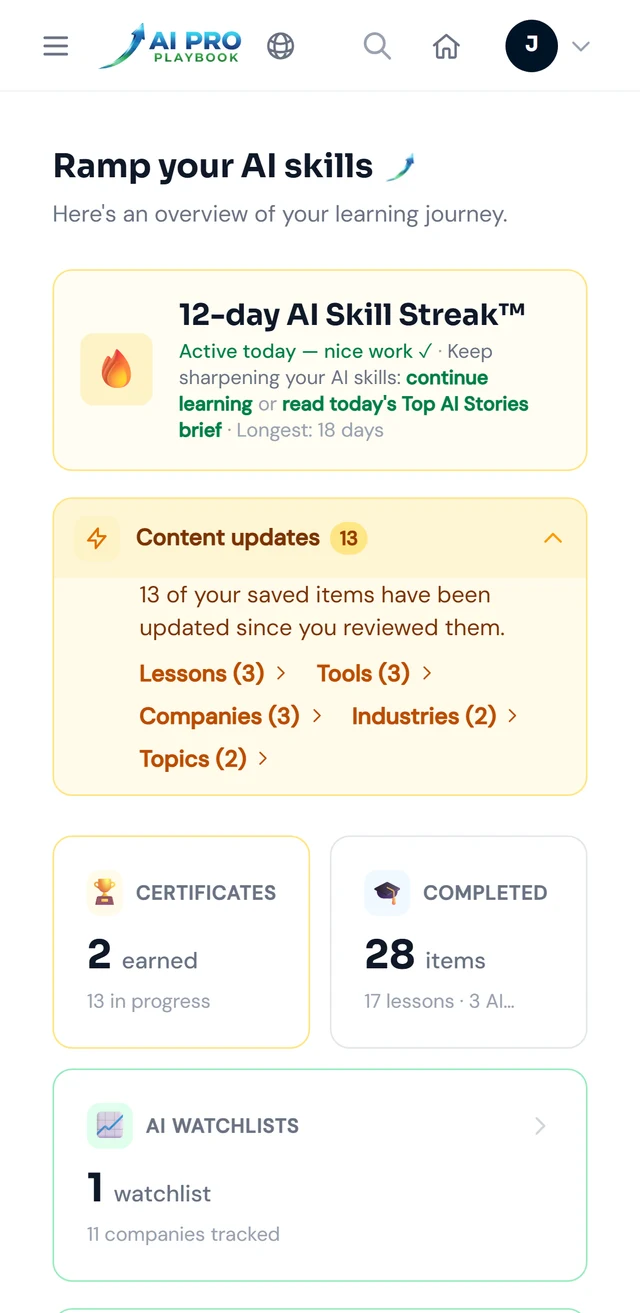

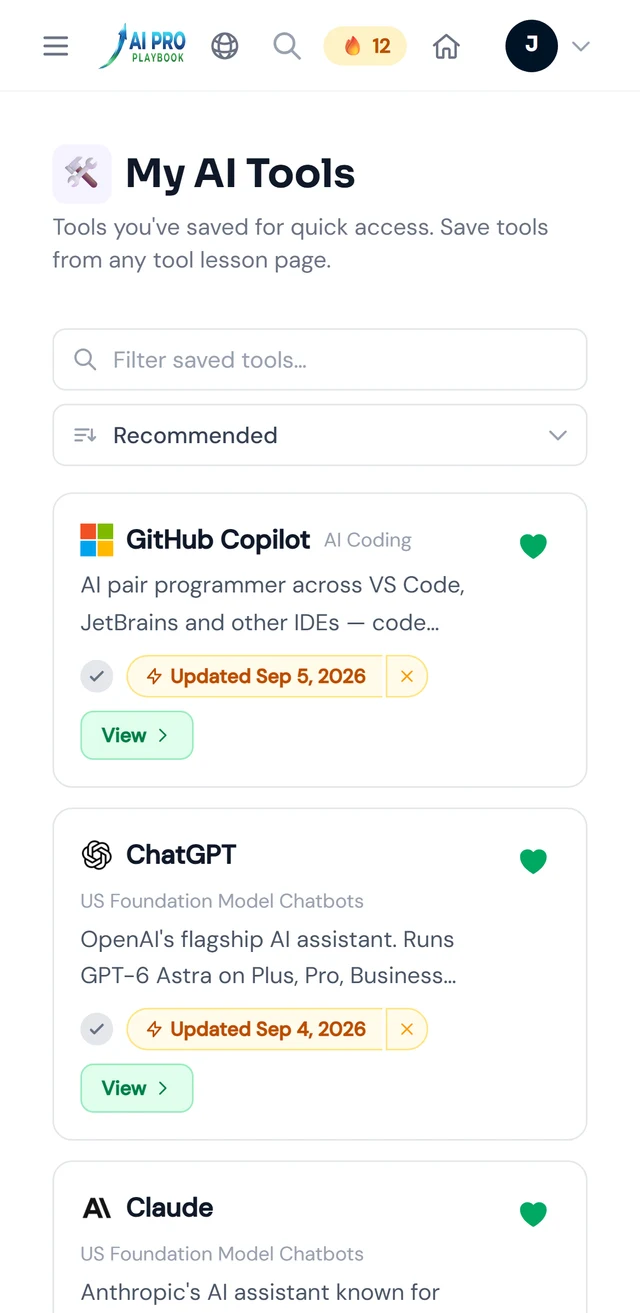
Swipe for Recommended for you and My AI Tools
Your AI Hub — sample data. See desktop view example
🛠️Top AI Tools in This Industry


Generative-design platform for real-estate developers and architects — auto-generates building configurations optimized for FAR, parking ratios, and unit mix.
 OpenSpace
360° construction site capture with AI that automatically maps photos to BIM coordinates, tracks progress, and surfaces deviations between as-built reality and the design model. Used by ENR Top 400 contractors.
 Buildots
AI-powered construction progress tracking — captures site walks via 360° helmet cameras, then compares as-built reality to the BIM schedule to flag delays and rework risk before they cascade.
 DroneDeploy
Drone software platform for surveying, mapping, and construction site monitoring. AI-powered photogrammetry turns drone flights into 2D orthomosaics, 3D models, and progress reports tied to BIM.
 Skydio
Autonomous drones for industrial inspection, public safety, and defense — Skydio's flight-stack AI handles obstacle avoidance, path planning, and target tracking without a pilot in the loop. Widely used for bridge, transmission-line, and building-envelope inspection.
 Pix4D
Pix4DPhotogrammetry software for drone mapping, surveying, agriculture, and construction. AI-driven structure-from-motion turns aerial imagery into orthomosaics, digital surface models, and 3D point clouds.
 Esri ArcGIS AI
GIS platform with embedded generative AI — natural-language query of spatial data, automated feature extraction from imagery, and predictive analytics for utilities, government, and infrastructure.
Construction-document AI for active job sites — automates RFI responses, submittal review, and safety analysis from project documents.