🏭Industry Overview
Updated May 16, 2026Forestry and Logging (NAICS 1131) covers timber harvesting from natural and managed forests, plus the broader forest-products supply chain. Major US forest-products companies include Weyerhaeuser (NYSE: WY, the largest private US landowner with ~10.5 million acres), Rayonier, PotlatchDeltic, and the regional operators in the Pacific Northwest, Southeast, and Northeast. International giants include West Fraser (NYSE: WFG, Canadian-American), Canfor (Canadian), Stora Enso (Finnish-Swedish), UPM-Kymmene (Finnish), and SCA (Swedish). The federal-and-state forest segment includes the US Forest Service, the BLM, and state forest agencies, which manage approximately 30% of US timberland. Combined US forest-products industry revenue exceeds $300 billion annually across logging, sawmills, paper mills, and the broader value chain. The industry is being reshaped by climate-change pressure (wildfire risk in the West, pest pressure in the Northeast) and the growing demand for forest-carbon offset projects.
🤖AI in Action
AI is being applied across forest management. Wildfire-risk monitoring is the most consequential application — Pano AI (camera-based fire-detection used by major utilities and forest agencies), Cornea (combining satellite and ground sensors), Descartes Labs (satellite-based monitoring), and the Wildfire AI initiatives at PG&E and Southern California Edison provide early-detection capabilities. Stand-health assessment uses satellite imagery and AI (Planet Labs, Capella, plus the proprietary platforms at major forest-products companies) to identify pest infestations, drought stress, and harvest-ready stands. Harvest-planning AI optimizes which stands to cut and when, considering market prices, growth curves, and equipment scheduling. LiDAR-based forest inventory increasingly uses AI to automatically classify tree species and measure standing volume from drone or aerial surveys. Forest-carbon-offset measurement (NCX, Pachama, Open Forest Protocol) is heavily AI-driven — verifying carbon sequestration claims requires high-resolution remote sensing plus ML for change detection. Mill-operations AI (Andritz, Valmet) optimizes pulping, drying, and sawmill cut-line decisions.
📊Impact on Jobs
Forest-products employment is largely concentrated in rural areas with smaller workforce footprint than crop or animal agriculture. Logger and equipment-operator roles face moderate automation pressure — autonomous logging equipment is in early stages but progressing. Forester roles (the licensed professional foresters managing land and harvest plans) are stable but heavily AI-augmented. Mill-operator roles are stable but increasingly AI-supervised. Wildfire-management roles are growing dramatically across both private and public forest agencies. Forest-carbon-offset measurement and verification roles are an entirely new growth area. New roles: AI-fire-risk analyst, forest-carbon-AI specialist, AI-stand-health-monitoring technician, autonomous-logging-equipment operator. The wildfire-mitigation buildout in California, the Pacific Northwest, and the broader West has significantly expanded forest-management staffing both in private utilities and public agencies.
Keep track of AI in your sector
- Save the sectors you follow
- Get ⚡ alerts when their tools and companies change
- The AI tools that actually ship here, from 900+ AI tool profiles
- Today’s top AI Stories — the day’s most important AI news, free
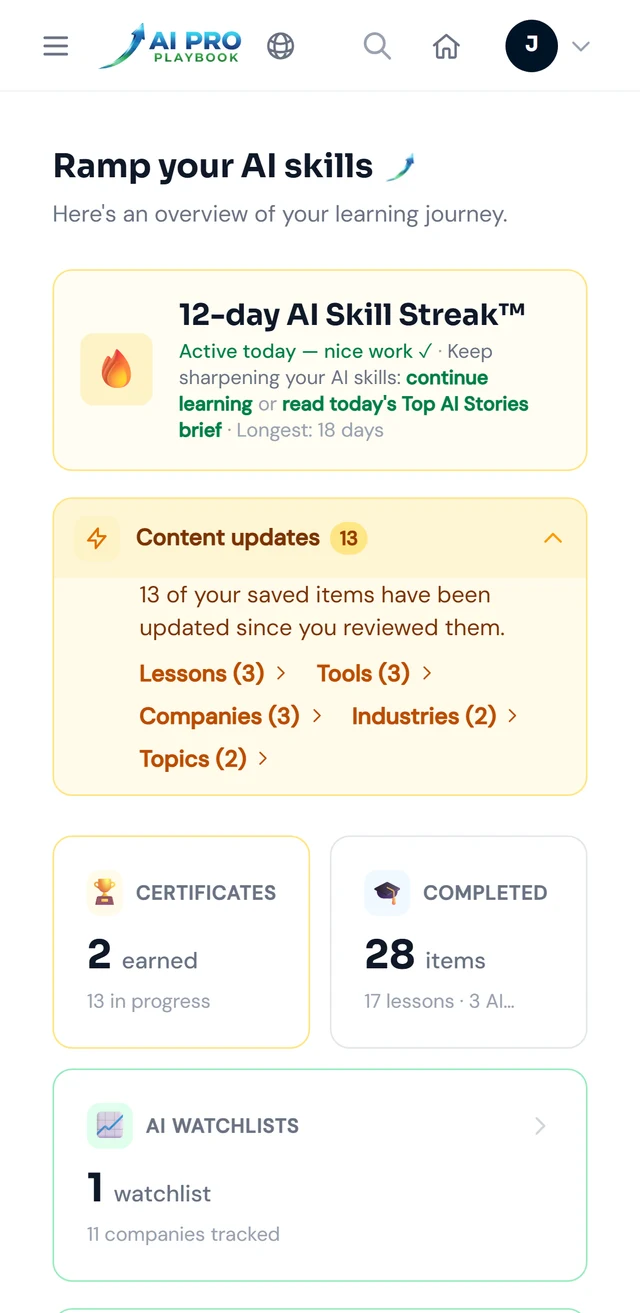
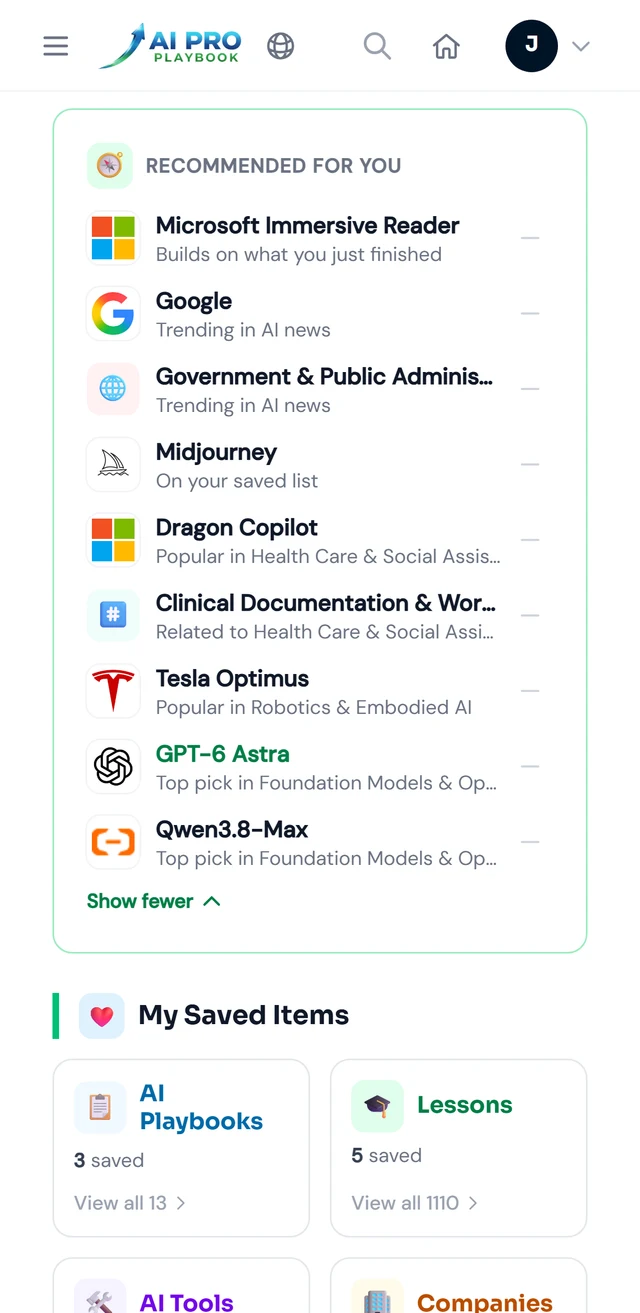
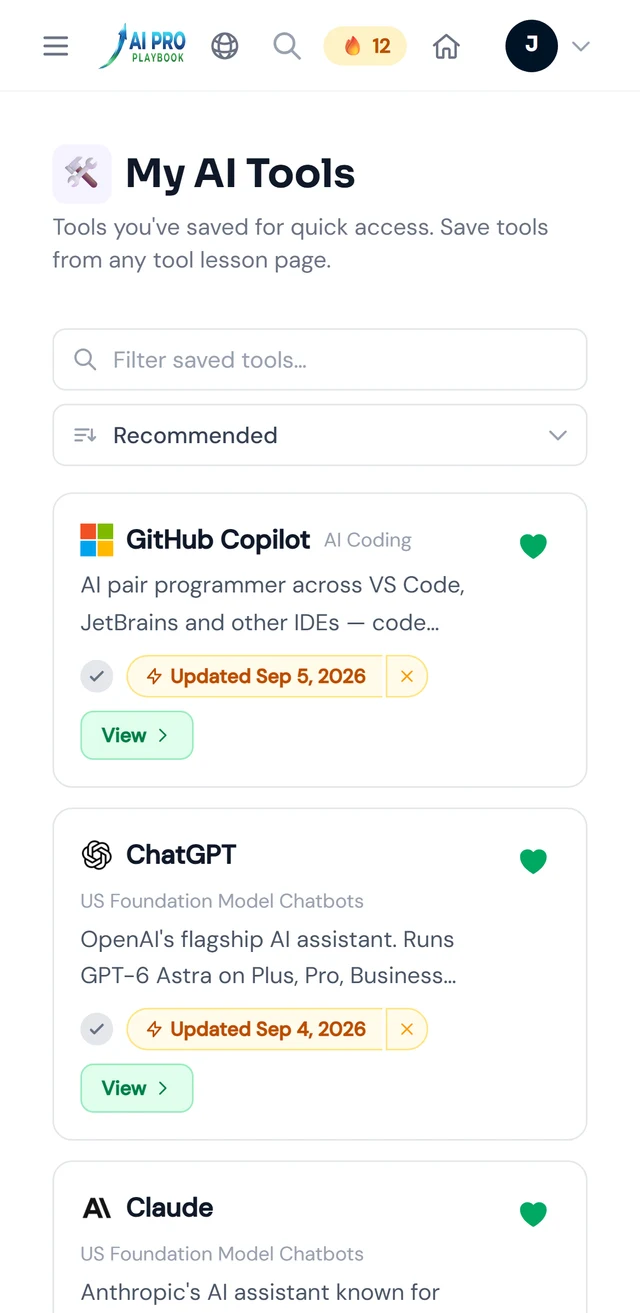
Swipe for Recommended for you and My AI Tools
Your AI Hub — sample data. See desktop view example
🛠️Top AI Tools in This Industry



 ChatGPT
OpenAI's flagship AI assistant. Runs GPT-6 Astra on Plus, Pro, Business and Enterprise since September 3, 2026, with GPT-5.6 Luna still the free default and unlimited free text chats. Includes GPT Image 2, full-duplex voice, Deep Research, ChatGPT Health, Sites for building and hosting web apps, and an auto-enrolled restricted mode for under-18s.
 Claude
Anthropic's AI assistant known for long-context reasoning, coding, and following nuanced instructions, with a 1 million token context window. Offers the current Claude lineup from the economical Opus tier up to the Fable flagship. Strong safety and helpfulness balance.


Google's AI assistant. Gemini 3.8 Flash reaches the app and Search AI Mode for AI Pro and Ultra subscribers while the free tier stays on 3.6 Flash, and Gemini 3.8 Live added a speech-to-speech layer in September 2026. Native multimodal, 1M token context, Deep Research, deep Google Workspace integration.