📘Overview
Updated July 4, 2026Quantum computing is a fundamentally different way of processing information. Where a classical computer stores bits that are either 0 or 1, a quantum computer uses qubits that can exist in a superposition of both at once, and can be entangled so that many qubits behave as one linked system. In theory this lets a quantum machine explore an enormous number of possibilities simultaneously, which could crack problems — simulating molecules for new drugs and materials, optimizing complex logistics, and breaking certain kinds of encryption — that no classical supercomputer could ever finish. Different companies are racing toward this with very different hardware: superconducting circuits, trapped ions, neutral atoms, photonics, and topological qubits, each with its own trade-offs in speed, stability, and how hard it is to scale.
💡The AI Opportunity
The honest state of the field in 2026 is one of real, measurable progress alongside serious remaining challenges. Today's machines are in what researchers call the "noisy" era — qubits are fragile, error rates are high, and useful, fault-tolerant quantum computing at scale is still years away. The central obstacle is error correction: it takes many physical qubits to build one reliable "logical" qubit, and crossing that threshold is the milestone the whole industry is working toward. So the correct framing is neither hype nor dismissal — quantum computing is a genuine, well-funded scientific effort making steady progress, not a product you can point at today and say "this beats a classical computer at a job that matters." Anyone who tells you it's about to change everything next year, or that it's pure vapor, is oversimplifying.
🤖AI in Action
The most important thing to understand about AI and quantum is which direction the value is flowing today. **AI *for* quantum is real and shipping right now: Google DeepMind's AlphaQubit uses AI to decode quantum errors more accurately than previous methods, NVIDIA CUDA-Q and its NVQLink architecture tightly couple GPUs and AI models to quantum processors, and Microsoft Majorana 2 was designed with help from Microsoft's agentic AI Discovery platform — AI is genuinely accelerating how quantum hardware is designed, calibrated, and error-corrected. The reverse — quantum *for* AI, using a quantum computer to train or run models faster — is still largely theoretical and years off. On the hardware and platform side, the usable-today leaders are the cloud services: IBM Quantum, IonQ, and Quantinuum let you run real quantum jobs today, while Google Quantum AI, Amazon Braket, and NVIDIA CUDA-Q provide access, tooling, and AI-quantum hybrid workflows. A wide field of specialists pursues different hardware bets — D-Wave Quantum (annealing), Rigetti Computing (superconducting), Xanadu (photonic), and QuEra Computing and Pasqal (neutral atoms) — with Q-CTRL providing AI-driven control software that squeezes more performance out of noisy hardware, and PsiQuantum** pursuing a longer-horizon photonic, fault-tolerant machine that has no purchasable product yet.
📊Impact on Jobs
Quantum computing is creating a new and fast-growing career frontier — quantum software developers, error-correction researchers, quantum-algorithm specialists, and the AI researchers now working at the intersection of the two fields — and the leading labs and hyperscalers are competing hard for that talent. For most people and businesses, the honest near-term takeaway is that quantum won't change your daily work soon, but two things make it worth understanding now: the AI-for-quantum crossover is a live, high-impact research area today, and "quantum-safe" cryptography is a real, present concern for anyone thinking about long-term data security. The bigger lesson is a template for how to read any emerging technology honestly: separate what is shipping (AI accelerating quantum R&D, cloud access to real quantum processors) from what is promised (quantum supremacy for everyday problems), respect the multi-year timelines without dismissing the genuine science, and watch the milestones that actually matter — logical qubits and error rates — rather than the headlines. That balanced, evidence-based way of thinking is exactly the skill this field rewards.
Keep track of the topics you follow
- Save the topics you follow
- Get ⚡ alerts when their tools and companies change
- Curated tools for this topic, from 900+ AI tool profiles
- Today’s top AI Stories — the day’s most important AI news, free
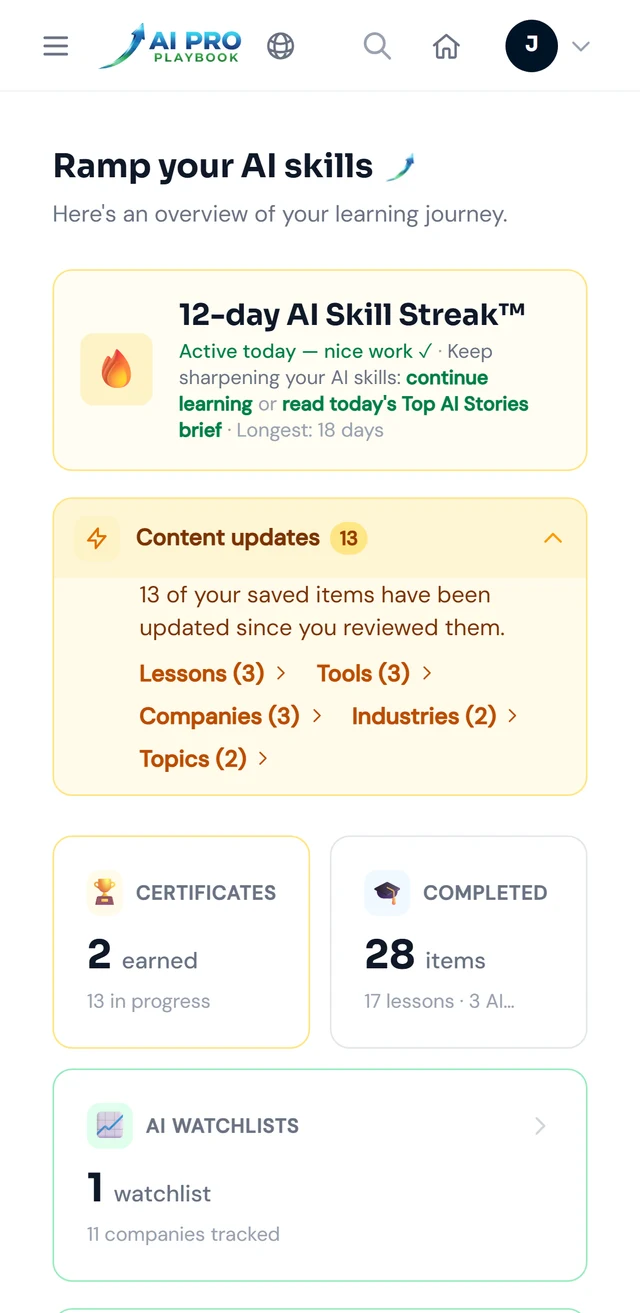
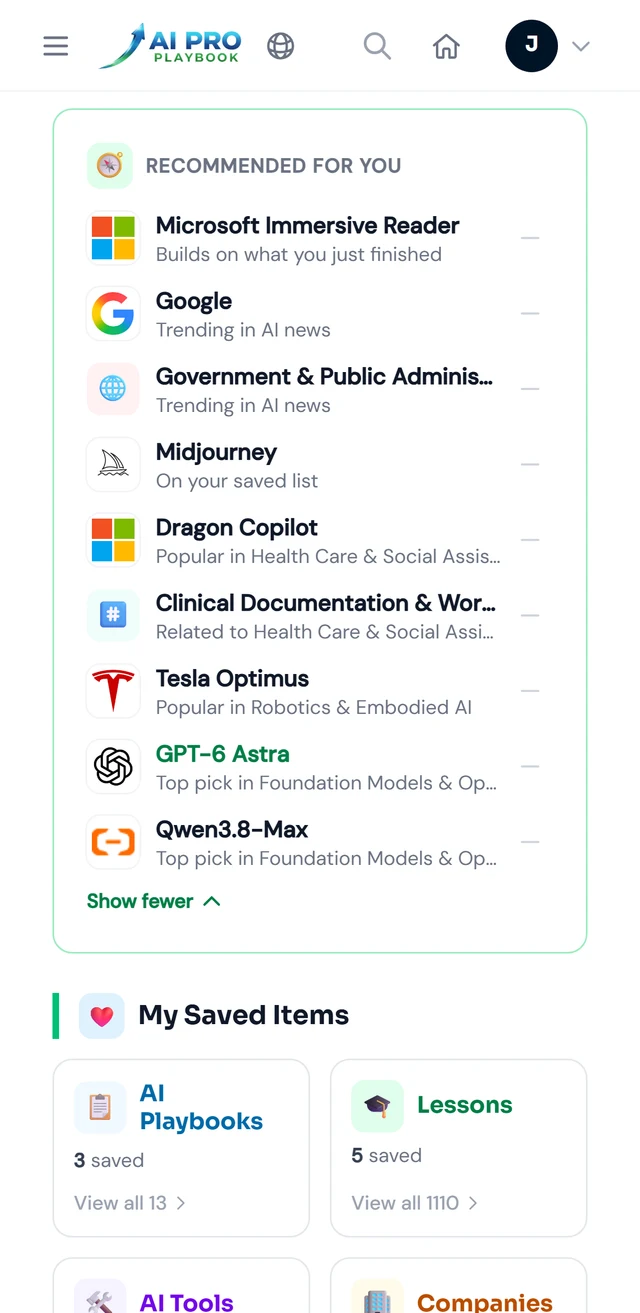
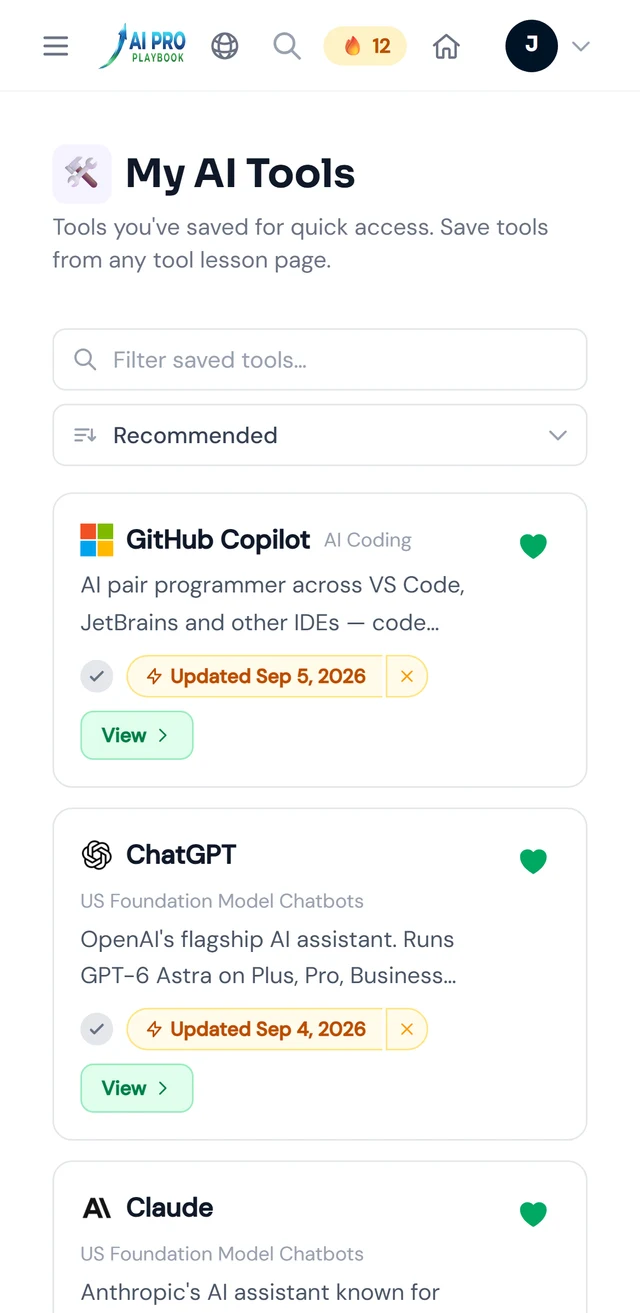
Swipe for Recommended for you and My AI Tools
Your AI Hub — sample data. See desktop view example
🛠️Top AI Tools for This Topic







Microsoft's second-generation topological quantum chip, unveiled at Build 2026 with a reported ~1,000-fold qubit-reliability gain over Majorana 1. Notably designed and fabricated with help from Microsoft's agentic Discovery platform — an example of AI accelerating frontier science. The underlying physics remains contested.



 QuEra Computing
Neutral-atom quantum computing (Aquila, 256 qubits on AWS Braket) with standout 2025 fault-tolerance results and a Transformer-based AI error decoder built with NVIDIA.
 Pasqal
French neutral-atom quantum computing (Orion series, 140+ qubits) with one of the broadest commercial clouds; integrates NVIDIA NVQLink for hybrid quantum-classical AI.
 Q-CTRL
Quantum control software that uses AI and reinforcement learning to suppress errors on others' hardware — its Fire Opal runs across AWS, IBM, and IonQ. The purest AI-for-quantum company.
 PsiQuantum
A private, best-funded photonic quantum bet aiming straight for a million-qubit fault-tolerant machine built in commercial chip foundries. No product yet — a long-horizon roadmap.