🏭Industry Overview
Updated June 17, 2026Space Research and Technology (NAICS 9271) covers civil space (NASA, NOAA satellite programs), military space (US Space Force, NRO, Air Force Space Command predecessor functions), and increasingly the commercial-space ecosystem that NASA and the Space Force partner with. NASA's annual budget is ~$25 billion across human spaceflight (Artemis program, ISS), science missions (JWST, planetary probes, Earth observation), and aeronautics research. The US Space Force was established as a separate service in 2019 with budget growing to ~$30 billion annually. The NRO operates classified intelligence satellites with budget that exceeds NASA's. The commercial-space ecosystem has grown rapidly — SpaceX (~70% of all global launch mass since 2020), Blue Origin, Rocket Lab, ULA (Boeing-Lockheed JV), plus the satellite operators (Planet Labs, Maxar Technologies, Iridium, Iridium Next, Eutelsat OneWeb) and emerging in-space-services companies (Astroscale, Northrop Grumman MEV, Orbit Fab).
🤖AI in Action
AI is reshaping space operations across the civil, military, and commercial sectors. Earth-observation AI (Planet Labs, Maxar, Capella, BlackSky, ICEYE) automatically analyzes satellite imagery for defense intelligence, climate monitoring, and commercial use cases — Maven Smart System processes much of the DoD ISR pipeline. Spacecraft autonomy is increasingly AI-augmented: NASA's Mars rovers use onboard AI for hazard avoidance and target selection; SpaceX's Dragon and Starship use AI in autonomous-rendezvous and docking. The Space Force operates AI-augmented space-domain awareness systems tracking ~50,000+ tracked objects in orbit. Orbital-AI-data-centers — SpaceX's Starlink V3 program is integrating AI compute into orbital infrastructure for both military and civil applications — represents a new frontier. Generative AI is being deployed for mission-planning (NASA, ESA), telemetry-anomaly detection, and scientific-data analysis (Hubble and JWST data pipelines use ML extensively for image processing). NASA's OpenSCG (Open Science Challenges) program uses AI for accelerating planetary-science workflows.
📊Impact on Jobs
The civil and military space workforce is approximately 200,000 across NASA, the Space Force, the NRO, and the major contractors. NASA scientists and engineers face AI-augmentation rather than displacement — mission-design, simulation, and data-analysis roles are heavily AI-augmented. Mission-control operations roles are growing with the Artemis program and the Space Force build-out. Imagery and geospatial analysts at the NRO and across the IC are the most-AI-augmented role category — the work has shifted toward exception-handling, source-validation, and analytic interpretation as AI handles the bulk of imagery review. Software-engineering roles in mission systems are growing. The commercial-space sector is hiring aggressively across all role categories — software, systems engineering, manufacturing, mission operations. New roles emerging: orbital-AI engineer, autonomous-spacecraft system designer, space-domain-awareness analyst, in-space-AI data center operator (a brand-new role created by Starlink V3 and similar programs).
Keep track of AI in your sector
- Save the sectors you follow
- Get ⚡ alerts when their tools and companies change
- The AI tools that actually ship here, from 900+ AI tool profiles
- Today’s top AI Stories — the day’s most important AI news, free
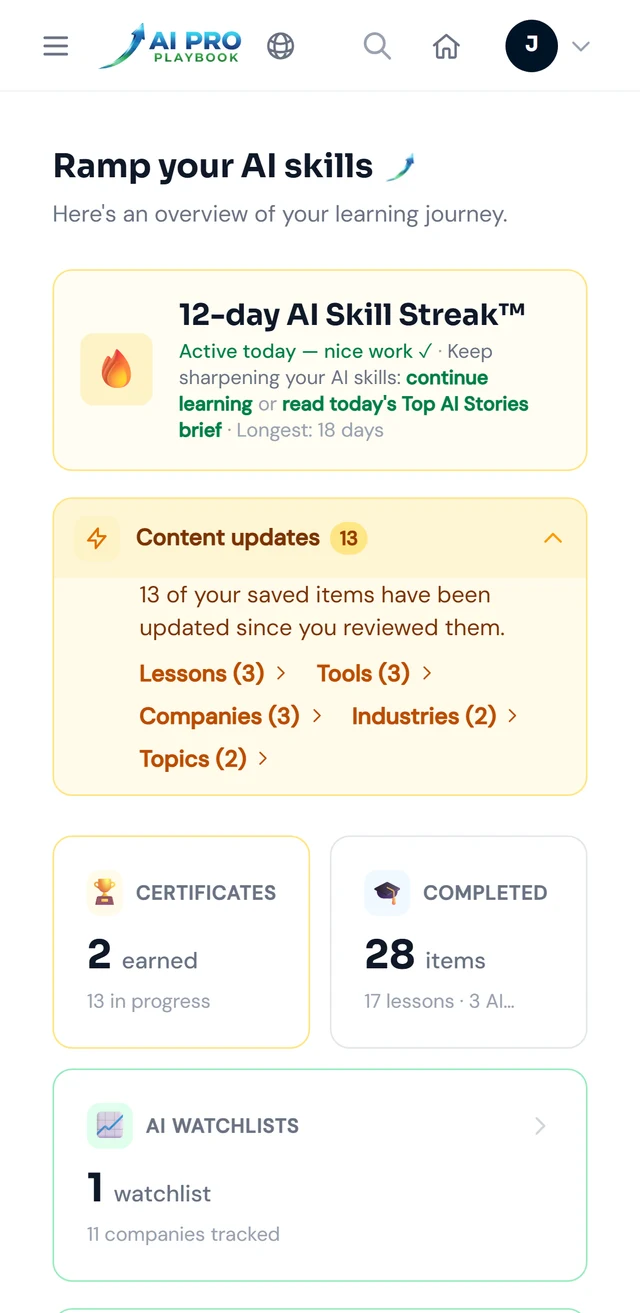

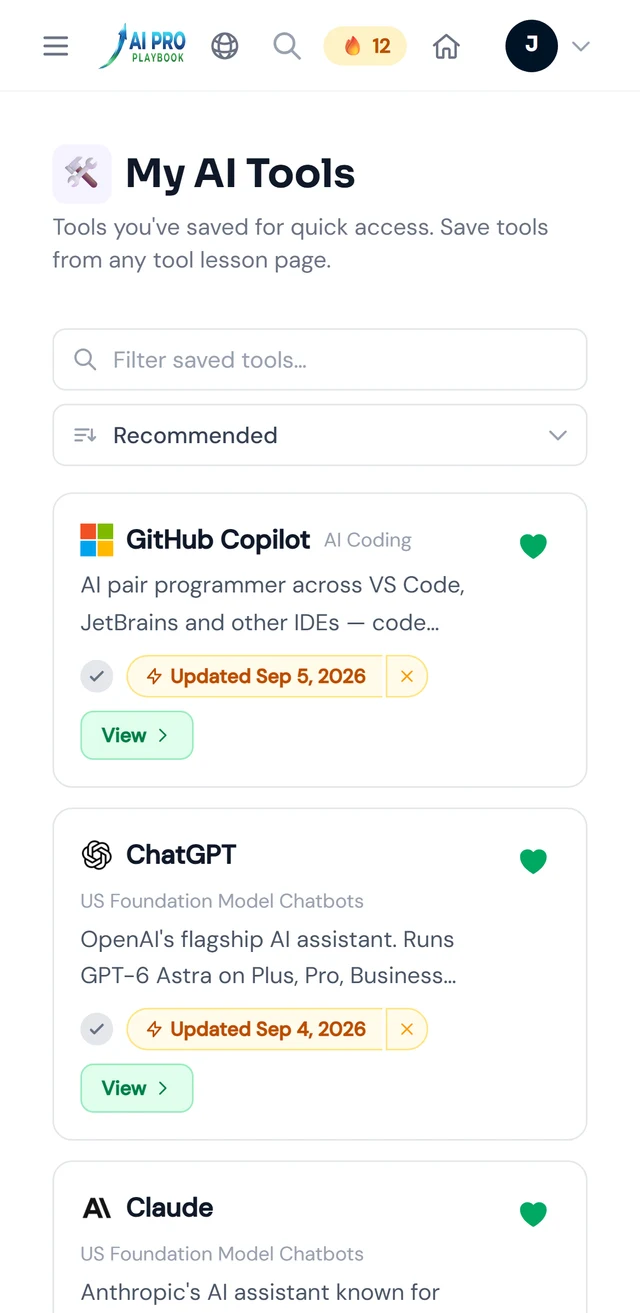
Swipe for Recommended for you and My AI Tools
Your AI Hub — sample data. See desktop view example
🛠️Top AI Tools in This Industry

 Vantor Sentry
AI change-detection from the former Maxar Intelligence that fuses very-high-resolution imagery across sensors to flag physical changes without frame-by-frame analyst review.

 Slingshot Aerospace Agatha
Space-domain-awareness AI built under DARPA's PRECOG program that detects anomalous behavior within large satellite constellations to flag spacecraft not operating as intended.
 LeoLabs Delta
AI threat-detection service built on a worldwide ground-based phased-array radar network that continuously tracks objects in low Earth orbit for US and allied national-security missions.
 Ursa Space Systems
Analytics-as-a-service on synthetic-aperture-radar data pooled from a Virtual Constellation of partners, processing 50 million-plus SAR images for security, maritime, and energy insights.
 HEO (Non-Earth Imaging)
Turns cameras toward space rather than Earth to deliver on-demand imagery and inspection of satellites and orbital objects via autonomous software for defense and intelligence users.

SpaceX's government and national-security space stack — a militarized variant of Starlink for secure communications, hosted payloads, and Earth observation. Its proliferated low Earth orbit constellation exceeds 200 satellites, with AI essential to manage the network and process sensor data on orbit. Won a $2.29 billion US Space Force SDN Backbone contract in May 2026.